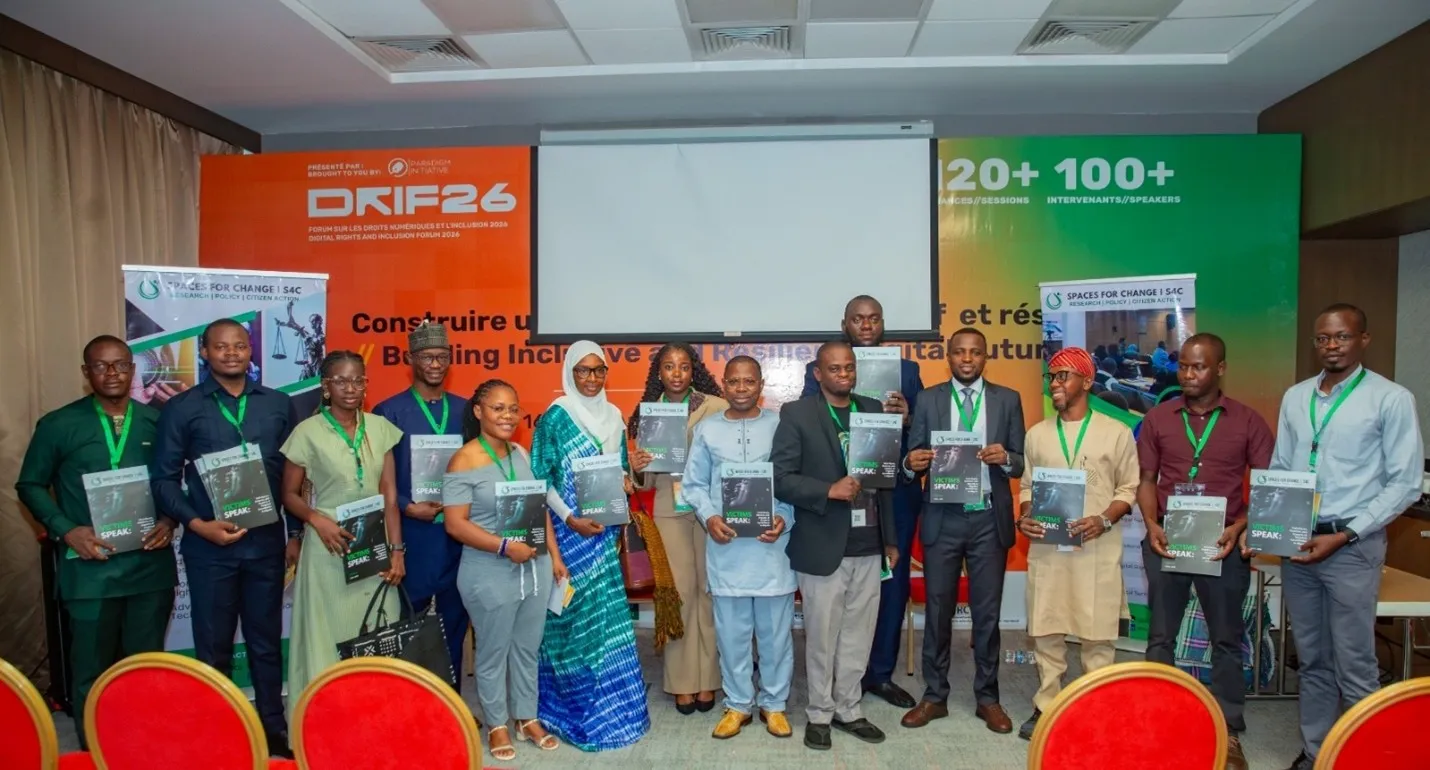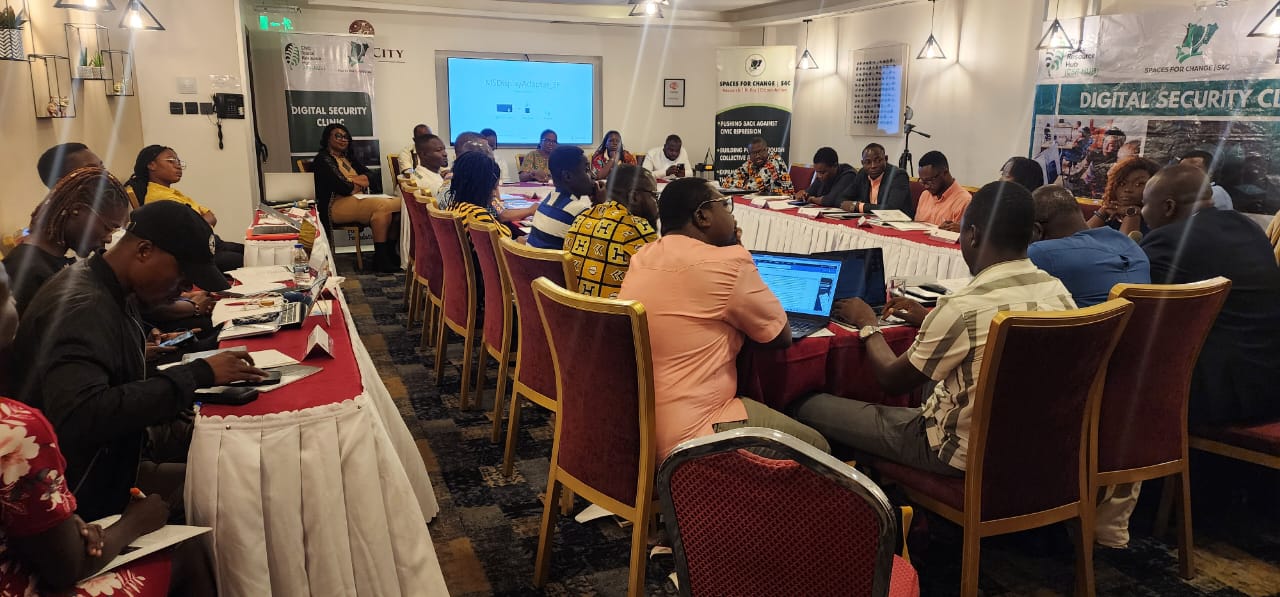
Spaces for Change | S4C launched the Civic Space Outlook 2024 for Ghana at a screening event held in Accra on Thursday, August 29, 2024. S4C produced Ghana’s Civic Space Outlook 2024 under the auspices of the West Africa Civic Space Resource – Hub (CSR-Hub) supported by Ford Foundation under its Weaving Resilience Initiative for the Global South. The Outlook shines a light on the civic space in Ghana ahead of the country’s upcoming national elections in December 2024. By examining the trends, drivers, and probable threats to the civic space during election seasons, the Outlook provides early warning signals for civic actors working to defend the civic space in the country.
Executives of government agencies, civil society organizations (CSOs), journalists, election monitoring bodies, journalists and activists attended the screening of the Outlook. In her opening address, S4C’s Executive Director described the Outlook “as an important proactive measure for the protection of civic space in Ghana and the West Africa subregion as a whole.” Civic space trends are mapped through incident-tracking on the Closing Spaces Database—www.closingspaces.org—curated by Spaces for Change. Patterns are derived from the periodic analysis of the incidents tracked in order to identify recurrent trends across countries. Produced in a documentary format, the Outlook sheds light on the political landscape, civic engagement, historical trajectories and electoral processes in Ghana as well as the voices of critical civic space actors and institutions in the country.
So, what are the prevalent incidents of crackdowns to the civic space in Ghana that have been most-tracked on the Closing Spaces Database? What human rights violations are the most reported in Ghana? How has the Commission on Human Rights and Administrative Justice (CHRAJ) handled these complaints? To what extent does CHRAJ collaborate with CSOs, journalists, the media, and activists to push back against shrinking the civic space in Ghana? What are some of the major drawbacks or hurdles CSOs and journalists face when carrying out their legitimate activities in Ghana? These questions and many more dominated the discussions after the screening.
Panelists comprising representatives of the Commission on Human Rights and Administrative Justice, West Africa Civil Society Institute (WACSI), Ghana News Agency, Human Rights Reporters in Ghana and Center for Democratic Development (CDD) responded to these questions, highlighting the importance of reporting incidents and civic participation in the electoral processes. It is important for CSOs, journalists and civic actors to file complaints to CHRAJ based on the incidents of crackdowns and other human rights violations. The Commission acts either through its own monitoring or complaints-handling. CHRAJ carries out its own monitoring of human rights conditions in the country and issues advisory to the government based on its findings. However, complaints carry more weight because they prompt authorities to conduct investigations and law enforcement.
CSOs in Ghana have contributed immeasurably to the country’s election processes, campaigns for good governance and the development of policies and regulations. Panelists also shed light on the ways CSOs, journalists and civic actors can take good work to scale. Recommendations include backing their advocacy with verifiable and reliable empirical data. Bearing in mind that no country is not immune to disruptive trends witnessed during and around election seasons in other countries within the subregion, the vigilance role of civic actors at a crucial time like this cannot be overemphasized.