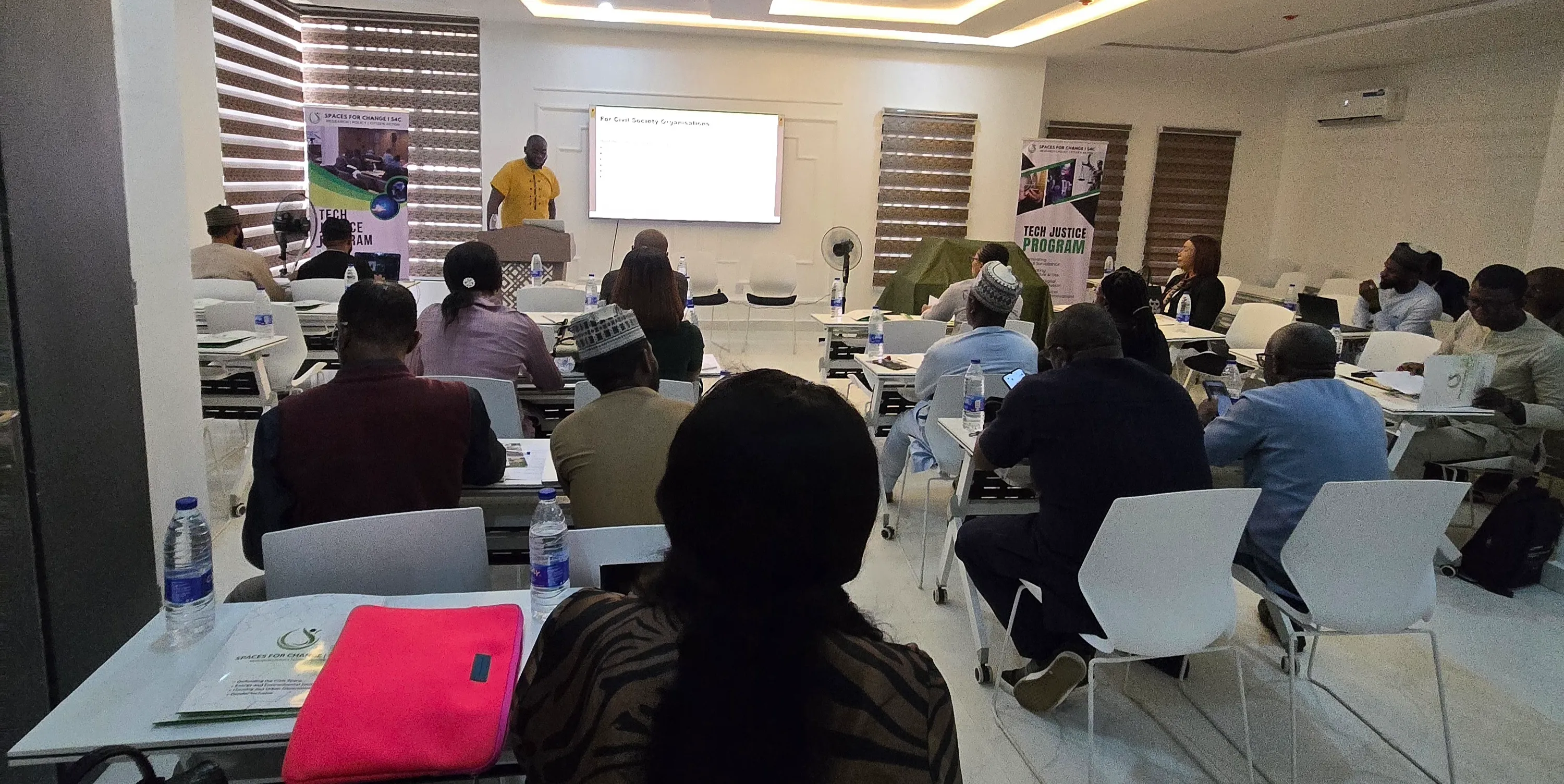
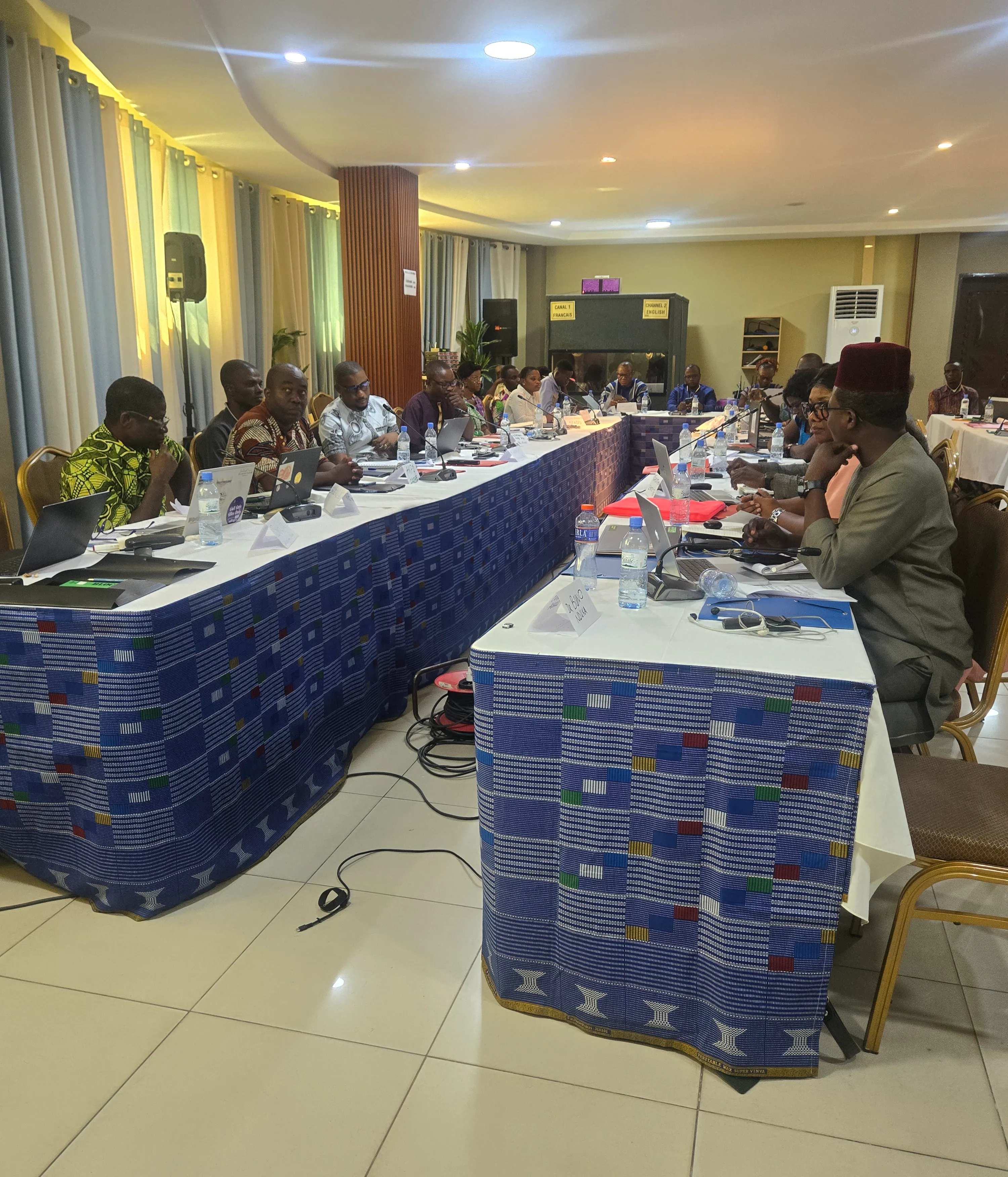
 Thirty (30) civil society and government representatives participated in Spaces for Change’s | S4C’s 4th Learning and Practice Workshop (LPW) held in Lome, Togo, on March 26-27, 2026. Over the two days, participants—comprising representatives of Togo’s financial intelligence unit, Ministry of Security, Ministry of Territorial Administration, Ministry of Finance and Budget, civil society organizations and independent experts from Nigeria—exchanged ideas and experiences about national terrorism financing risk assessments, mutual evaluations and risk-based supervision practices aimed at protecting the integrity of the non-profit sector.
As with other editions of the LPW held in Ghana, Gambia and Burkina Faso, the fourth edition sought to bridge technical knowledge gaps, foster collaboration between NPOs and their regulators, and translate regulatory frameworks into actionable strategies for improving the regulatory environment for civil society in Togo. The experiences shared, the notes compared and the lessons learned delved deeply into the practical strategies for correctly implementing the Financial Action Task Force (FATF) Recommendations 1 and 8, highlighting best practices from other jurisdictions.
Similar to other LPW workshops held across West Africa, the opening poll showed that over 90% of the civil society participants have never heard about the FATF Recommendations before, let alone know why national terrorism financing risk assessments are critical, necessitating their participation. The workshop afforded NPO representatives the opporunity to learn about the outcomes of the country’s risk assessment and the proposed mitigation measures developed by national authorities. Togo has conducted a national risk assessment (NRA) which rated the terrorism financing risk level of NPOs in the country as “medium high”. Among other things, the risk assessment identified several vulnerabilities that predispose NPOs to terrorism financing abuse such as the cash intensive nature of their activities, the ease of registration, limited funding, poor regulation and monitoring of the sector, operating in close proximity to geographical locations overrun by terrorist groups, and the absence of a comprehensive database.
The workshop employed a blended approach combining expert led sessions, case studies, peer learning exchanges and interactive sessions to enhance participants’ understanding of FATF recommendations while promoting dialogue between regulators, civil society, and security agencies. Reactions to the deep dives into the national and international legal frameworks and institutions that oversee the operations of NPOs in Togo was quite revealing. Some NPOs acknowledged that they were not aware of some of the legal provisions elucidated nor the compliance requirements expected of them.
Togo is currently under enhanced monitoring by the Intergovernmental Action Task Force Against Money Laundering (GIABA)—FATF’s regional-styled body for West Africa following the last mutual evaluation conducted in 2022 which rated the country “non-compliant” on Recommendation 8 and low level of effectiveness in immediate outcome 10. In response to these deficiencies, the Togolese government has recently updated its laws aimed at combating money laundering and terrorism financing, while new institutional arrangements are underway. Leveraging the experience from Nigeria, the ensuing sessions focused on how countries can identify and address deficiencies in mutual evaluation reports, effectively conduct sectoral risk assessments of the NPO sector, and build platforms for constructive dialogue between NPOs and regulators.
Four key outcomes emerged instantly from the workshop. First, government representatives assured that NPOs will now be fully involved in national efforts to update the sectoral terrorism financing risk assessment and the ongoing development of mitigation measures for the sector. Secondly, regulators committed to continuing the dialogue with NPOs beyond the LPW workshop. Thirdly, the NPO regulator—Ministry of Territorial Administration—undertook to disseminate all relevant laws applicable to the NPO sector within an agreed timeframe. Participants, on the other hand, committed to cascading the knowledge gained within their organizations, ensuring long-term impact beyond the training event.
By combining technical rigor with practical advocacy tools, the workshop not only improved participants’ technical knowledge but also rejigged the collective will of stakeholders to bolster financial transparency in the country. Continued follow-up and monitoring will be essential to sustain these gains and translate them into measurable policy reforms.