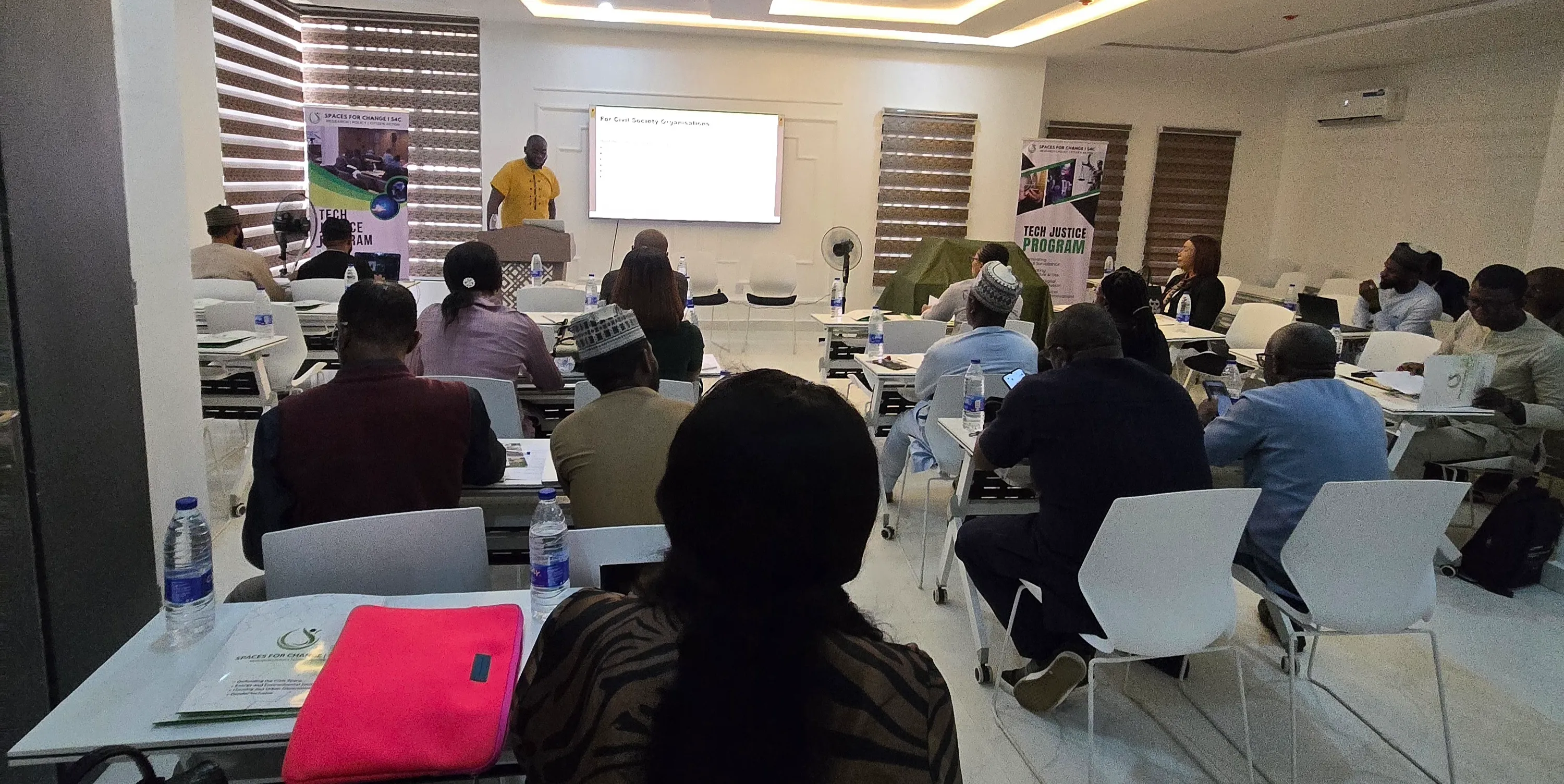
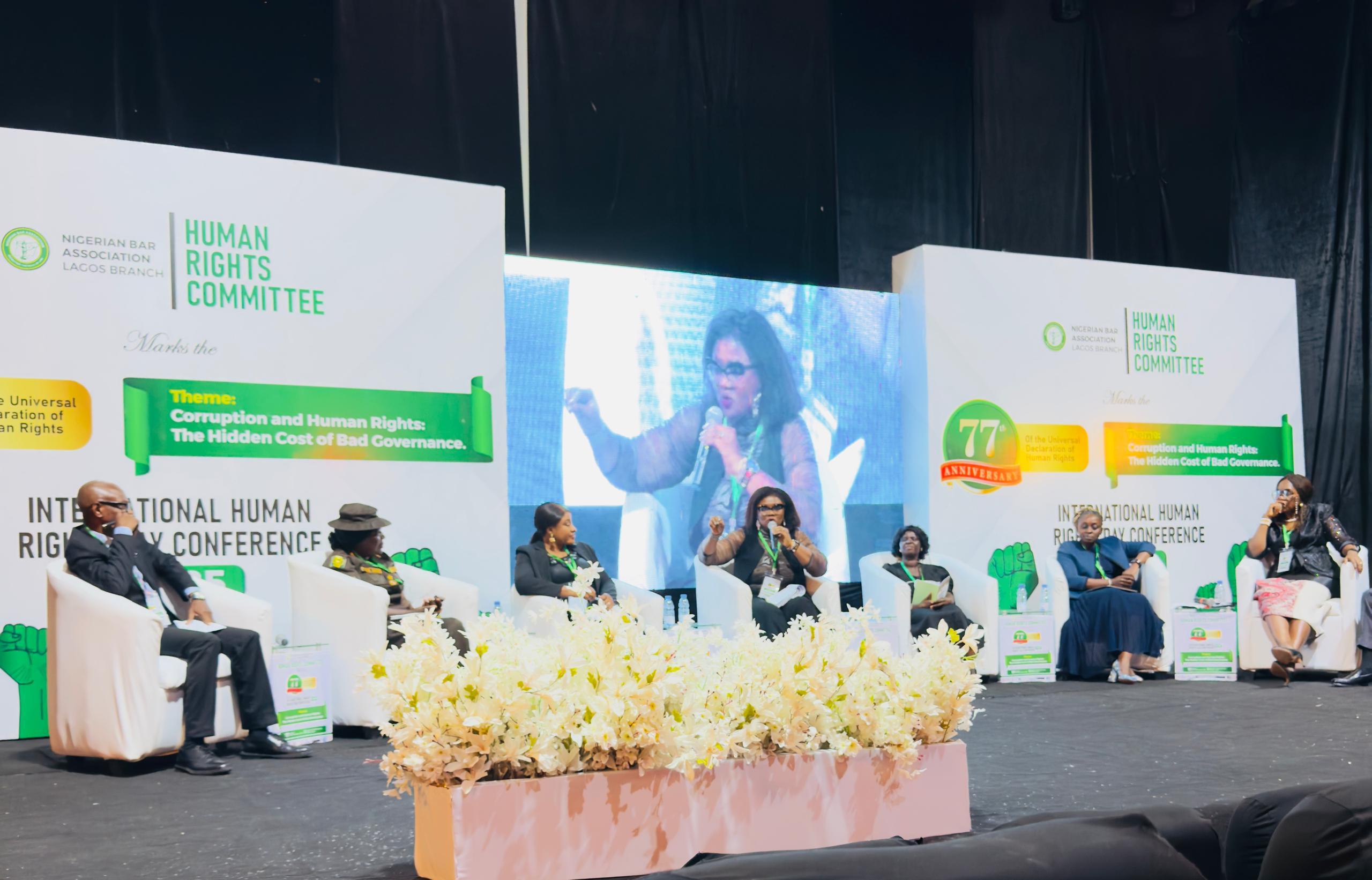
 Spaces for Change | S4C joined representatives of law enforcement agencies, anti-corruption bodies, state ministries of justice, departments of public prosecution, correctional facilities and civil society organizations at a fireside chat during the 2025 International Human Rights Day Conference organized by the Human Rights Committee of the Nigerian Bar Association, Lagos Branch, on December 10, 2025. The fireside discussion featured interactive and solutions-focused conversations on strengthening governance, combating financial crimes, and safeguarding human rights in Nigeria. The conference, “Corruption and Human Rights: The Hidden Cost of Bad Governance,” provided an important platform for stakeholders to examine the intersection between anti-corruption efforts, institutional accountability, and the protection of fundamental rights.
Corruption is not only a governance issue, but a direct violation of human rights. It deprives citizens access to justice, quality health care, education, and economic opportunities. It exposes the vulnerable and underserved members of society to adverse living conditions and weakens public institutions. Although key legislative reforms have taken place in the last few years, inconsistent and selective enforcement, elite impunity, and structural weaknesses still stall progress. Lawyers have an important role to play towards ensuring that anti-corruption efforts of the government are anchored on transparent investigations and fair trials that follow due process safeguards.
Spaces for Change discussed the role of law and technology in preventing corruption. Most anti-corruption initiatives tilt towards correction rather than prevention. Technological advancements can be leveraged to minimize the use of human discretion and reduce blind spots, therefore preventing corrupt behaviour. In this regard, the digitization of government services and payment systems can reduce opportunities for bribery and other malpractices. Many governments and institutions around the world are utilizing open data initiatives and automated monitoring systems to increase efficiency and deter acts of corruption. Technology alone is not a magic wand to ending corrupt practice as it could themselves to more advanced corrupt tactics. Technological use must be backed by upholding ethical and legal standards both at the individual and institutional levels.
S4C further argued that corruption transcends stealing public funds from the state coffers. It begins with little acts of dishonesty—such as cheating during examinations, offering jobs to unqualified friends and relatives at the expense of more competent professionals, converting office property for personal use, accepting bribes and kickbacks from contract bidders etc.—and graduates to outright embezzlement of public funds when small thieves are presented with bigger opportunities in public office. Such acts of dishonesty are prevalent within the churches to the mosques, schools, corporate entities, informal economies, schools, hospitals and nearly every facet of the economy. Anti-corruption initiatives tend to focus more on detecting and punishing public sector corruption, while overlooking the simple offences in other non-public sectors that provide the fertile ground for the bigger corrupt offences to thrive. Against this backdrop, it is important to import ethical considerations in the fight against corruption and also expand the accountability ecosystems beyond the current fixation on law enforcement, punishment and correction.
Overall, there was consensus among panelists that corruption is a human rights issue as it cuts across every aspect of human lives. Corruption has become an existential problem and manifests in several forms. Corruption reflects in how people misuse governance, position, power, and personal information of others. The obvious cost of bad governance is abject poverty and a perverted brand of democracy that does not demand accountability. The prevalence of poverty in Nigeria, despite enormous resources and earnings over the years, is a consequence of corruption and bad governance. Accordingly, tackling corruption begins with every citizen and not just the government alone, as government is just a reflection of its people. A value-based system that encourages accountability is needed to curb corruption.