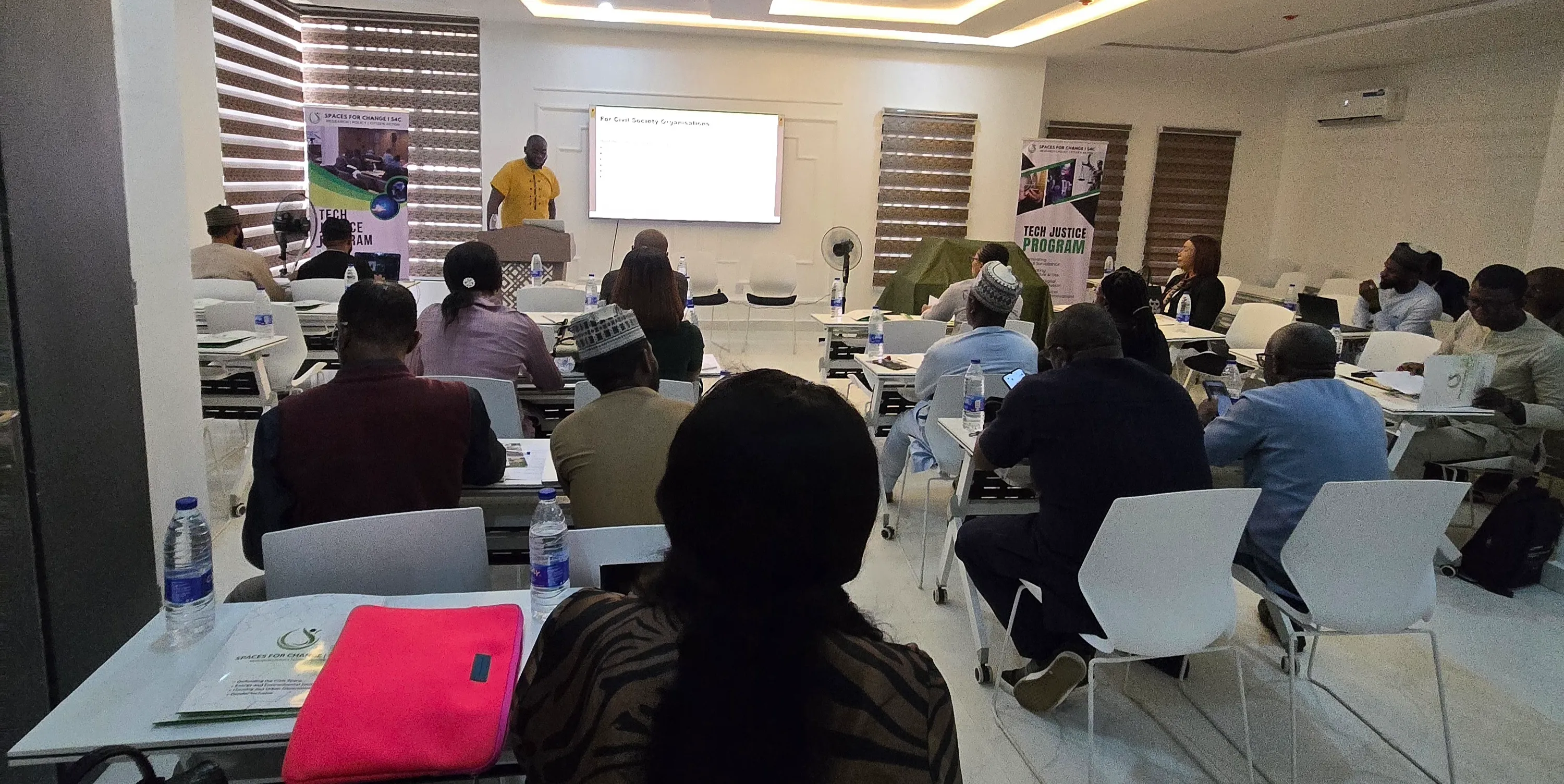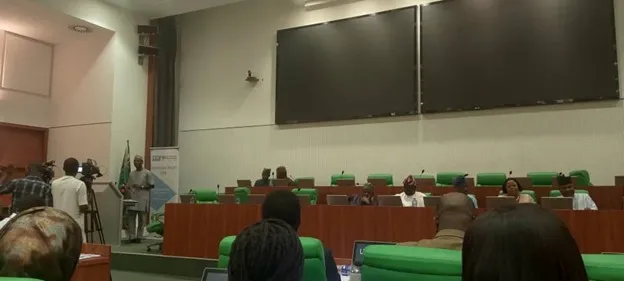
Spaces for Change | S4C participated in the public hearing on the Human Rights Defenders Protection Bill, 2024 (HB. 1867) and National Human Rights Commission Act (Repeal and Enactment) Bill, 2025 (HB. 2376). Held on Wednesday, March 4, 2026, the public hearing brought together stakeholders such as civil society organizations, the National Human Rights Commission (NHRC), the United Nations Resident and Humanitarian Coordinator in Nigeria, representatives of diplomatic missions in Nigeria, the Nigerian Bar Association (NBA), the media and other interested persons.
Presenting its memorandum to the federal legislative committee, Spaces for Change praised the innovative provisions in the Bill, such as the recognition of human rights defenders (HRDs) as persons requiring special protection; the criminalization of intimidation and reprisals against HRDs by state and non-state actors; the provision of a clear duty to investigate violations; and the proposal to designate the National Human Rights Commission as the protection mechanism. The Bill, if passed, will align Nigeria’s international commitments to the United Nations Declaration on the Protection of Human Rights Defenders (General Assembly Resolution A/RES/53/144), which emphasizes the responsibilities of state parties to provide essential protections for individuals and groups promoting and protecting human rights.
Despite the laudable provisions, certain clauses in the draft statute need further strengthening to enhance the safety of HRDs. Along this line, S4C advocated for the alignment of certain provisions with constitutional guarantees; recognition of pre-existing human rights enforcement mechanisms espoused in the Fundamental Rights Enforcement Procedure Rules (FREP), and the reframing of some terms that could potentially be weaponized by law enforcement agents to restrict assembly and associational rights. Spaces for Change further urged the Committee to consider modifying the provisions relating to penalties, enforcement procedures, and prosecutions towards strengthening accountability and unifying prosecutorial procedures across the six geopolitical zones of the country.
For the National Human Rights Commission Act (Repeal and Enactment) Bill, Spaces for Change commended the innovations in the Bill such as the introduction of a legal framework to bolster business’ compliance with human right principles and the designation of the NHRC as the national preventive mechanism for the implementation of the Optional Protocol to the United Nations Convention against Torture (OPCAT). S4C advocated for the inclusion of young people on the governing council of the Commission and the proper regulation of dual-use technologies especially spywares and technologies with surveillance capabilities.
There was consensus among stakeholders that the two bills offer immense prospects for centering human rights in the national development agenda. Stakeholders were assured that the House Committee will dispassionately consider all the submissions received and ensure that the outcome of the legislative deliberations reflects the will of the people. The House of Representatives Committee on Human Rights organized the public hearing with the support of the UK International Development and Policy and Legal Advocacy Centre (PLAC).