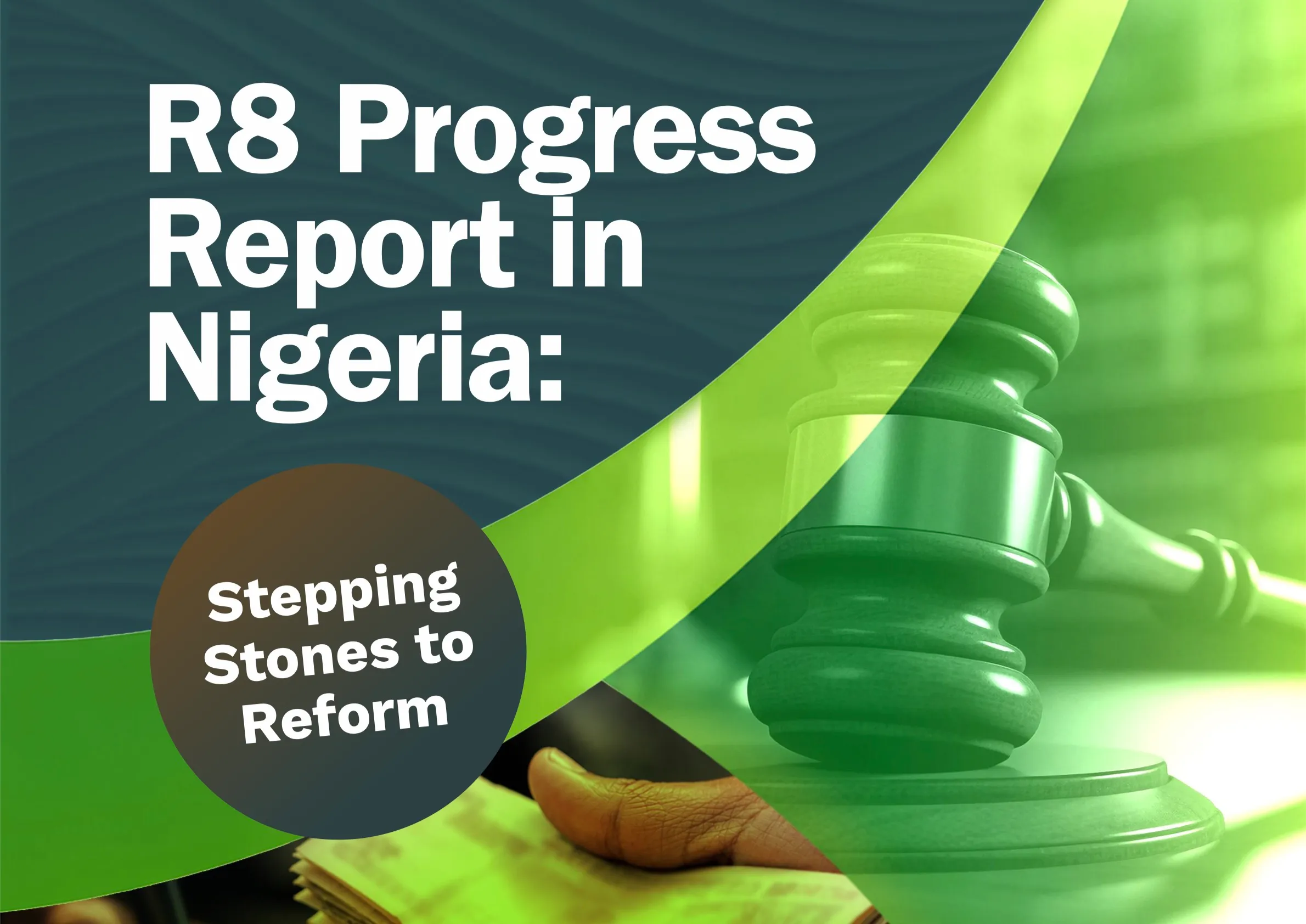
Sixty (60) senior executives, compliance officers, and regulators of banks and other financial institutions across Nigeria’s northern region participated in the second edition of the high-level training—Effective Implementation of FATF Recommendation 8 by Financial Institutions—organized by Spaces for Change | S4C in collaboration with the Compliance Institute of Nigeria (CIN) on February 11-12, 2026. The training aimed to enhance the capacity of banks and other financial institutions (BOFIs) to implement the revised Recommendation 8 (R8) of the Financial Action Task Force (FATF) relating to non-profit organizations (NPOs).
Over the two days, NPOs highlighted the disproportionate burdens non-profits face as a result of banks’ implementation of of rule-based approaches towards mitigating money laundering and terrorism financing (AML/CFT) risks. Typical restrictions include routine transaction flagging, bank account suspension, Post No Debits (PNDs), blocked transfers, enhanced due diligence, onerous customer onboarding protocols and de-risking. Presentations depicted examples of real-life consequences of AML/CFT policies on NPO operations NPOs some of which resulted in project delays, deprivations of critical humanitarian assistance, and deaths.
BOFIs cited strict banking policies and heavy sanctions for non-compliance as the primary drivers of these restrictions. There are serious consequences for non-compliance with AML/CFT policies and standards set by the national central bank and international financial regulators. As noted by one participant, “… before now, we (banks) paid fines of five million, two million Naira for non-compliance…But these days, the fines now run into billions of Naira. Will you rather choose to pay say N5 billion Naira for a ₦5,000 transaction or simply cancel the transaction?” Like this question depicts, most financial institutions would succumb to avoiding the risk rather than managing it, eventually paying the steep price for non-compliance.
Other major drivers include banks’ risk averse behaviour and the widespread perception of NPOs as high-risk customers. The conversations that ensued interrogated whether this perception is hinged on bias or facts. For instance, out of the 50+ regional and zonal head of compliance divisions of major financial institutions present, none of them have ever encountered, documented or reported any asset seizures or forfeitures of monies in NPO accounts, court-ordered account freezes, sanctioned individuals or entities, TF prosecution involving any NPO accounts or customers, at least, in the last five years. This sparked a robust debate regarding where the high-risk perception attributed to NPOs emanated from? This perception has also deepened mistrust between humanitarian organizations and their bankers/regulators. As one participant asked, “are we really regulating risks or perceptions?
The technical sessions and interactive sessions that followed aimed to bridge this trust gap, drawing guidance from the revised Recommendation 8 of the Financial Action Task Force (FATF). Experts walked participants through the results of the National Terrorism Financing Risk Assessment (TFRA) 0f the non-profit sector conducted by the Special Control Unit against Money Laundering (SCUML) in 2022. The risk assessment already identified subsets of NPOs vulnerable to TF abuse, highlighting the nature of their inherent vulnerabilities and heat map according to the risk spectrum of various subsets. With emphasis placed on the risk-based approach, experts elucidated why risk assessments matter, the strategies for conducting sectoral/entity risk assessments and useful tools for designing simplified measures for low-risk entities and sectors.
To be balanced, risk calibration metrics used by financial institutions must be informed and aligned with SCUML’s TFRA findings and the risk categorisations for various subsets of NPOs. Other sessions proffered recommendations rooted in local and international standards. Some practical measures like the ‘traffic light’ signal or the A.M.E.E.I.T strategy (assess, mitigate, explain, engage, innovate, and terminate) were explained in detail. These measures collectively pave the way for an effective risk-based approach to be implemented when dealing with NPOs customers. Continuous education by compliance officers on new and innovative compliance frameworks and regulations was also encouraged to ensure that they are informed about amendments and changes to financial regulations. Conversations also delved deeper into the role of multistakeholder dialogues, especially the Multistakeholder Working Group on Charities, in addressing the negative impacts of AML/CFT measures on NPO activities.
In closing, there was consensus that not all NPOs are high risk. Risk assessments are necessary, and must be case-by-case, evidence-based, and proportionate. Perception-based classification should be avoided while structured risk assessment tools and proper segmentation are necessary. Finally, effective compliance depends on collaboration, clear communication, and a shared commitment to regulating risks. The training was supported by the Global Center on Cooperative Security and the Charles Stewart Mott Foundation.