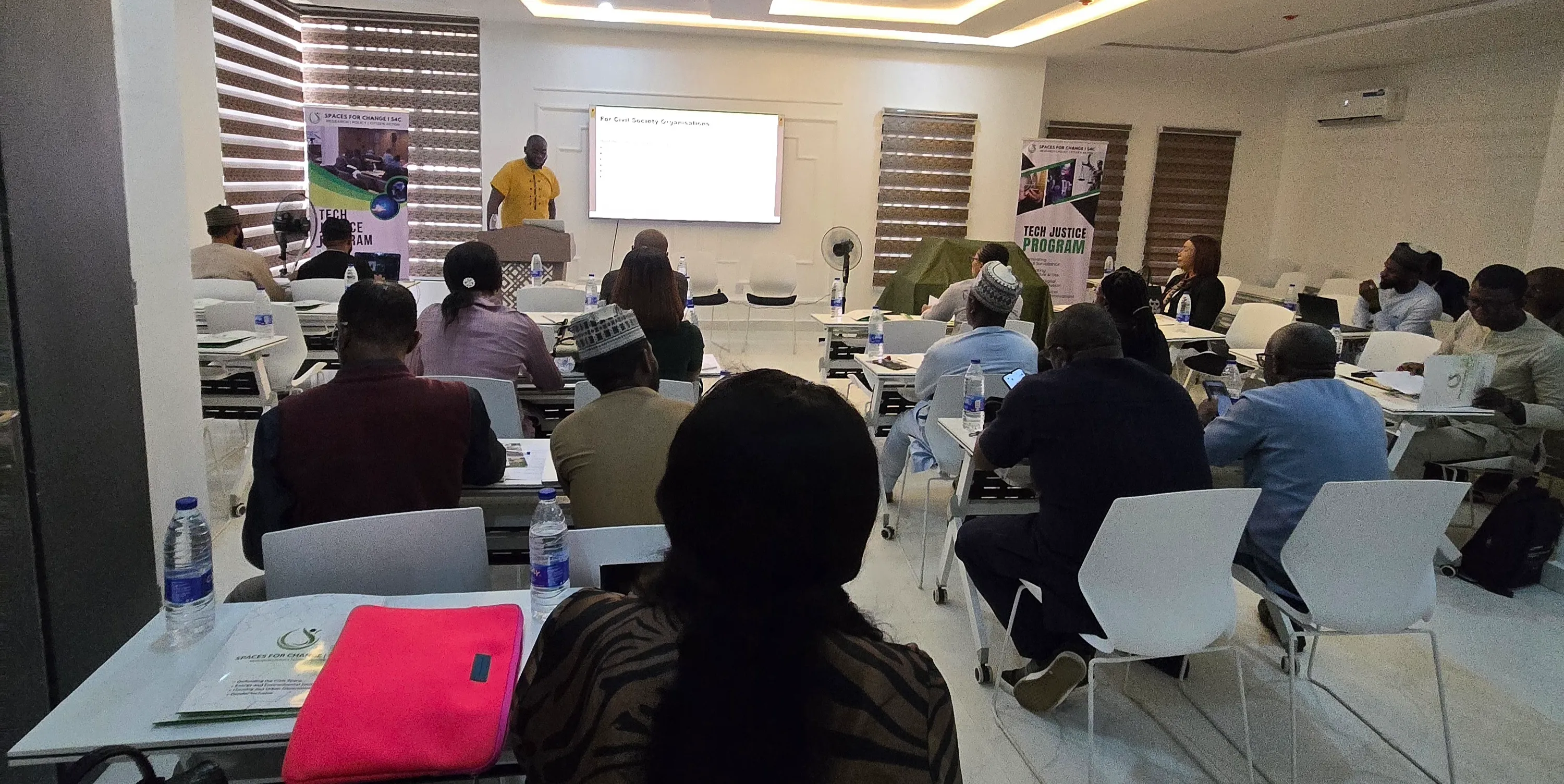
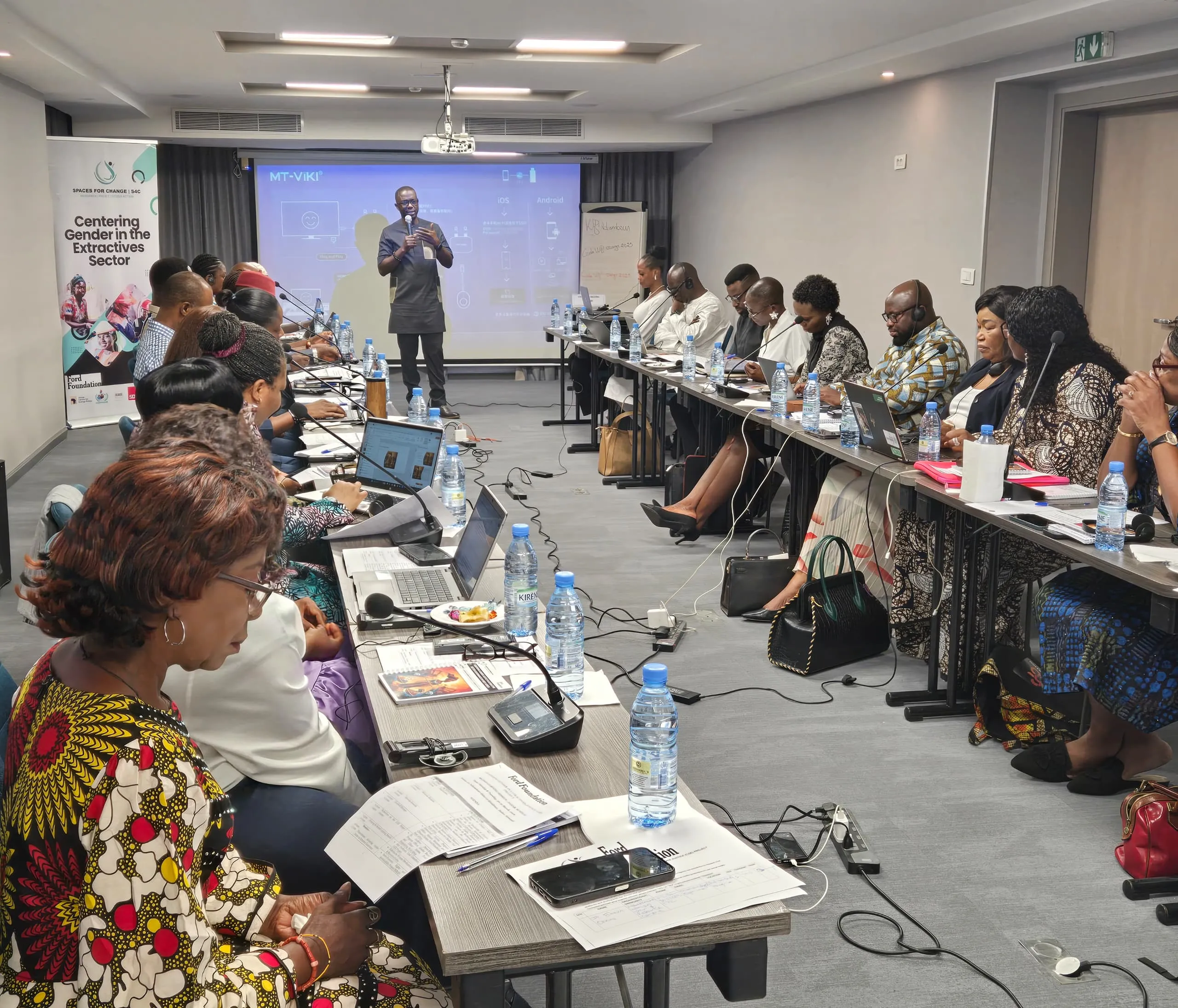
 Building on the momentum of the inaugural convening in Accra, Spaces for Change | S4C partnered with the Senegal-based Centre de Recherche et d’Action sur les Droits Economiques, Sociaux et Culturels (CRADESC) to convene the second learning session for Ford Foundation’s Natural Resource and Climate Change (NRCC) partners across West Africa working to advance gender equity in extractive governance. While in Dakar, Senegal, the cohort of NRCC grantees assessed the progress they have made toward embedding gender equity within their extractive governance processes and advocacy initiatives.
While organizations had made considerable strides in mainstreaming gender within their institutional systems and external engagements, certain gaps however remain. One such gap is the tendency to equate representation with impact. Although expanding the participation of women and other underrepresented groups in extractive governance is necessary, it does not automatically translate into influence. Representation is only an entry point, but influence determines decisions, priorities, and outcomes. This distinction reframed the conversation and shifted focus from numerical inclusion to meaningful participation.
A central theme throughout the discussions was the need for organizations to internalize gender equity and gender mainstreaming, This requires examining structures, cultures, and decision-making processes to ensure that gender equity is treated not as an external obligation but as an internal standard. Without this alignment, progress risks remaining superficial rather than transformative. Another important learning curve is that gender issues are context specific and cannot be addressed through one-size-fits-all approaches. Effective gender integration must reflect local socio-cultural, economic, and political realities. This means designing interventions that respond to context while ensuring equitable engagement of men and women alike.
Are there tools and frameworks that organizations can use to institutionalize gender principles in their extractive justice programming? Participants explored the role of gender and power analysis as a foundational step in program design. Such analysis reveals who holds power, who is marginalized, and how voice, agency, and access are distributed. Discussions further highlighted the importance of a multi-level approach to gender mainstreaming, one that transforms systems at individual, community, and institutional levels. Meaningfully engaging women, men, youth, persons with disabilities, and marginalized groups at various levels can significantly reshape the structural dynamics and transform asymmetrical power relations.
What about energy transition? In what ways will fossil fuel phaseouts affect men, women and communities as well as their livelihoods? How can advocates ensure that the new green economy does not perpetuate existing inequalities? Anticipating rather than responding to new inequalities will be vital to ensuring that the energy transition does not replicate existing patterns of exclusion. Key insights emerged from the group exercises that followed. First, advancing gender equity requires moving beyond advocacy rhetoric towards changing norms and influencing systems within both communities and institutions in a sustainable manner.
Secondly, evidence plays an important role in enabling these power shifts. The means that the use of data and high-quality knowledge products to influence decision-making is indispensable. The need for disaggregated data by sex, age, disability, and socio-economic status is an important step towards designing inclusive and effective interventions. Emphasis must therefore be laid on generating evidence that is credible, compelling, and resistant to contestation. To better assess the impact of gender-responsive interventions, it is also important for learning activities to complement quantitative data with qualitative measures that capture more nuanced dimensions such as voice, agency, and access to resources.
In achieving gender-transformative outcomes, collaboration is key. Participants identified opportunities for partnership, knowledge exchange, and mutual support across the cohort. This collective approach is essential for amplifying impact, addressing complex issues such as gender-based violence, and sustaining progress across contexts.
As the second learning session came to a close, conversations returned to the people whose lives give this work its meaning: the communities living with the daily realities of extraction. Beyond frameworks and strategies, participants agreed that the real test of progress lies in whether change reaches those most affected. As participants departed, they carried with them a clearer understanding of what the work ahead demands. Gender equity must move from principle to practice, from aspiration to evidence. Only then will inclusion be seen, felt, and reflected in the outcomes that shape everyday life. The second learning session held in Dakar, Senegal, from March 30–31, 2026, was organized under the auspices of the Centering Gender in Extractives Justice (CGE) Project, supported by the Ford Foundation.