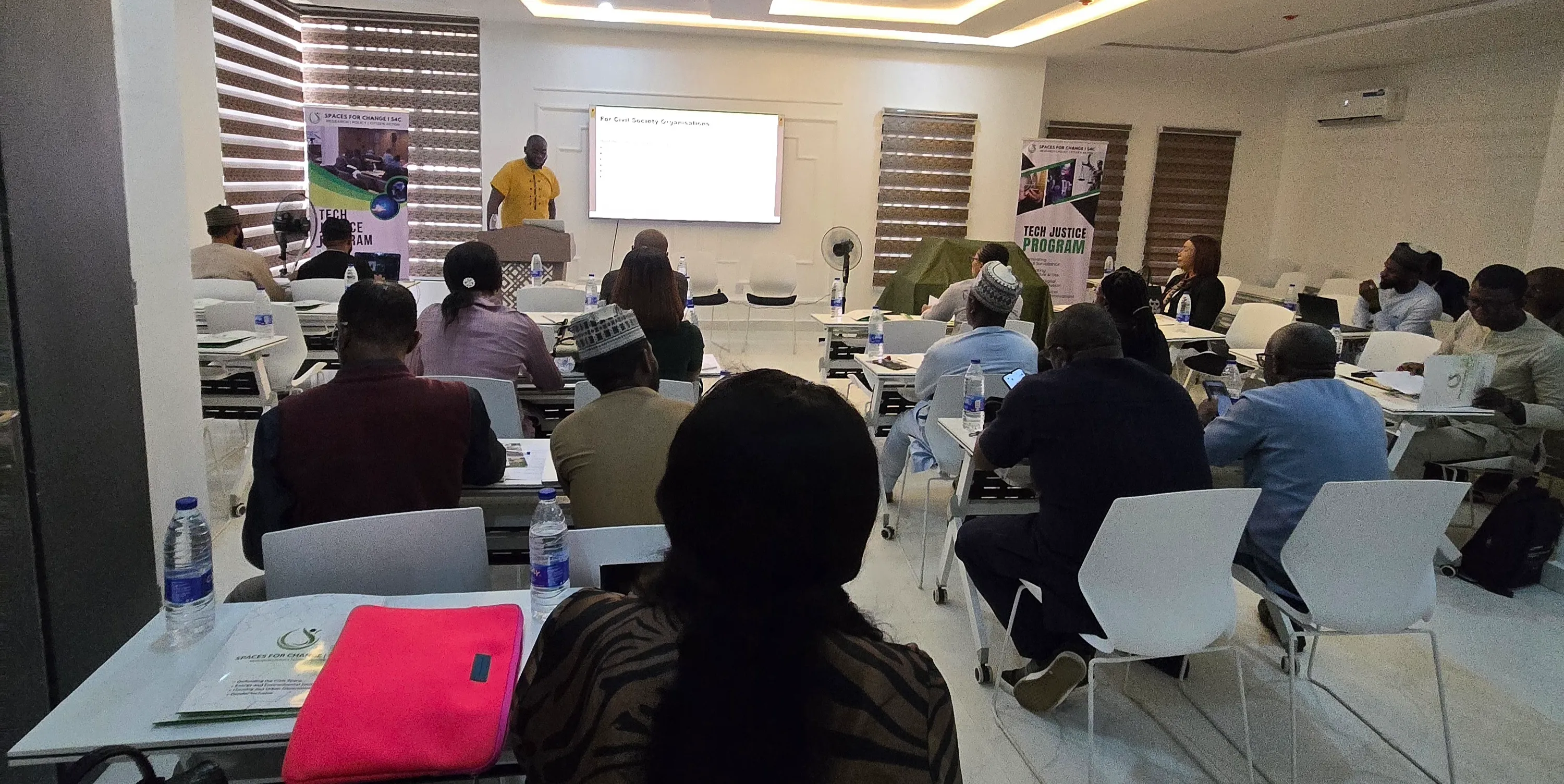
 Spaces for Change | S4C and its housing rights partner, Communities Alliance Against Displacement (CAD), convened a strategy meeting on March 24, 2026, to develop the workplan for 2026, towards enhancing the effectiveness of their joint campaigns against forced eviction and displacement affecting vulnerable and marginalized communities in cities across Nigeria.
Communities Alliance Against Displacement [CAD] is a loose network of over 50 informal communities working together to resist forced evictions and mass displacements in Nigeria while advocating strongly for land and housing rights protections for the urban poor. For over 10 years, CAD has increased the agency of slum and informal communities to push back against overbearing urban development programs that force the urban poor out of their homes and violate their property rights. Through CAD’s legal empowerment, sensitization, public interest litigation, media campaigns, community mobilization, and inter-community alliances, affected communities are finding their voice, demanding accountability for unlawful evictions, and increasing community participation in urban planning processes.
The strategy meeting provided an opportunity to take stock of the progress made over the last ten years, reflect on past evictions and track new communities facing evictions. Other important priorities discussed include the network’s governance architecture, operational framework, stakeholder engagement modalities and strategic partnerships necessary for achieving its goals. Strengthening the network’s operational capabilities means that community leaders must also increase their capabilities to initiate, lead and sustain campaigns in their respective communities. That led to the discussion around potential resources, initiatives and opportunities for capacity-building of local network leaders and their members.
S4C seized the opportunity to share its 2025-2030 strategic plan, and the broader goals around strengthening campaigns against forced evictions, embedding tenure security in urban planning, and piloting innovative financing mechanisms for social housing. Working with traditional leaders, youth groups, women’s associations and networks like CAD exemplifies S4C’s broader social impact strategy, linking safety, dignity, and inclusion to civic empowerment. Setting out these long-term objectives paved the way for exploring areas of complementarity and synergy between CAD and Spaces for Change.
A detailed workplan emerged from these discussions, outlining the activities of the network for the 2026 year. Starting from collective reflections to the elaboration of ideas to the adoption of the workplan, the meeting ended on a forward-looking note, with executive members exuding shared optimism in the new phase of growth, accountability, and impact. With a strengthened structure and stronger direction, CAD is poised to improve its advocacy efforts and better serve communities facing displacement across Nigeria.