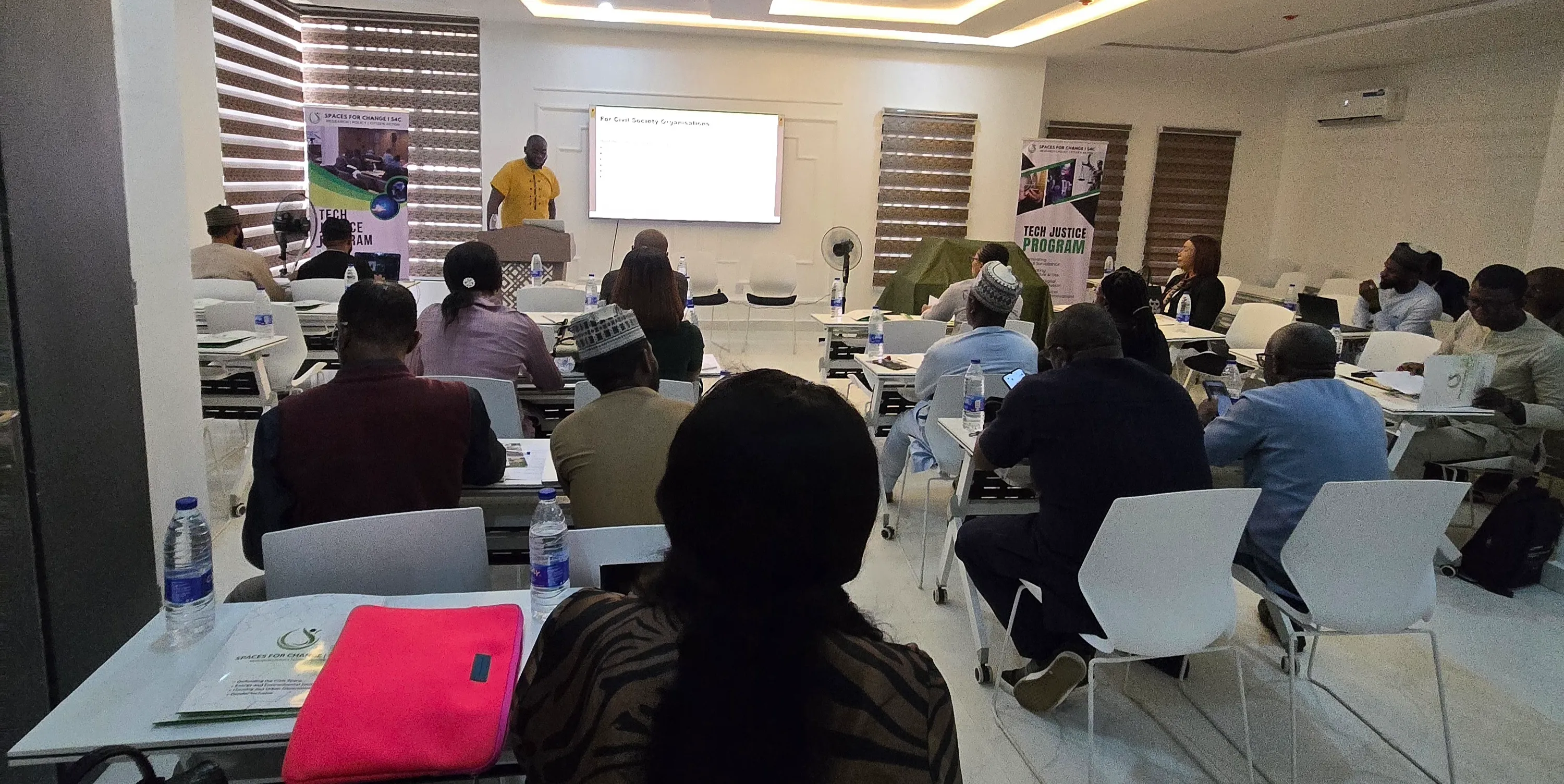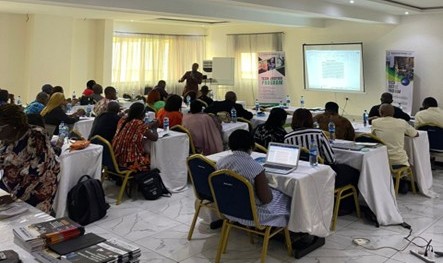
On December 3–4, 2025, Spaces for Change | S4C convened a Digital Security Clinic (DSC) in Port Harcourt, Rivers State, extending its capacity-building crusade for online safety to civic actors in Nigeria’s South-South region. Implemented under the Civic Space Resource Hub (CSR-Hub), with support from the Ford Foundation, the two-day Clinic brought together 47 participants from Rivers, Akwa Ibom, and Imo States. The sessions examined the deepening intersections between technology, rights, and governance, while equipping frontline civic actors with the knowledge and practical tools needed to safeguard themselves in an increasingly digitized and volatile civic space.
Participants were introduced to the CSR-Hub and the Closing Spaces Database – a data-driven platform for tracking civic restrictions, including digital closures across West Africa. These resources framed the discussions on digital human rights, national and international privacy norms, and the legal foundations that shape online freedoms in Nigeria, helping participants understand how to assert their rights and recognize unlawful digital interference.
Across various sessions, facilitators examined the evolving risks that journalists face from state actors, political groups, online mobs, and private interests. The session broke down how to classify threats, secure communication channels, safeguard sources, and navigate the heightened disinformation ecosystem that increasingly shapes civic life. Closely linked to these concerns was the growing proliferation of surveillance technologies in Nigeria. Drawing on S4C’s reports on digital authoritarianism and dual-use surveillance tools, participants unpacked the expanding roles of telecom operators, ISPs, private vendors, and financial technology platforms in enabling intrusive monitoring. The discussion highlighted how these technologies affect free expression, association, and the broader democratic landscape, while also identifying advocacy pathways for challenging opaque and rights-eroding surveillance practices.
The training further examined legal remedies for digital rights and privacy violations, drawing on judicial precedents from across West Africa. Participants learned how courts have been used to challenge unlawful data access, arbitrary arrests tied to online expression, and intrusive surveillance orders, while also discussing the practical limitations of enforcement in politically constrained environments.
Additional sessions addressed whistleblowing protocols, digital safety through a gendered lens, and practical cybersecurity strategies. Facilitators walked participants through concrete steps for securing devices, adopting stronger authentication practices, reducing exposure to phishing attacks, hardening organizational systems, and maintaining safe digital habits. These modules demystified technical concepts and connected them directly to the lived experiences of civic actors who routinely contend with online risks. Participants also explored digital tools for advocacy, including secure communication platforms, storytelling tools, and methods for strengthening online campaigns. Discussions on data protection roles and responsibilities underscored the importance of organizational structures that support ethical data handling and compliance.
Across the two days, the Clinic catalyzed significant reflection on the challenges facing civil society in the South-South region. One participant noted that the training arrived at a critical moment, given the rise in misinformation, cybercrime, and regulatory crackdowns on online speech. He emphasized that many CSOs depend heavily on digital platforms for outreach and mobilization, making it essential for staff to understand how to secure their data and guard against cyberattacks. “With the increase in fake information, cybercrime, and clampdowns in the name of hate speech, this clinic was necessary,” he shared, adding that he planned to cascade the training to his colleagues to strengthen organizational compliance and safety.
What emerged from the Digital Security Clinic in Port Harcourt was not only new technical insights into digital hygiene, but a deeper understanding of digital security as a core component of civic engagement. Participants recognized that securing their devices, communications, and information flows is inseparable from protecting the communities they serve and the causes they represent. By linking personal safety to organizational resilience and broader struggles for civic freedoms, the Clinic underscored a fundamental truth: in today’s Nigeria, digital security is civic security!