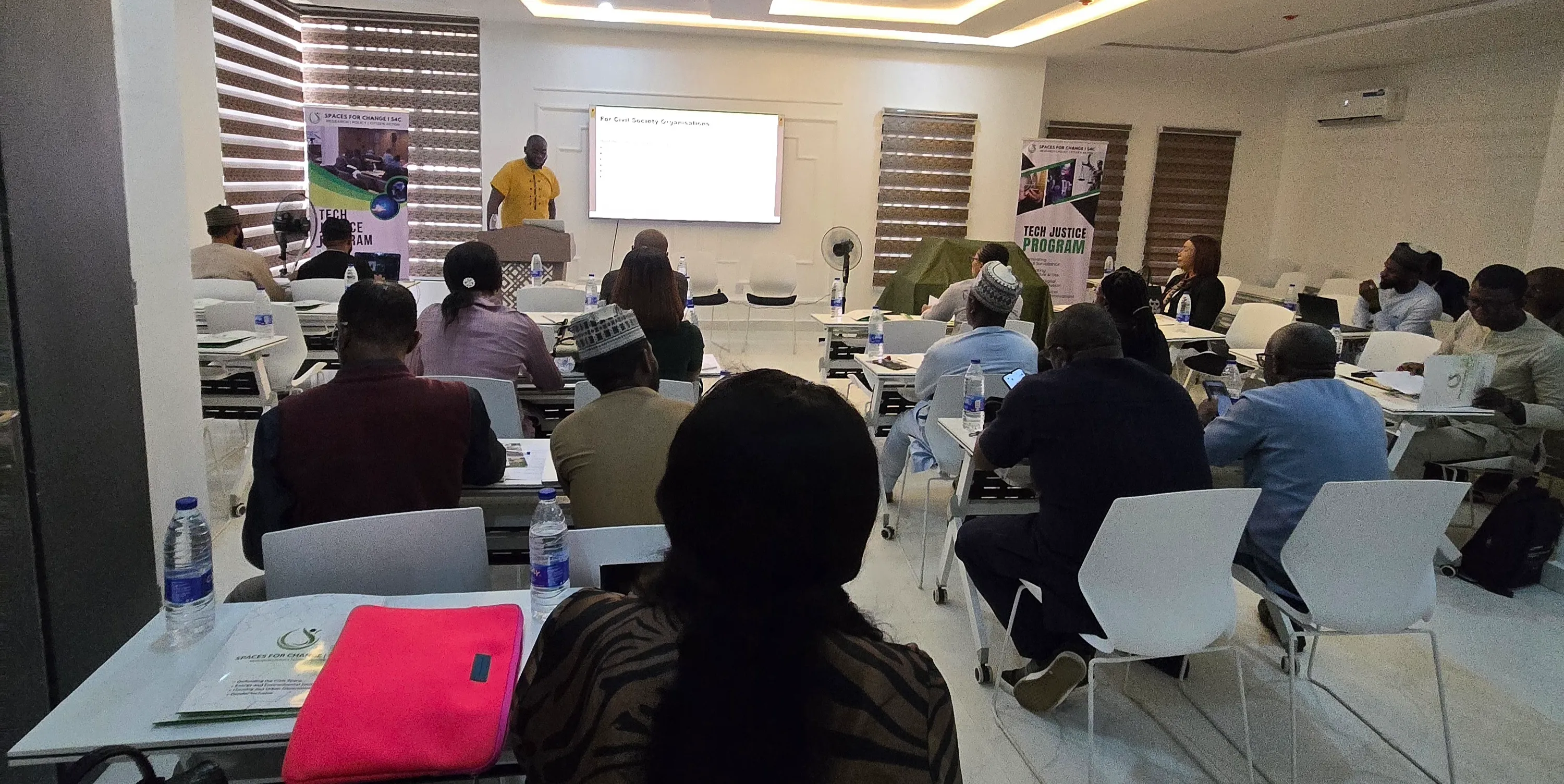
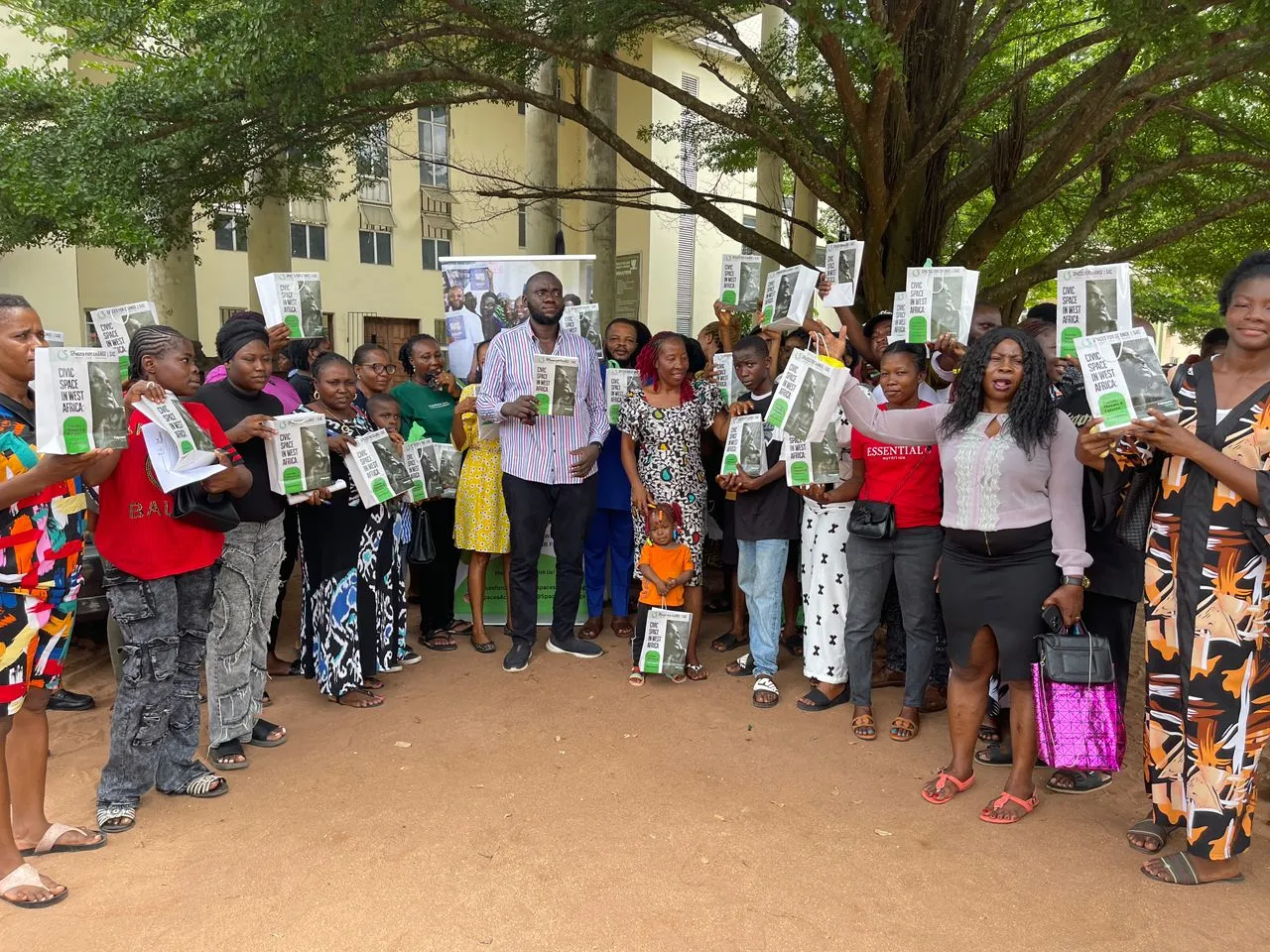
 On April 22, 2026, Spaces for Change’s | S4C’s advocacy train moved to Owerri, Imo State, where we leveraged knowledge systems and research evidence to empower young people to increase their participation in civic life. Over 100 students converged at the Imo State University (IMSU) Auditorium, Owerri, at the event, themed Youth Bulge: Moving from Risks to Opportunities. Sharing the findings of its recent report, “Civic Space in West Africa: Trends, Threats and Futures 2nd edition”, the event provided a platform to examine the accelerating deterioration of civic space across West Africa, with a particular focus on the role of digital technology and the growing youth population in shaping the region’s civic future.
Starting with the key findings of the recent research report, the presentation began with a comparative overview of the two editions, highlighting how the civic space has deteriorated since the first edition was published in 2023. While the first edition documented 639 civic space incidents across 16 West African countries over six years, a pattern the report described as a democratic recession, the second edition documented 801 incidents in just two and a half years, surpassing the entire previous period by 26% and at a significantly faster rate. Nigeria accounted for 332 of those incidents, representing 41% of the total. The presentation established that the five structural drivers identified in the first edition, military coups, flawed elections, insecurity, digital technology, and the youth bulge had not only persisted but intensified, directly accounting for 722 of the 801 cases documented.
Particular emphasis was placed on the report’s two most audience-relevant findings: the weaponisation of digital technology and the civic implications of West Africa’s growing youth population. On digital technology, the presentation walked participants through the dual role that connectivity now plays in the region. Social media platforms powered significant civic movements during the reporting period including Nigeria’s #EndBadGovernance, Ghana’s #FixTheCountry, and Senegal’s #FreeSenegal demonstrating the organising power available to digitally connected young people. However, the same infrastructure has been systematically weaponised by governments to suppress the very participation it enabled. The report tracked 77 incidents of digital repression across the 16 countries, including nationwide internet shutdowns, social media bans, and the deployment of commercial spyware.
Participants also learned about the mechanics of tools like Pegasus spyware, software capable of infiltrating a device without any user interaction, accessing messages, activating cameras and microphones, and tracking location in real time and the implications of cybercrime laws in Nigeria, Niger, and Mauritania that have been selectively applied to silence bloggers, journalists, and critics. The presentation made clear that digital security is not a concern limited to activists and journalists but is relevant to any young person who participates in civic life online.
On the youth bulge, the presentation drew a direct line between demographic reality and civic risk. With 70% of Nigeria’s population under 35 and West Africa’s total population projected to double to 700 million by 2050, the region’s youth population represents both its greatest democratic asset and one of its most significant pressure points. The report documents how young people have channeled this demographic weight into civic action, organizing movements, mobilizing voters, and holding governments accountable in real time. But it also documents the severe repressive response those efforts have attracted: 1,154 arrests during Nigeria’s August 2024 protests, minors charged with treason, court-sanctioned protest bans, and internet shutdowns timed specifically to disrupt youth-led mobilisation. The presentation also raised the radicalization risk embedded in the youth bulge, that a large population of young people excluded from economic opportunity and political participation becomes vulnerable to recruitment by extremist organisations, a pattern already visible across the Sahel.
The findings resonated strongly with participants. Engagement was particularly active around the tension between opportunity and risk in the growing youth population, with participants reflecting on what meaningful civic participation looks like for young people in an environment where organizing, protesting, and even posting online carries documented legal and physical risks.
The event concluded with a summary of the report’s six strategic recommendations, with judicial reform and anti-SLAPP legislation presented as the priority intervention, followed by digital security investment, security sector engagement, economic advocacy, cross-border collaboration, and the establishment of regional resilience funds. Participants were directed to the full report and the Closing Spaces Database at closingspaces.org as resources for further engagement.
By bringing the report’s findings directly to a university audience, the event extended S4C’s civic space advocacy into an academic environment and introduced a new generation of young Nigerians to the evidence base behind the region’s deteriorating civic conditions. For many participants, the session represented a first encounter with the concepts of digital surveillance, lawfare, and structured civic repression, equipping them with the awareness and language needed to recognise, discuss, and respond to the shrinking of civic space in their own communities. The event reinforced S4C’s commitment to making research accessible beyond policy circles and to engaging young people as informed actors in the civic space conversation.