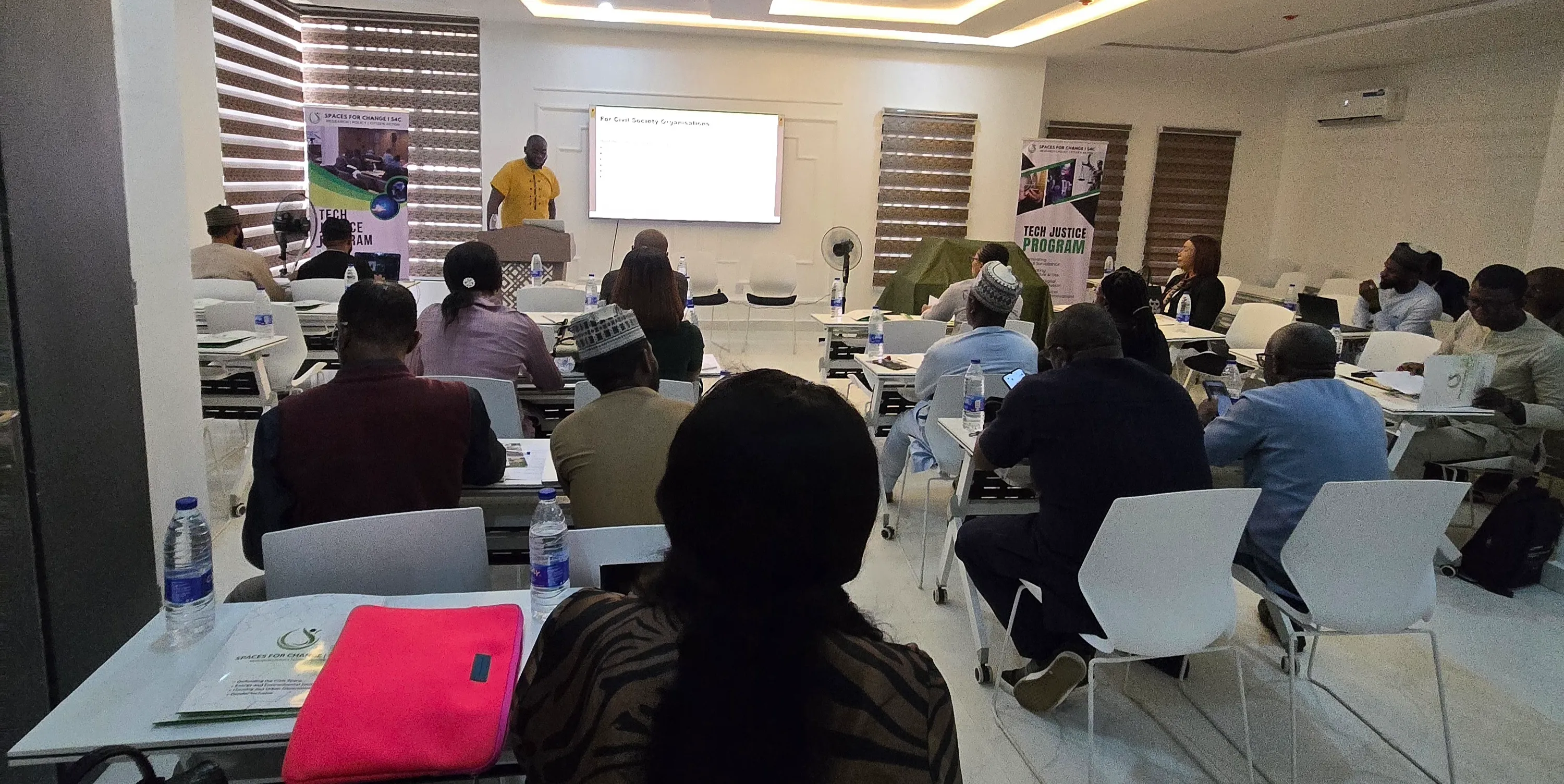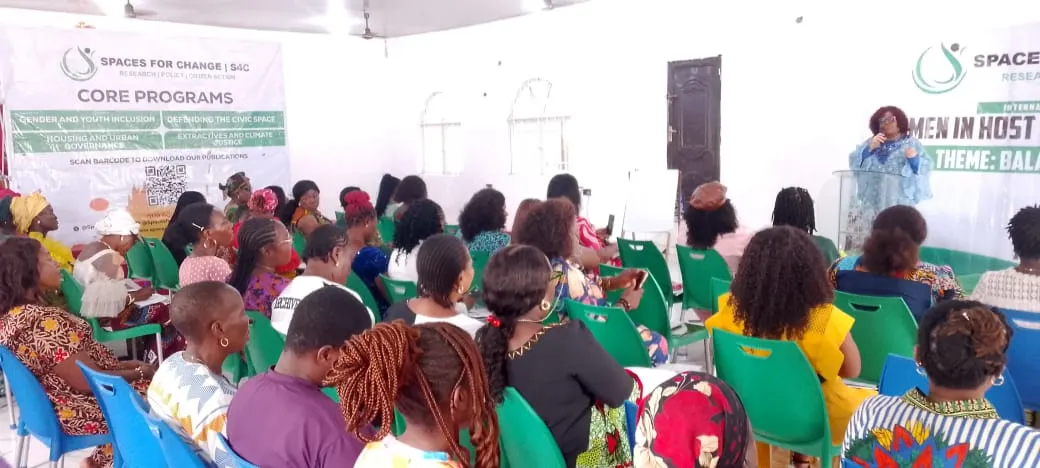
March is women’s month all over the world. Joining lovers of gender justice all over the world in commemorating International Women’s Day 2026, Spaces for Change | S4C convened the Women in Host Communities’ Forum in Amassoma, Bayelsa State, on March 10, 2026, bringing together women and girls from extractive communities across the Niger Delta. Convened under the auspices of the Centering Gender in Extractives Justice (CGE) Project, supported by the Ford Foundation’s Natural Resource and Climate Change (NRCC) program, the forum created a critical platform for reflection, exchange, and proposing shared solutions to problems affecting women living in Nigeria’s resource-rich communities.
From the outset, a clear consensus emerged that gender inequality in extractive communities is neither incidental nor isolated, but deeply embedded within social, economic, and institutional arrangements that continue to shape access to power, opportunity, and voice. The participants weren’t just women. They were also leaders of Host Community Development Trusts (HCDTs), grassroots networks, youth groups, and civil society and market associations. Looking back at their background and contexts, they shared experiences that revealed the layered pressures confronting women and girls. These reflections traced the intersections of economic hardship, environmental degradation, and restrictive social norms, illustrating how exclusion limits access to education, constrains leadership pathways, and shapes everyday outcomes. Yet, even within these constraints, women’s roles in sustaining households, communities, and local economies remain both visible and indispensable. These unsavoury reflections deepened their resolve to interrogate the structural conditions limiting women’s participation in community governance and to advance more inclusive, accountable systems of leadership.
How then can equality provisions espoused in the rule books transform into concrete legal protections for women and girls in extractive contexts? Participants examined existing legal and policy frameworks, evaluating both their promise and their limitations. While these frameworks establish important guarantees, the gap between formal provisions and lived realities remains a central concern, sustained by limited awareness, weak enforcement, and the enduring influence of harmful norms.
Attention then turned to the heightened vulnerabilities faced by girls in extractive communities. Participants explored how economic instability, environmental impacts such as pollution and gas flaring, and fragile social protection systems combine to increase risks, including school dropout, early pregnancy, and gender-based violence. These challenges were understood not as isolated incidents, but as outcomes of broader structural conditions requiring coordinated, sustained, and context-specific responses.
During the breakout sessions, emphasis shifted from reflection to action. Participants collectively identified barriers to women’s participation in decision-making and developed practical, community-driven strategies to address them. Some strategies discussed include expanding access to leadership and economic opportunities, deepening legal awareness, and engaging traditional and community institutions as critical partners in advancing inclusive governance. What came out clearly from the deliberations was that progress is not constrained by the absence of frameworks, but by the persistence of systems that determine whose voices are heard, whose interests are prioritized, and whose futures are deferred. Advancing equity requires more than participation; it demands a deliberate restructuring of decision-making processes to ensure they are inclusive, representative, and accountable.
As the forum drew to a close, participants committed to taking steps to expand women’s representation in governance structures, strengthening legal protections for women and girls, and challenging the norms and systems that continue to limit both. What emerged was a shared recognition that meaningful transformation in extractive communities will not occur by chance; it must be intentional, sustained, and collectively driven.
The convening closed on a note that captured both the spirit and significance of the gathering. As participants prepared to depart, a chant for unity, “Women Oye!”, echoed across the room, reflecting a shared sense of purpose and resilience. “Women Oye!” also symbolizes voices rising with greater clarity, spaces being claimed with greater confidence, and a movement steadily advancing towards more just, inclusive, and accountable systems of community governance.