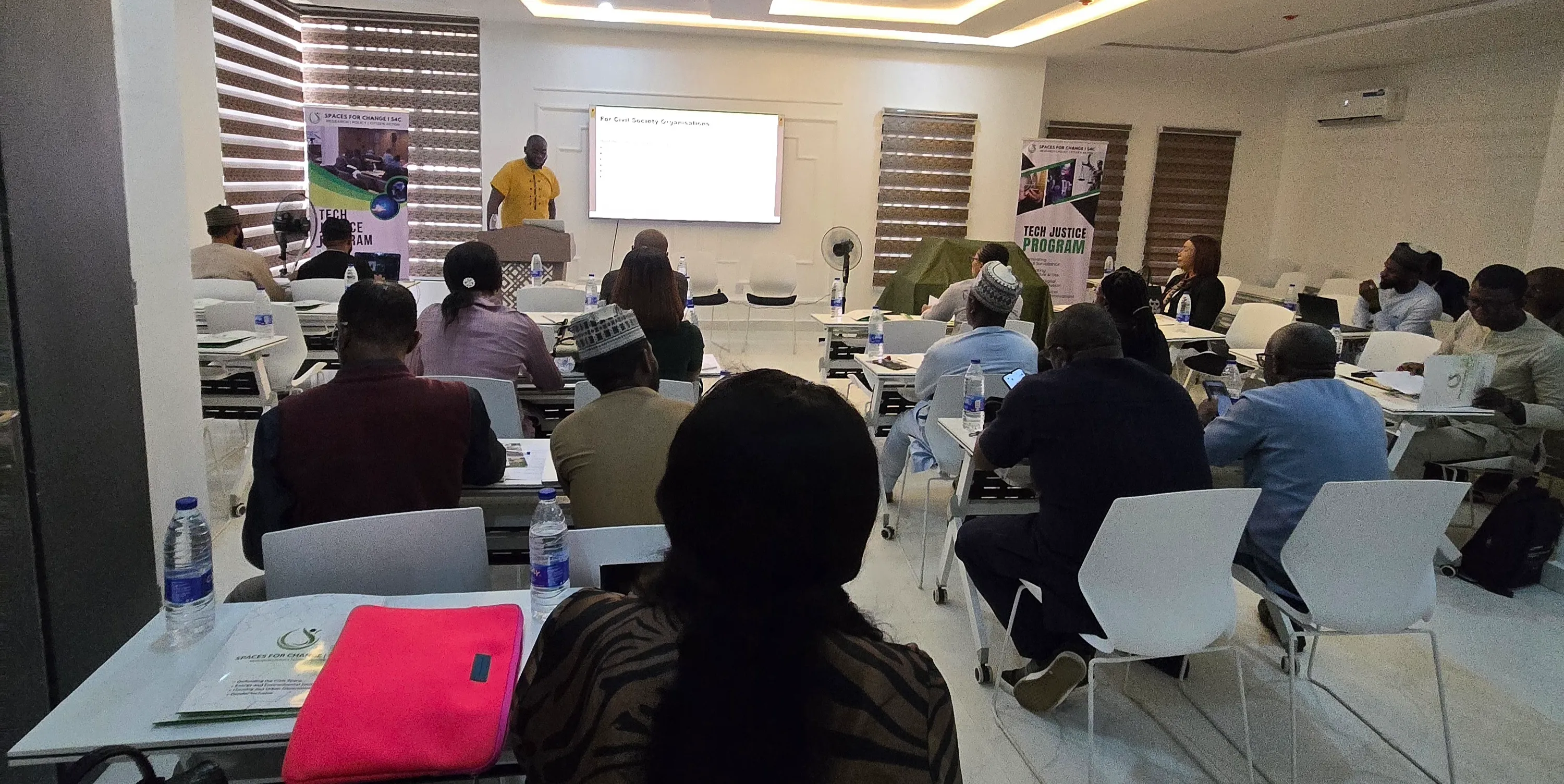
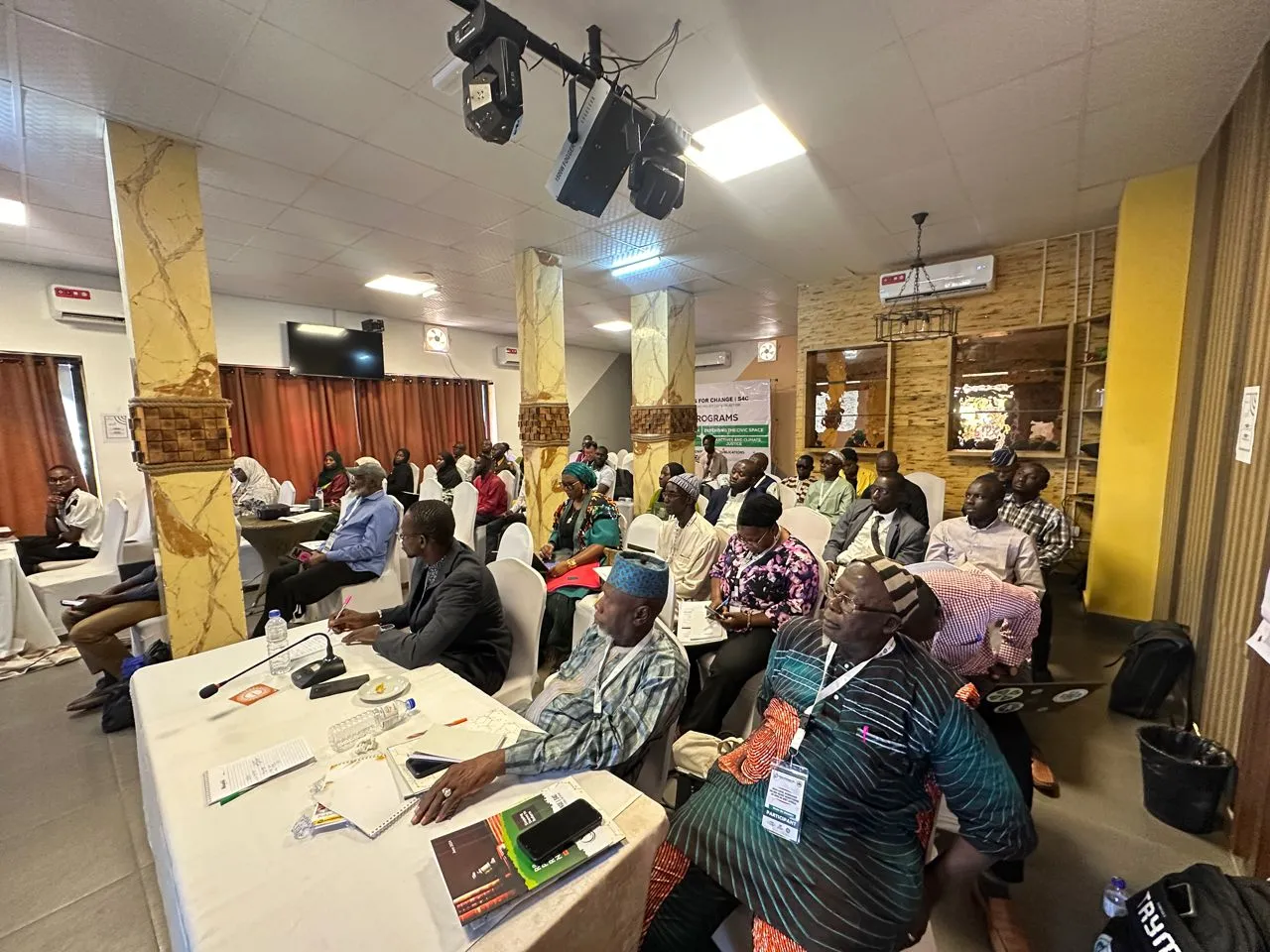
 On 27 November 2025, Spaces for Change | S4C provided technical support at a two-day high-level workshop on risk-based monitoring of non-profit organizations (NPOs) in The Gambia convened by the NGO Affairs Agency (NGOAA). Fifty representatives of government regulatory bodies, the Financial Intelligence Unit (FIU), security and law enforcement agencies, development partners, and a cross-section of NPOs from across The Gambia attended the workshop aimed at building the capacity of national authorities to protect non-profits from terrorism financing abuse using a risk-based approach consistent with the revised Financial Action Task Force (FATF) Recommendation 8 (R8). Leveraging best practices from countries like Nigeria with a “fully compliant” rating on FATF R8, the workshop examined “what has worked” and “what didn’t work”, exploring how similar strategies can be adapted to The Gambian context.
The FATF Recommendation 8 encourages countries to identify the subset of NPOs that are at risk of terrorist financing abuse and apply focused, proportionate measures to address those risks. Sessions offered deep insights into the definitions, concepts and typologies of money laundering and terrorism financing (ML/TF); the national framework and mechanisms for NPO regulation in The Gambia; the country’s risk assessment and mitigation architecture as well as the strengths and gaps within. Discussions ensued regarding the plethora of national and international legal frameworks—coupled with institutional arrangements—aimed at countering terrorism and terrorism financing at the national, regional and global levels.
As terrorism spreads, identifying a country’s risk exposure is important. Countries often use a national risk assessment (NRA) to understand their specific risks and vulnerabilities across sectors. Experts elucidated the legal and operational foundations underpinning FATF Recommendations 1 and 8, emphasizing the various methodologies and approaches for identifying “at-risk” NPOs, and global trends in vulnerabilities within the NPO sector. They also shared experiences from Nigeria regarding sectoral and entity risk assessments and the development of countermeasures that do not disrupt legitimate charitable activities.
Between 2017 and 2019, the Gambian government conducted its first National Risk Assessment and is currently reviewing the assessment in line with the revised FATF Recommendation 8, incorporating learnings from Nigeria’s NPO Terrorism Financing Risk Assessment (TFRA) process of 2022. Along this line, Gambian authorities acknowledged the timely intervention of Spaces for Change in the ongoing sectoral TF risk assessment process, including organizing a dedicated Learning and Practice Workshop (LPW) for government agencies such as the FIU, central bank, tax authorities, financial institutions, customs, immigration, etc., and several other virtual technical sessions.
Among other key findings, The Gambia’s initial terrorism financing risk assessment of the NPO sector revealed that a small portion of NPOs pose moderate to high-risks due to geographic exposure, cross-border operations, or cash-intensive activities, as well as prevailing capacity gaps in governance, financial management, sanctions screening, and due diligence processes. So, how can national authorities develop proportionate risk mitigation frameworks and measures for low-risk and high-risk NPO? Likewise, what does Gambia need to do in order to attain a COMPLIANT rating on FATF Recommendation 8? Where countries identify lower risks, they should allow and encourage simplified measures as appropriate. Experts emphasized the importance of applying a focused, proportionate, and risk-based approach without unduly disrupting the activities of legitimate NPOs. They provided practical templates and guidance for developing and applying simplified measures for sectors assessed to be of low-risk, as well as enhanced monitoring approaches targeted at at-risk NPOs.
Presentations over the two days sparked several debates regarding the external and internal factors shaping the regulatory landscape for civil society in The Gambia. Participants reflected on the extent shrinking foreign aid can make terrorist donations attractive to non-profits. The second issue centered on whether disproportionate and punitive measures developed after risk assessments actually dissuades bad behaviour and abuse of the sector. Finally, impediments to effective oversight of the sector stems from insufficient data, particularly data on beneficial owners’ information, the funding sources and the nature of NPOs activities, coupled with limited knowledge on the effective implementation of the FATF Recommendation 8.
As the workshop concluded, NPO regulators noted that their understanding of the FATF R8 has improved considerably, having gained practical insights into how to effectively apply a risk-based approach in their oversight functions. As with the case with most meetings of this nature convened by Spaces for Change, over 80% of the participants noted that it was their first time hearing about the FATF and Recommendation 8. NPOs thanked Spaces for Change and the NGOAA for providing them a platform (the workshop) to interface directly with their regulators and address areas of regulatory uncertainty. It was noted that the training has improved their understanding of how they can mitigate ML/TF abuse and sustain a compliance culture. This 2-day high-level workshop was supported by the Charles Stewart Mott Foundation (Mott Foundation).