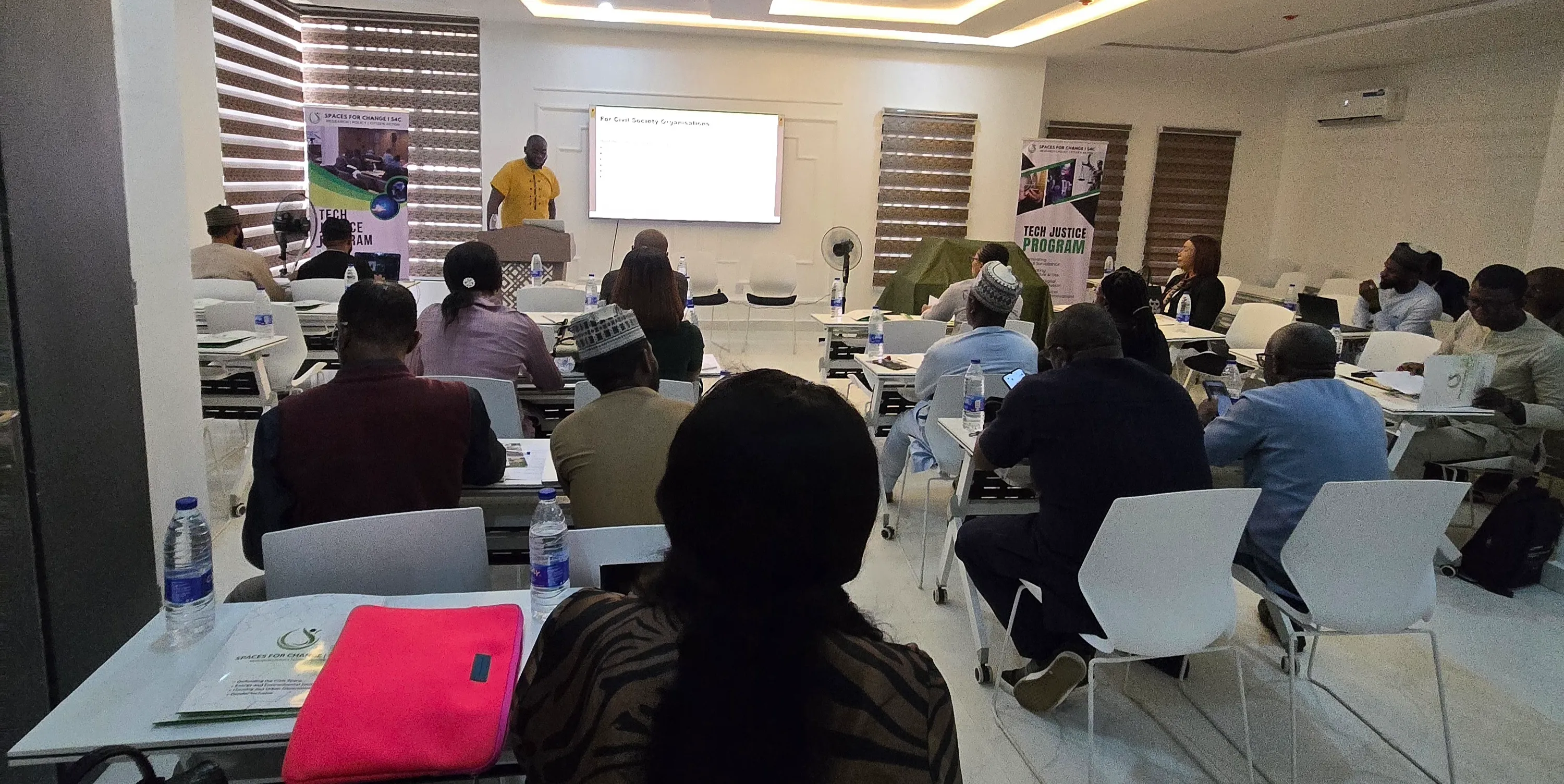
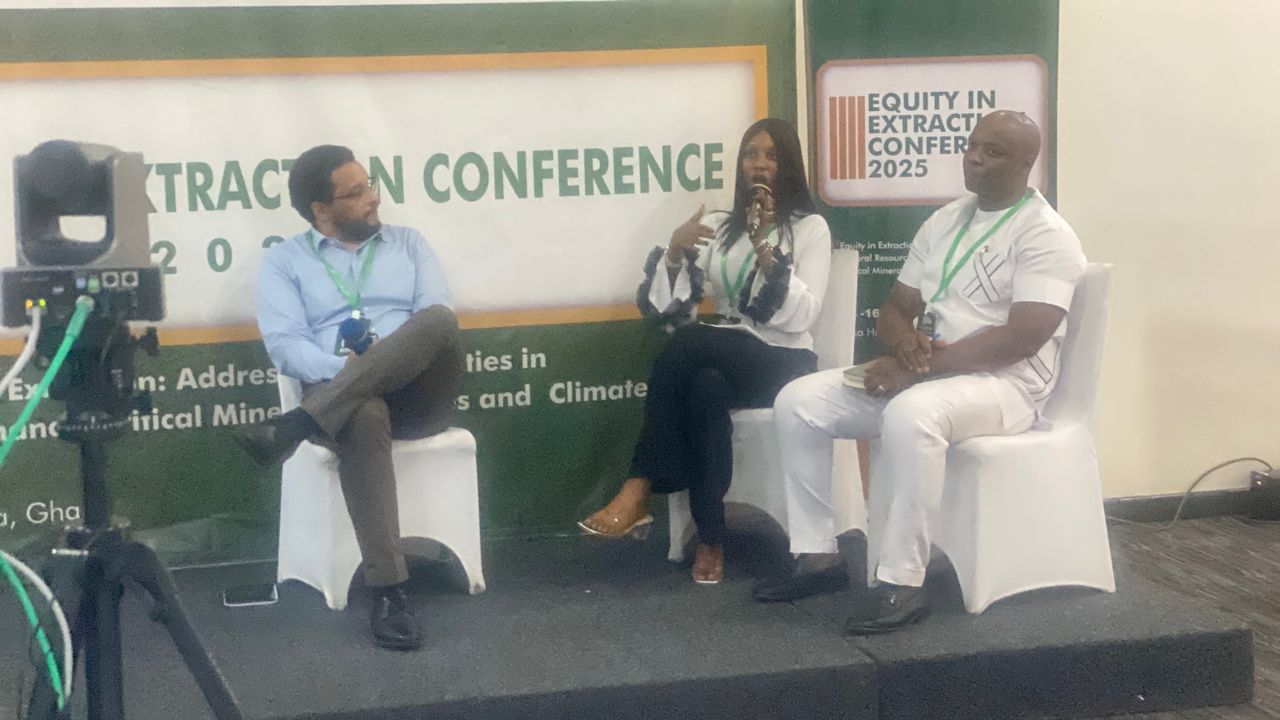
 Spaces for Change | S4C participated in the Equity in Extraction (EiE) conference held in Accra, Ghana, from October 14 to 16, 2025, joining over seventy stakeholders comprising policymakers, researchers, community leaders, trade unionists, policymakers, academics, youth advocates and civil society actors from West Africa to examine the intersections between the rush for critical minerals, climate action, and social justice. Consistent with the conference theme, “Equity in Extraction: Addressing Inequalities in Natural Resource Governance, Critical Minerals, and Climate Change,” S4C shared a case study of subnational climate policy development in Imo State, South East Nigeria, highlighting the role of state institutions in steering just and inclusive transitions in resource-rich regions.
Delivering the paper, “Governing the Shift: Lessons from Subnational Climate Policy for a Just Transition,” S4C discussed its collaborative work with the Imo State Ministry of Environment and Sanitation, demonstrating how subnational governments, civil society, and host communities can co-create equitable climate frameworks within extractive economies. The presentation unpacked the multi-phased processes that led to the development of Imo State’s draft Climate Change Policy 2025. Beginning with an inception meeting in July 2024, followed by the inauguration of the Imo State Technical Committee on Climate Change (TCCC), statewide consultations, radio engagements, and a public town hall, the process illustrated what inclusive policymaking looks like in practice. Each stage placed communities, particularly women, youth, and persons with disabilities, at the center of decision-making, ensuring that climate governance was not an elite exercise but a collaborative community project.
A central feature of S4C’s presentation was the knowledge paper, Advancing Inclusive Climate Governance in Imo State: Transforming Challenges into Opportunities. Developed in early 2025, the paper served as an evidence base for policy formulation. It documented Imo’s changing climate patterns, sectoral vulnerabilities, and community testimonies on floods, erosion, and extractive pollution, establishing a clear empirical link between environmental degradation, livelihoods, and governance gaps. The paper grounded the policy process in data and lived experiences, enabling stakeholders to design responses that reflected local priorities. This evidence-first approach distinguished Imo’s climate policy process as a model for participatory subnational governance across the region. As evidence from Imo State shows, subnational governance is no longer peripheral to Africa’s energy transition; it is, in fact, the frontier. While national frameworks such as Nigeria’s Climate Change Act and Energy Transition Plan set the tone, it is at the state and community levels that implementation, accountability, and equity truly take shape.
Beyond the loud ovation, the presentation elicited reactions from several delegates. Acknowledging the huge disconnect that exists between elite-led policy processes and grassroots realities, many described Imo State’s participatory approach as both inspiring and instructive best practice that should be replicated across the continent. Stakeholders commended S4C for “walking the talk” by demonstrating how civil society can facilitate community inclusion in climate policy design. Not only that, anchoring climate policy advocacy on home-grown research and evidence reinforces credibility while building local confidence in policymaking. Other presentations and discussions at the Equity in Extraction conference reaffirmed that durable climate solutions in Africa’s extractive regions must rise from the ground up. There was consensus among delegates that Africa’s energy transition should not replicate the inequities of its extractive past.