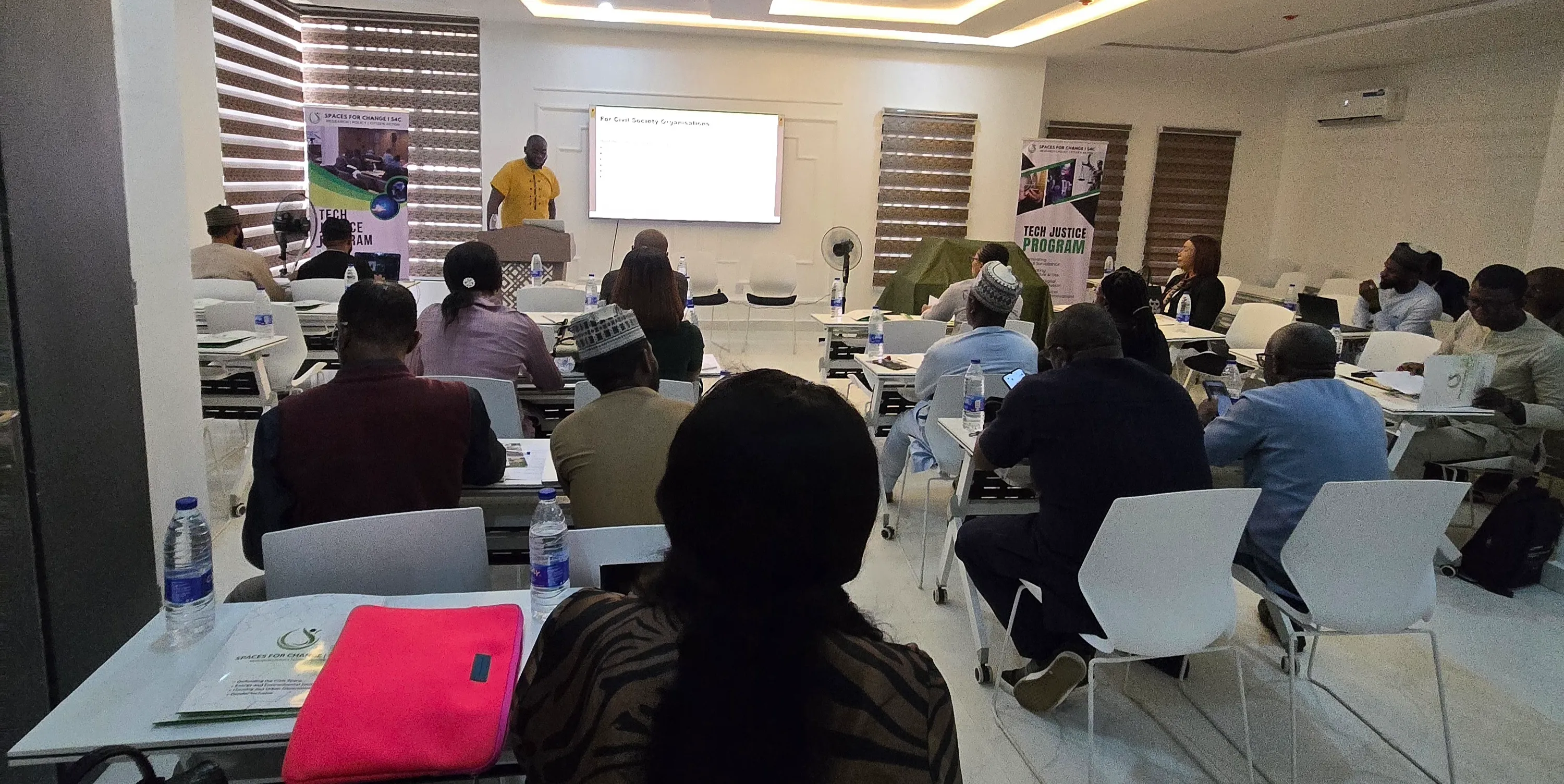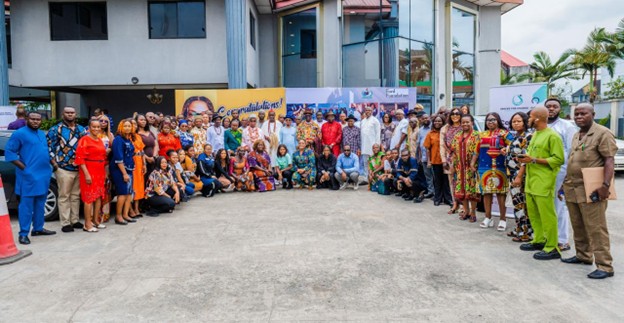
On December 3, 2025, Spaces for Change | S4C and fellow grantees of the Ford Foundation’s Natural Resource and Climate Justice (NRCJ) program in Nigeria convened the Host Communities’ Appreciation Day to mark sixty-five years of the Ford Foundation’s support for social justice, transparency, accountability, and building community power in Nigeria’s extractive regions. The gathering brought together over 150 host community representatives from both solid mineral-rich regions and the oil- and gas-producing areas across the Niger Delta, including government officials, regulators, women leaders, youth advocates, persons with disabilities, and traditional institutions. Participants came together to reflect on how Ford Foundation’s sustained support over the years has reshaped community agency, strengthened advocacy, spurred legal reforms, and enabled communities to assert their rights in spaces that have historically excluded them.
Opening reflections from all the Ford Foundation grantees–Spaces for Change, Kebetkache Women, Accountability Lab, Global Rights, BUDGIT, SERAP and Stakeholder Democracy Network (SDN)–emphasized that the significance of the anniversary lay not in commemoration alone, but in the opportunity to speak openly about how access to information, legal literacy, and sustained accompaniment have transformed the ways communities engage oil companies, regulators, and government institutions. Community representatives spoke candidly about the realities of exclusion that continue to shape everyday life in extractive communities and the years of environmental degradation, delayed remediation, loss of livelihoods, and governance arrangements that sidelined women, youth, and persons with disabilities. At the same time, they described how targeted capacity building and community sensitization have shifted internal dynamics, opening leadership spaces, strengthening collective decision-making, and enabling communities to challenge practices that once went unquestioned. These reflections reinforced a shared understanding: accountability becomes meaningful only when communities are equipped to demand it.
Gender equality, disability rights, and social inclusion emerged as recurring themes across community accounts. Participants reflected on how women and persons with disabilities, previously absent from community deliberations, are increasingly participating in development planning, remediation processes, and leadership structures. These changes were understood not as symbolic gains, but as practical improvements that have reshaped how priorities are identified, how benefits are distributed, and how trust is built within communities. Participants emphasized that inclusion has strengthened community cohesion and improved accountability outcomes.
Community representatives also reflected on their evolving engagement with extractive governance frameworks, particularly around transparency, consent, and benefit-sharing. Many described how the trainings they received on petroleum policy and regulatory provisions have enabled communities to interrogate projects, question opaque arrangements, and insist on processes that respect community rights. Access to information and accountability tools was consistently cited as a turning point, shifting communities from reactive responders and complainants to proactive engagement grounded in evidence and law.
Environmental justice featured prominently in community testimonies. Participants recounted how prolonged exposure to oil spills, gas flaring, and pollution have produced negative health and social consequences over generations. Reflections highlighted how sustained advocacy and engagement with regulators are improving awareness of reporting mechanisms, regulatory responsibilities, and pathways for redress. In some communities, these efforts have contributed to remediation actions, reduced harmful practices, and strengthened community monitoring of environmental impacts.
As reflections deepened, attention turned to emerging challenges linked to divestments, climate change, and energy transition pathways. Community representatives expressed concern that, without deliberate safeguards, new phases of extraction or transition risk reproducing old patterns of exclusion. They stressed the importance of ensuring that host communities are not only consulted, but actively involved in shaping decisions that affect land, livelihoods, and environmental futures. These discussions reinforced the need to connect local experiences to national and global climate and energy debates.
Across the exchanges, participants consistently returned to the importance of collective learning and solidarity. Reflections underscored how shared spaces for dialogue have helped communities recognize common struggles, exchange strategies, and build confidence to engage institutions more assertively. These interactions were described as essential in breaking isolation and reinforcing the understanding that community struggles are interconnected rather than isolated.
What emerged from the Host Communities’ Appreciation Day was not a catalogue of projects, but a set of lived accounts tracing how community power is built over time. Participants reflected on how progress, while uneven and incomplete, has been made possible through long-term partnerships that prioritize community voice, persistence, and accompaniment rather than short-term fixes. One major important lesson learned is that meaningful change in extractive governance is sustained not by policy alone, but by communities that are informed, organized, and confident in asserting their rights. In reflecting on sixty-five years of Ford Foundation support for effective resource governance in Nigeria, both Ford Foundation executive, Mr. Emmanuel Kuyole, and other host community representatives affirmed that when communities are supported to speak and act for themselves, accountability deepens, inclusion expands, and justice becomes increasingly attainable. That understanding shaped the close of the engagement, reinforcing a conviction that will endure beyond the Appreciation Day: community-led advocacy remains not just an approach, but the most credible pathway to dignity, equity, and lasting transformation in Nigeria’s extractive regions.