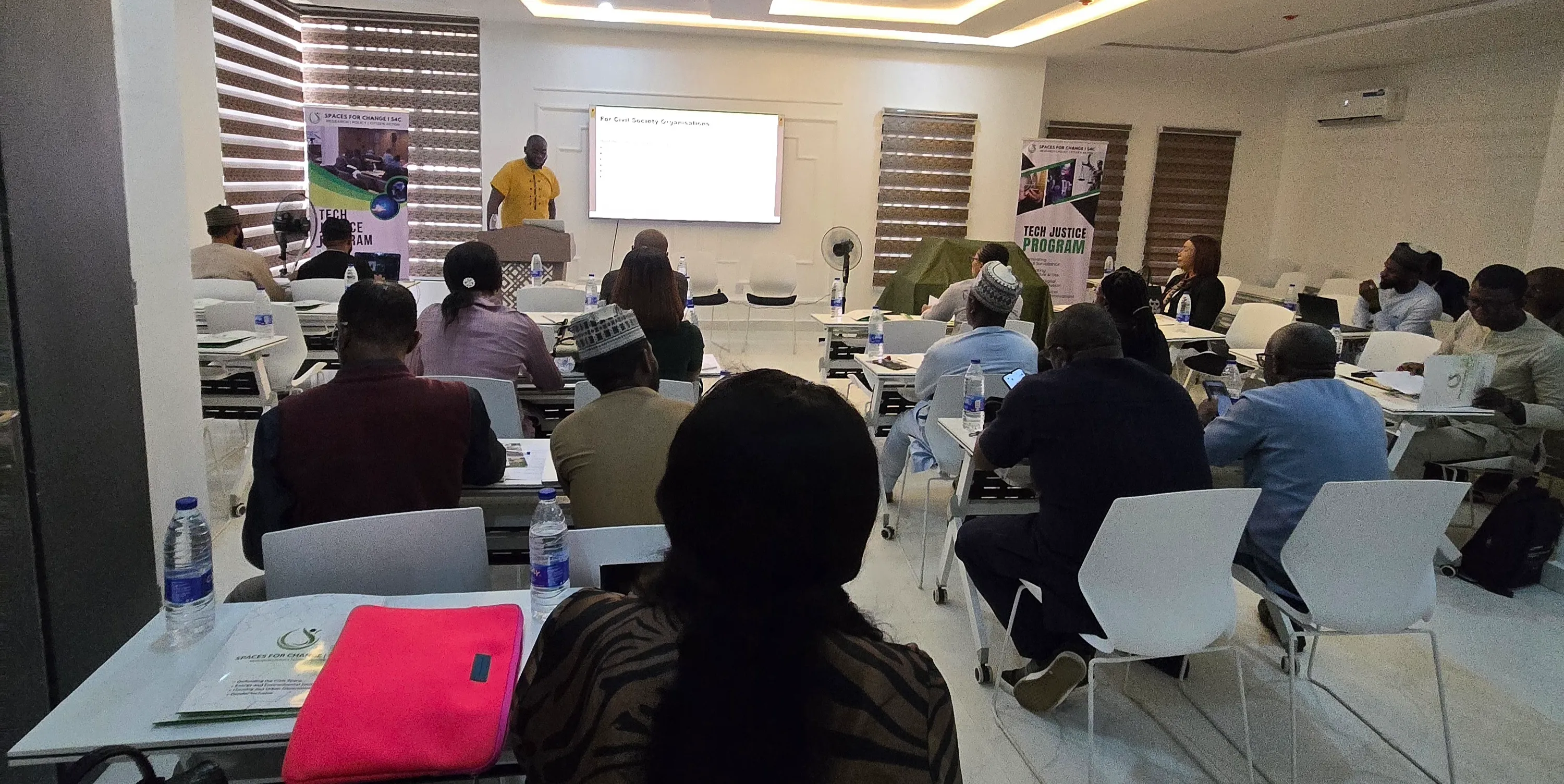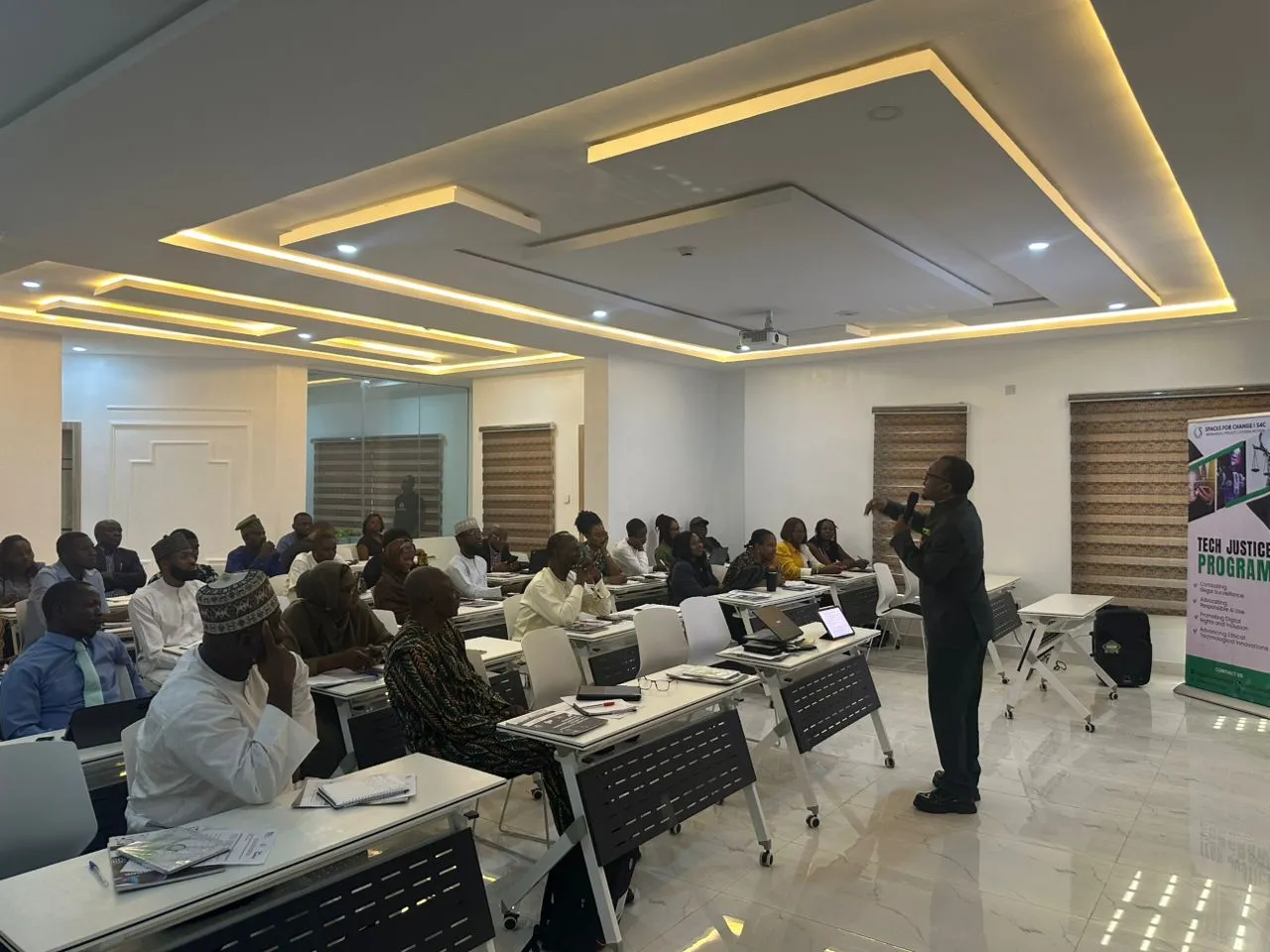
On March 4–5, 2026, Spaces for Change | S4C convened a Digital Security Clinic (DSC) in Abuja, extending its reach to civil society and media organizations in North-Central Nigeria. Delivered under the auspices of the Civic Space Resource Hub (CSR-Hub), with support from the Ford Foundation, the two-day Clinic brought together over 35 civic actors and media professionals from Kwara, Nasarawa, Benue, Plateau, and the Federal Capital Territory. The sessions examined the intersections between technology, human rights, and governance, while equipping participants with the knowledge and tools to strengthen their resilience in an increasingly digitized civic space.
From the outset, participants were introduced to the Closing Spaces Database, a platform for monitoring civic space restrictions across Nigeria and West Africa. S4C’s latest report, Civic Space: Trends, Threats and Futures , analyzes data tracked and reported on the Database. The first edition (published in 2023) analyzed incidents from May 2016 to July 2022, while the second edition examined cases between July 2022 and December 2024. The database recorded 639 incidents between 2017–2022 and 801 between 2022–2024, revealing a sustained and coordinated pattern of civic space restrictions largely driven by state authorities through legal, administrative, judicial, and coercive measures. These resources framed an intensive exploration of digital human rights, privacy frameworks, and the legal dimensions of cyber governance. Drawing on Nigeria’s constitutional protections and statutory regimes, including the Cybercrimes (Prohibition, Prevention, etc.) Act 2015 (as amended 2024) and the Nigerian Data Protection Act 2023, participants learned how to assert and defend their rights in both national and international contexts.
A dedicated session on technology-facilitated gender-based violence examined the nature, types, and risks of digital harm directed at women and marginalized groups, situating these threats within the broader landscape of online abuse and its chilling effects on civic participation. The Clinic also featured a session on investigative journalism in the digital space, which addressed the risks and responsibilities of reporting in an environment of heightened surveillance and disinformation, and offered practical guidance on classifying threats from state, media, and non-state actors alike.
Day One concluded by examining the growing proliferation of surveillance technologies in Nigeria and the expanding role of both state and private actors, including telecommunication companies, internet service providers, and FinTechs in digital monitoring and in facilitating restrictions that constrain civil society. Discussions explored the impact of these tools on free expression, assembly, and association, while surfacing practical safeguards and advocacy pathways for countering digital repression. S4C’s research, particularly, The Proliferation of Dual-Use Surveillance Technologies in Nigeria: Deployment, Risks, and Accountability, and the Security Playbook of Digital Authoritarianism in Nigeria, document how surveillance technologies and digital regulations are weaponized to shrink civic space in Nigeria.
Day Two delved deeper into whistleblowing protocols, digital safety through a gendered lens, and cybersecurity strategies for protecting devices, communications, and sensitive organizational data. These discussions reinforced the need for holistic and inclusive approaches to digital security, ones that account for the distinct vulnerabilities faced by women, journalists, and frontline activists rather than applying uniform solutions across varied contexts.
The Clinic concluded with a set of applied sessions covering data protection strategies, roles, and responsibilities; digital tools for effective advocacy; and a session on social protection and rapid response mechanisms, equipping participants to act quickly and collectively when digital rights violations occur. The programme closed with strategic communications training for CSOs, helping participants identify their target audiences, sharpen their messaging, and communicate with clarity and impact.
Across the two days, participants left with more than technical skills. What emerged was a broader shift in how they understood their work: digital security not as an afterthought, but as a core dimension of civic engagement and democratic participation. Protecting data, communications, and online presence, they recognized, is inseparable from protecting voices, movements, and communities. That reframing of digital safety as a collective responsibility ran as a thread through both days. Every journalist, activist, and civic actor walked away with a clearer sense of their own role in fortifying the civic space they share. By grounding personal protection within organizational security and linking both to wider regional struggles for rights and freedoms, the Abuja Clinic affirmed once again that digital resilience and social justice are not parallel projects, they are the same one.