 Starting from Lagos and subsequently to Imo State, Spaces for Change |S4C has now extended its WOMENPOWA program to 100+ displaced women and smallholder farmers in Daudu (Guma Local Government Area (LGA)) and Naka (Gwer West LGA) in Benue State. Implemented in partnership with the Community Alliance Against Displacement (CAD) under its public safety initiative, tagged, “Security and Rights Opportunity (SRO) Project” supported by Open Society Foundations, the WOMENPOWA scheme transcends economic empowerment, but rather, aims at helping households recover from the pains of forced displacement and violence while strengthening the community-level structures that promote safety and cohesion.
The SRO Project – implemented in Benue and Bayelsa States – aims to protect traditional livelihoods and social cohesion by giving local communities a stake in their own safety and development. As insecurity challenges continue to plague hinterlands and remote communities, the project represents a crucial step towards building citizens’ awareness, promoting civilian policing models, and strengthening community resilience and sustainability in the face of recurring security challenges. Having lost their source of livelihoods, women, men and the youth living in communities displaced by violence and conflict could turn to crime, thus exacerbating existing security challenges in their communities. S4C proceeds upon the premise that meaningfully engaging the women and the youth in productive and economically-empowering ventures is a powerful crime prevention strategy.
Generally, S4C’s WOMENPOWA initiative supports vulnerable women who have been displaced—whether by conflict, natural causes, or urban renewal—to rebuild their livelihoods and contribute to safer, more resilient communities. Extending the initiative to Benue required adapting the scheme to the local context. Most households in Daudu and Naka depend on farming, and many have lost their farmlands, tools, and harvests to repeated waves of violence. Accordingly, the WOMENPOWA initiative expanded its focus to accommodate smallholder farmers, regardless of gender, whose recovery is central to restoring community stability. By supporting both farmers and petty traders, the Benue rollout aims to reduce the economic pressures that often push vulnerable groups toward harmful coping strategies, exploitative arrangements, or unsafe survival choices.
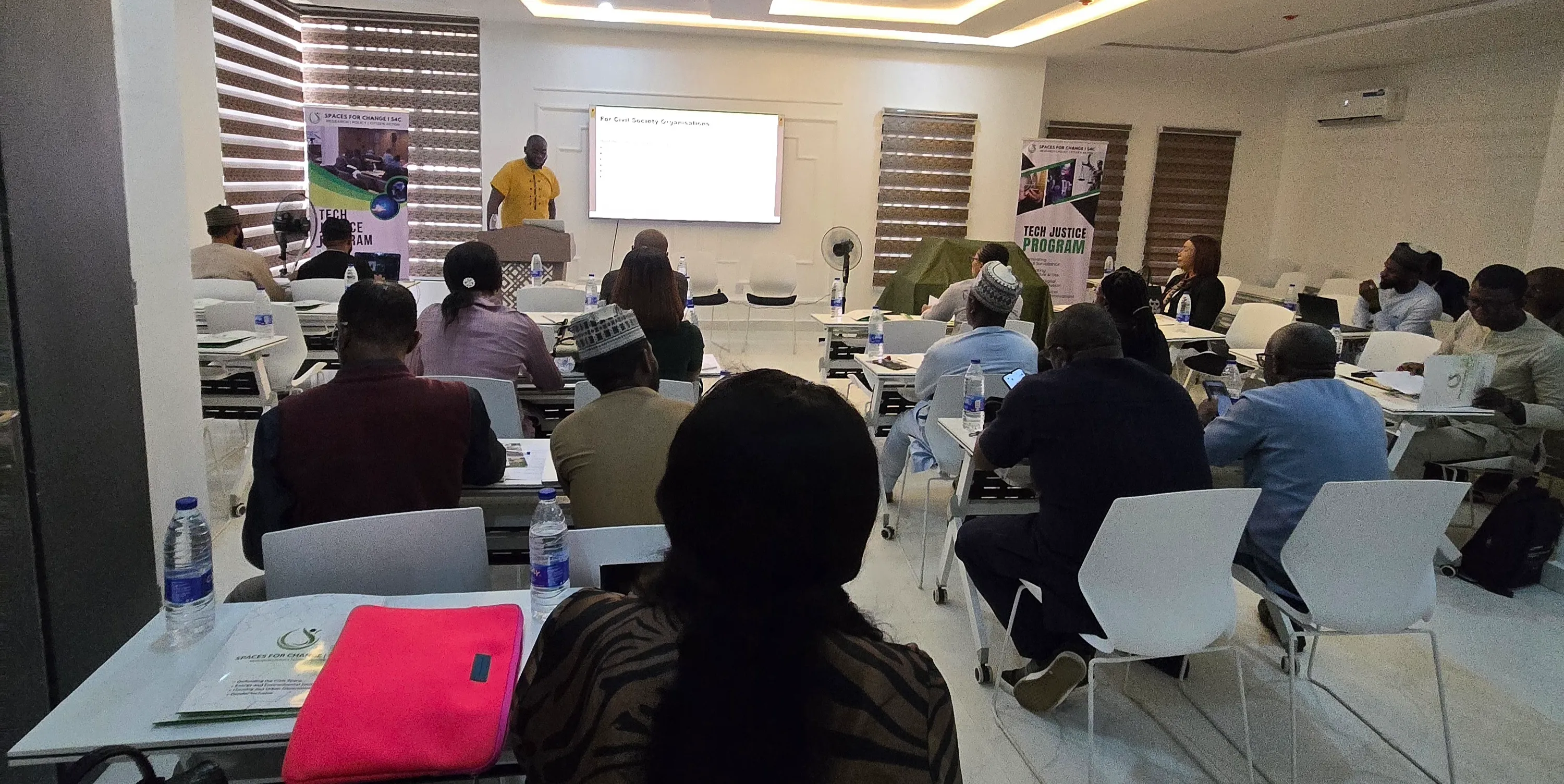
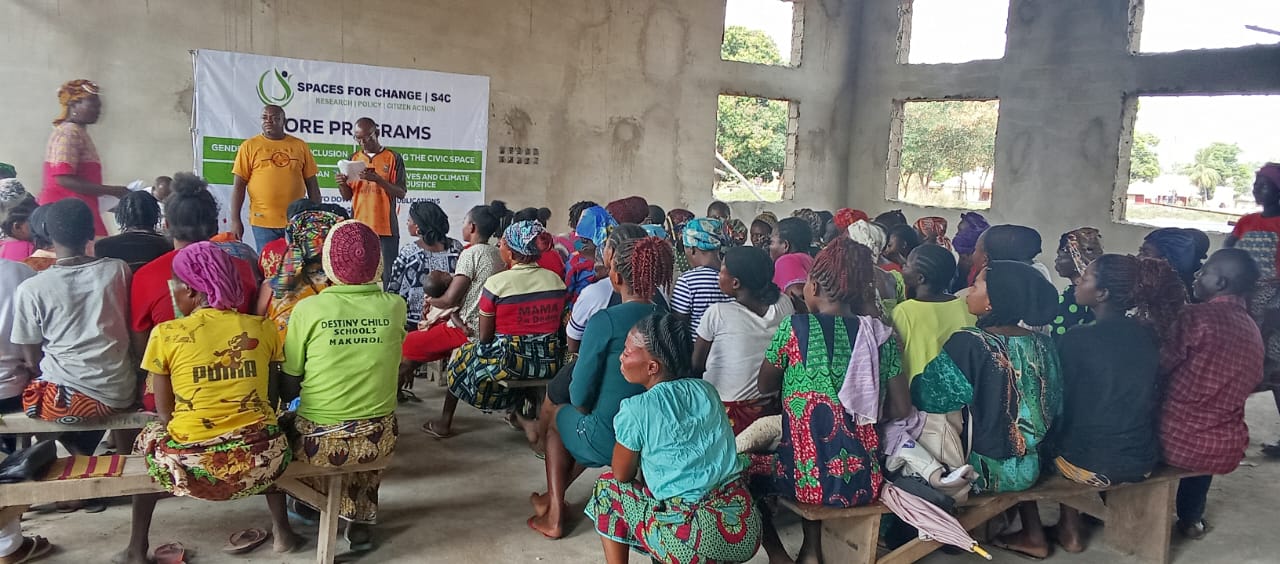
Palpable joy and excitement surged through Daudu and Naka communities as hundreds of local people converged at the village square on the disbursement day—November 28-29, 2025. The disbursement of seed capital in the form of zero-interest rotating loans to target groups is only the first step. A Fintech company present at the occasion provided basic information about financial literacy and building a credit history while encouraging the use of formal payment channels. Speaking in local languages, S4C’s legal team enlightened them about the importance of the loan scheme and timely repayment so that other women, youth and local farmers on queue can also benefit.
S4C will continue working closely with beneficiaries to help them stabilize their livelihoods in ways that strengthen community cohesion and reduce the economic pressures that often escalate tension or expose households to insecurity. The aim is not just to revive small businesses and farms, but to lessen the vulnerabilities that drive displaced people into crime and weaken community safety. As the intervention continues into 2026, S4C remains committed to supporting local protection structures, reinforcing community-led safety efforts, and helping families in Daudu and Naka build the economic stability needed for safer, more resilient communities.