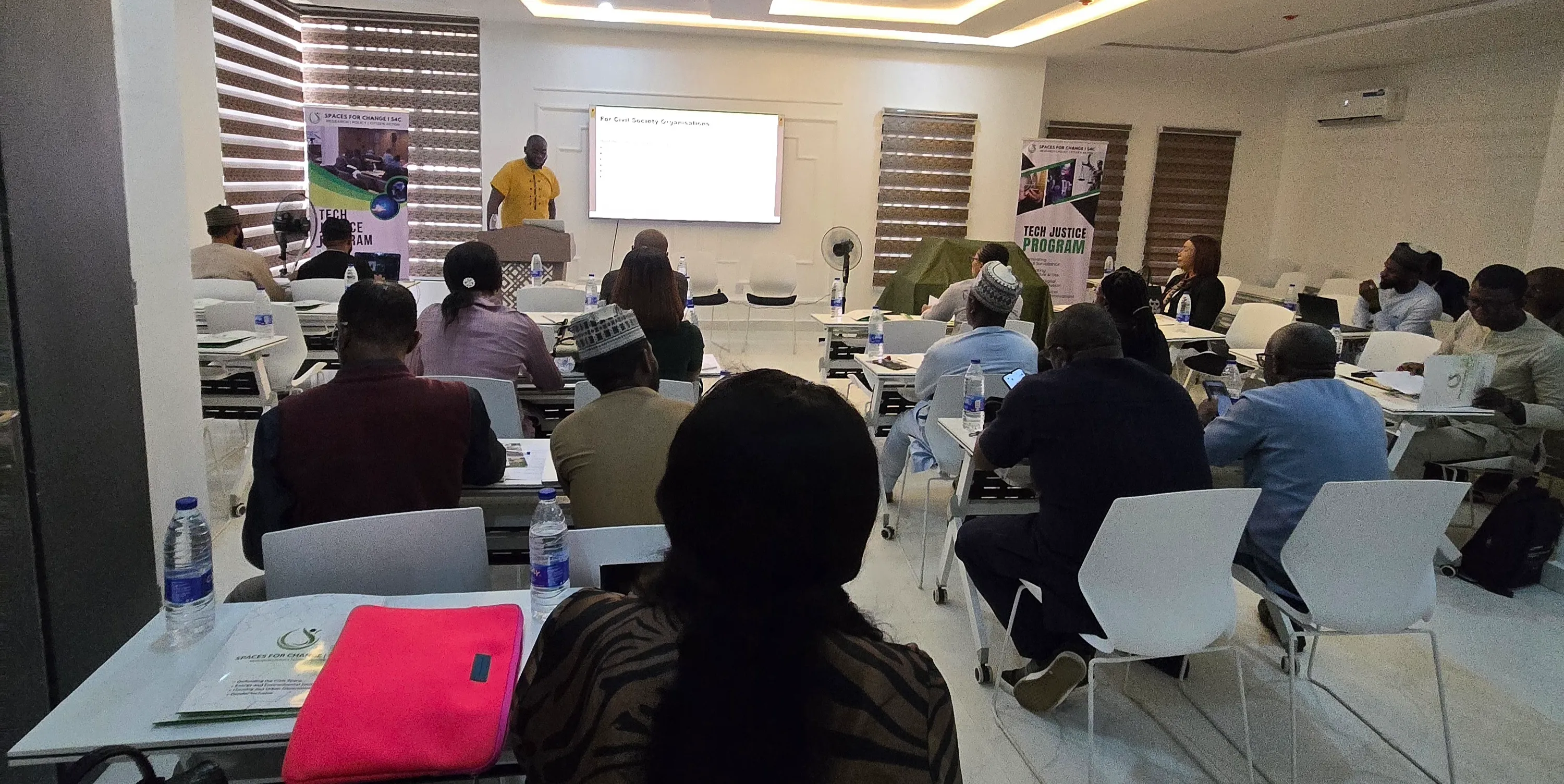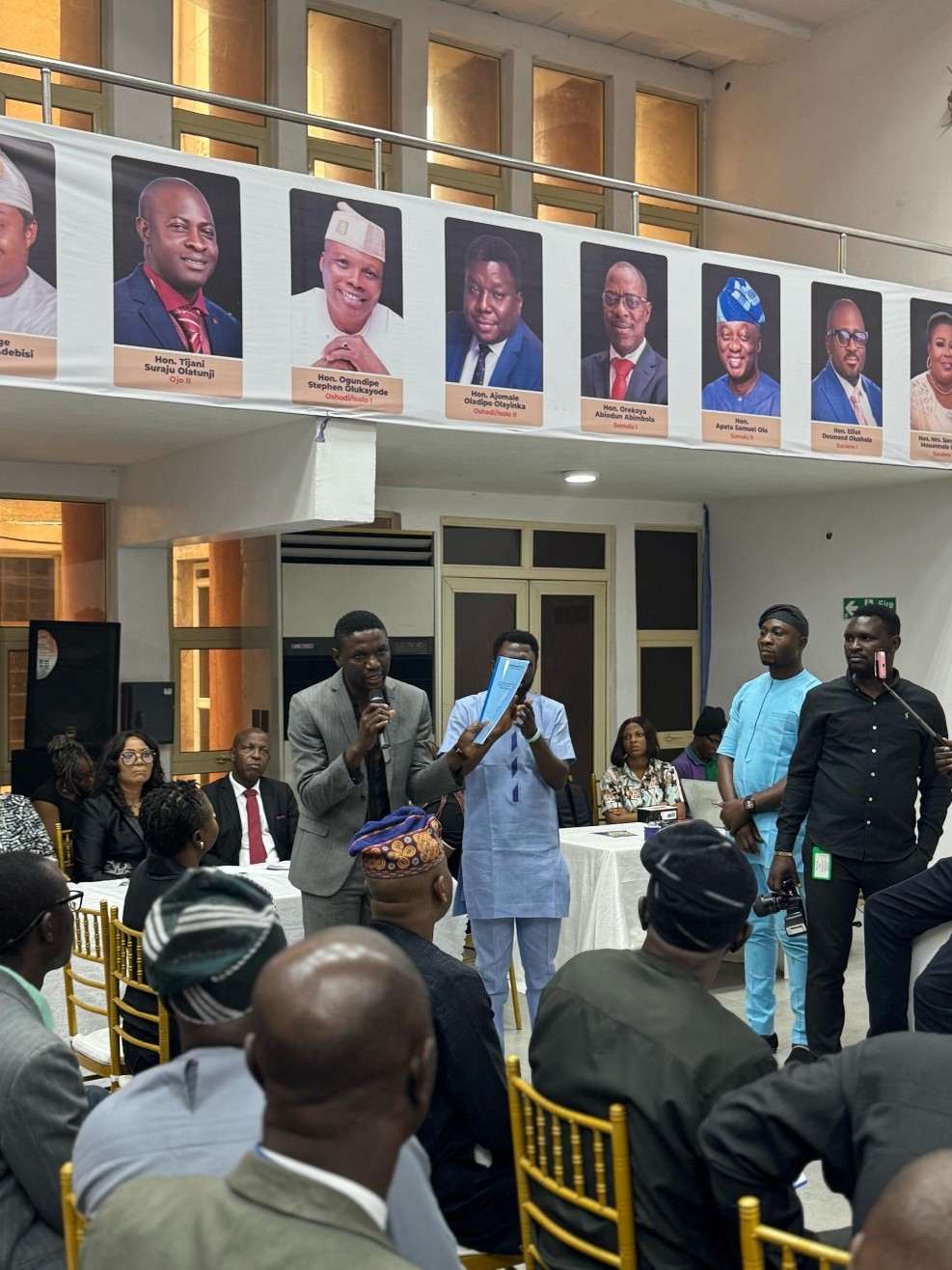
Spaces for Change│S4C participated in the public hearing on the Lagos State Tenancy and Recovery of Premises Bill, 2025, organized by the Lagos State House of Assembly Committee on Housing on August 11, 2025. The public hearing drew the participation of a diversity of urban stakeholders in Lagos State such as the Lagos State Attorney General, the Lagos State Commissioner for Housing, university professors, lawyers, realtors, professional groups, community associations, and estate and urban planners and university students. During the hearing, S4C presented a memorandum detailing nine (9) key areas of concern and practical recommendations for advancing housing justice in Lagos State.
Out-of-date legal frameworks and unwholesome practices of landlords and their agents have been identified among the major drivers of the housing deficit in Lagos State, currently estimated at 3.396 million. Many low-income earners in urban centers like Lagos have been pushed to under-served shelters or homelessness, making the rights to housing and property protected under international and national law an illusion. The Tenancy and Recovery of Premises Bill 2025 now seeks to address some of these growing concerns by reviewing the legal framework governing tenancy agreements, rental rights and responsibilities, and the processes for tenants’ eviction in the state.
At the public hearing, Spaces for Change |S4C drew the attention of stakeholders to the exorbitant rents and sundry charges property owners demand for dilapidated and poorly-managed properties. Compounding the issue, landlords indiscriminately increase rent at will, especially at the point of rent renewal. This is often done with little or no notice to subsisting tenants—a practice calculated to price the tenant out of the property. Because housing is a social need that must never be allowed to pander to profiteering private interests without restraint, S4C advocated for specific provisions in the bill specifying the frequency of rent increases as well as the notice periods.
Drawing from first-hand insights from the field, S4C also drew the attention of the lawmakers and stakeholders to the prevailing discriminatory practices against certain demographics in the Lagos rental market where landlords expressly deny accommodation to prospective tenants based on their tribe, marital status and even religion. This unpopular rental practice makes it difficult for these demographics to secure decent accommodation of their choice. S4C therefore recommended the introduction of a non-discrimination clause in the bill that would criminalize the practice with enforceable penalties such as fines, sealing of premises, suspension of an agent’s license, or temporary restriction on a landlord’s ability to lease the property.
Another key input from Spaces for Change was around data privacy and data protection in the housing sector in Lagos State. S4C recommended the introduction of express provisions in the bill requiring ethical data collection, processing, storage, and sharing by landlords, agents, and property managers consistent with the Nigeria Data Protection Act (NDPA) 2023. This provision is expected to rest the practice where sensitive personal data of prospective tenants are collected and processed with little or no regard to their privacy rights. S4C also recommended a provision mandating agents and landlords that qualify as data controllers or processors under the NDPA 2023 to provide evidence of data protection compliance, such as NDPC-issued certifications, when registering with Lagos State Real Estate Regulatory Authority (LASRERA).
Other stakeholders at the public hearing advocated for a specialized court for hearing and determining tenancy matters to ensure speedy resolution of disputes; the creation of a special fund for depositing security deposits, which are currently deposited with property owners and are hardly refunded to the tenant at the end of the tenancy. Also, stakeholders called for streamlining of the provisions of the bill to ensure there is no conflict with existing federal and state enactments. For instance, the Estate Surveyors and Valuers (ESV) contested that the proposal provision in the bill to reduce the agency fee to 5% contradicts the ESV Act, which pegs it at 10%.
Receiving S4C’s memorandum, Lagos State lawmakers promised to dispassionately consider the recommendations for possible inclusion in the bill. The Committee on Housing is expected to collate all submissions at the public hearing and incorporate the inputs into the draft law. As processes for operationalizing the statute continues, S4C will continue to continue to advocate for rights-centric housing policy and practices in line with its decade-long advocacy for inclusive housing policy for the urban poor and low-income earners in Nigeria and across West Africa.