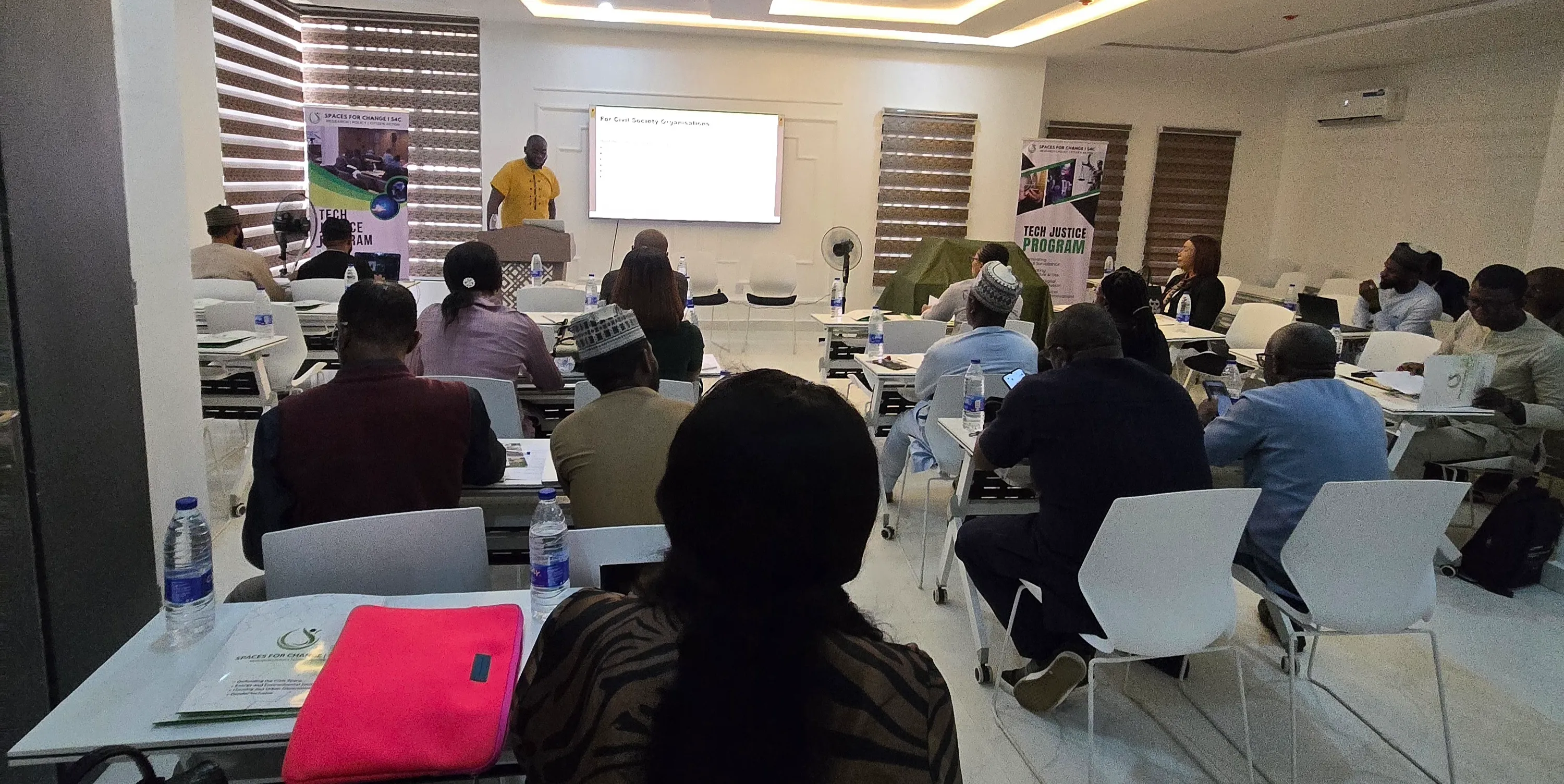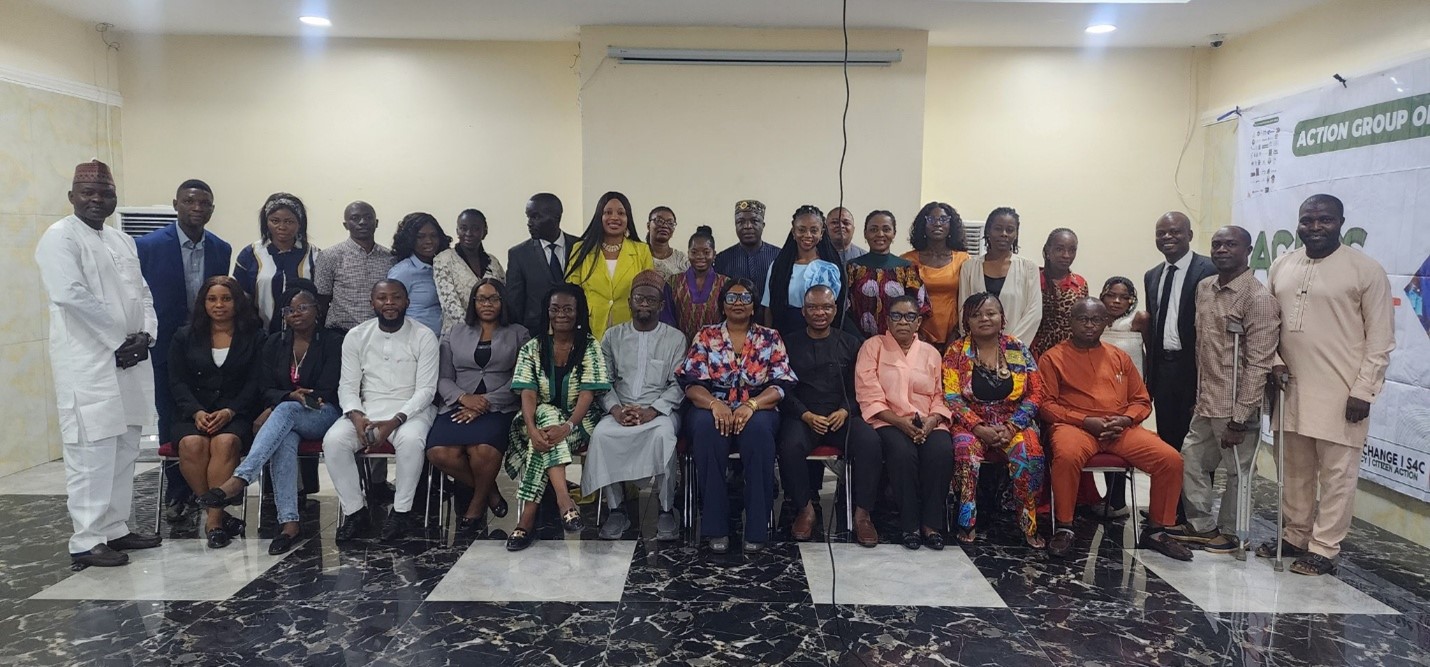
Spaces for Change | S4C hosted a targeted Regulatory Compliance Clinic (RCC) for members of the Action Group on Free Civic Space (AGFCS) on February 12–13, 2025. In total, 32 executive directors and senior management executives of 30 AGFCS’ member organizations participated in the Clinic where they gained deeper understanding of their regulatory compliance obligations under national and international law as well as the corporate governance best practices necessary for their institutional strengthening and sustainability. Run jointly by S4C and Nigeria’s regulatory bodies since 2020, the RCC has become a safe space for NPOs operating in West Africa to understand and discuss their inherent shocks, threats and vulnerabilities and get practical solutions to them.
Supported by the Fund for Global Human Rights (FGHR) and the Ford Foundation’s Civic Space Resource Hub (CSR-Hub), the Clinic started with a panoramic overview of the legal and regulatory frameworks applicable to NPOs in Nigeria. Experts from S4C and the regulatory bodies discussed corporate governance trends and practices around the world in light of the changing regulatory landscapes driven by technology, globalization, insecurity and global geopolitics.
Many charities today sprouted from the early organic movements, raw passions and drive of their founders. At the time, the founders had no thoughts nor plans to establish structured organizations managing complex projects and budgets. As these startups and movements consolidate into formally-registered organizations, this prompted founders to rethink how to sustain their operations in alignment with the prevailing regulatory requirements. To this end, the RCC offers a problem-solving arena for bringing these entities up to speed with their compliance obligations and closing out regulatory gaps that would hinder them from attaining long-term sustainability.
Another major threats charities face is the rising threats of terrorism coupled with the onslaught of measures and regulations developed by countries to mitigate threats to national security. Recommendation Eight – R8 of the standards developed by the foremost norm-setting global institution —the Financial Action Task Force (FATF)—focuses on checkmating the misuse of the NPO sector for terrorism financing (TF). R8 obligates national governments to identify, understand and assess the risk that NPOs are exposed to in their various jurisdictions before developing tailored measures to counter those risks. Through presentations, case studies and exercises, experts at the clinic walked participants through the typologies of risks they are exposed to and provided practical solutions for mitigating them.
Beyond making funds available to terrorist groups for acts of terror, recent regulatory frameworks are now expanding the definition of terrorism financing in line with FATF Recommendation 5. The new definition now includes the provision of life-saving humanitarian products and services to terrorists. These revisions have been incorporated into Nigerian law. Aside from the gravity of punishment upon conviction, which includes jail term of at least 20 years for principal officers for corporate groups, exorbitant fines and a lifetime blacklist, participants operating in terrorist prone areas learnt about how they could be exploited by terror groups knowingly or unknowingly. The experts shed light on the heightened vigilance and due diligence systems that non-profits can adopt to screen vendors, donors and beneficiaries, including the relevant sanctions screening lists maintained by international and national authorities.
As the Clinic wound down, participants expressed gratitude to Spaces for Change | S4C and partners for organizing the specialized program for them. They observed that the training was indeed a clinic. Organizations came in sick, but returned to their base better repositioned to strengthen their institutional sustainability. They called for more publicity, follow-up sessions and more awareness-creation for the topics covered during the clinic. Beyond the direct interface non-profits had with regulators over the two days, the RCC continues to reinforce the need for continuous dialogue between regulators, NPOs and other stakeholders to ensure that regulatory measures do not stifle, but rather, enhance the operating space for civil society.