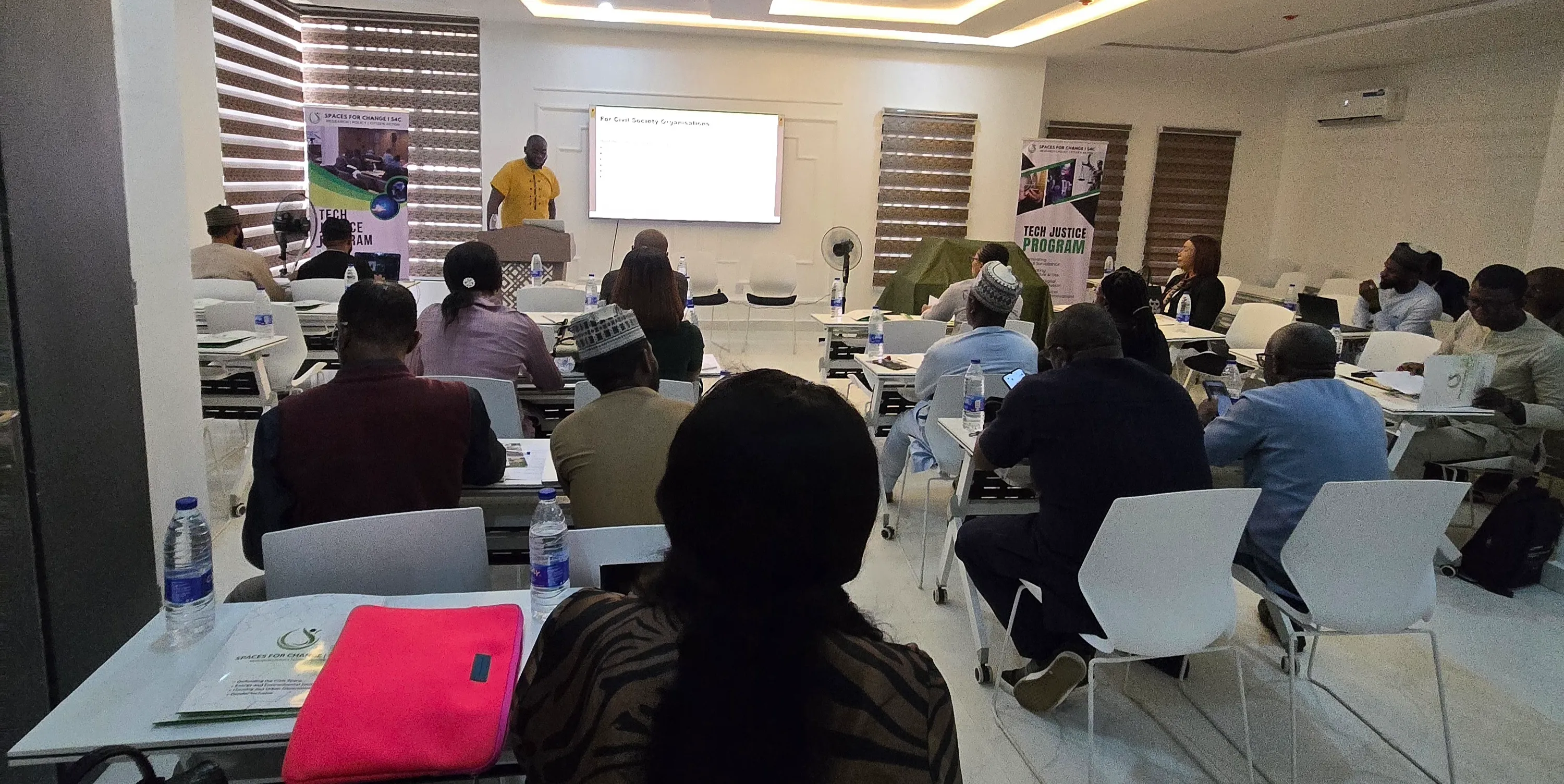
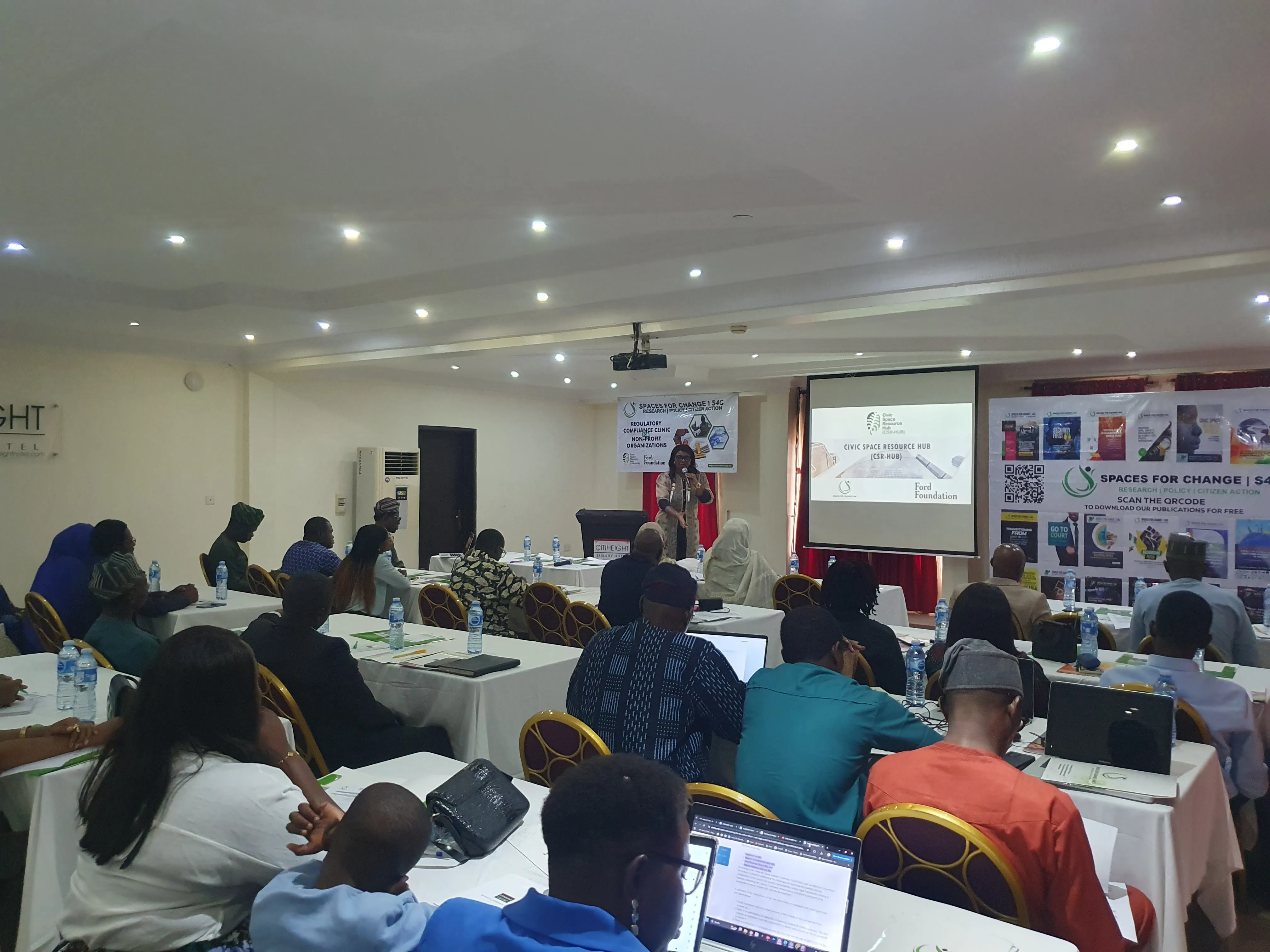
 Subscriptions for S4C’s flagship NGO Regulatory Compliance Clinic (RCC) delivered under the auspices of the Civic Space Resource Hub (CSR-Hub) surged in 2026 with over 400 applications. 35 executive directors, program managers, and finance officers of non-profit organizations operating in Nigeria’s South West region participated in Batch A of the RCC 2026 held from April 14 to 16, 2026 in Lagos. As applications surged, this RCC edition was jointly delivered with the Tax Clinic, consolidating the organization’s campaign to strengthen the capacity of nonprofit organizations (NPOs) across West Africa to build resilient institutions that can sustainably deliver impact over a long period of time.
The three-day program featured presentations, group exercises, and interactive sessions that deepened participants’ understanding of regulatory compliance requirements for the non-profit sector and strategies for achieving corporate longevity, resilience, and sustainability. The Clinic started with discussions around balancing the constitutional rights of assembly and association with the need to build strong institutions. Understanding how to translate this constitutional guarantee into organizational sustainability provided insights for improving efficiency in non-profits and building institutions that operate independent of, and beyond their founders’ influence.
How do you ensure nonprofit organizations are not misused for terrorism financing? As with all RCCs, this was a central theme discussed in various sessions over the three days. A pre-training exercise revealed that most participants had no prior knowledge of measures to combat money laundering or the financing of terrorism. Many were also unfamiliar with the Financial Action Task Force (FATF) and its 40 recommendations, particularly Recommendation 8, which pertains to the nonprofit sector. Participants were introduced to the rudiments of FATF Recommendation 8 and typologies that demonstrate how nonprofit organizations can be exploited for terrorism financing, including by misusing their goodwill to raise funds for harmful activities. It was clearly stated that “an NPO’s credibility is an asset! NPOs must therefore jealously guard their public trust and good will to ensure they are not abused for terrorism financing.”
Applying the lessons learned, participants shared strikingly similar experiences of their close shave with ostensible money laundering and terrorism financing schemes, both personally and within their organisations. As knowledge of these risks deepened, many participants asked, “How can NPOs fully protect themselves from exploitation for terrorism financing?” Responses from experts shed light on the methods for identifying risk factors and entrypoints such as beneficiaries, operational locations, sources of revenue, methods of resource distribution, use of unvetted vendors and third parties in their activities, etc. Participants engaged in group exercises that helped in identifying, assessing, understanding, and, most importantly, mitigating these unique risks. They also learned about key mitigation strategies such as strong internal governance systems, sound financial management practices and effective internal policies and controls.
The training also took a deep dive into compliance requirements related to manpower management and labour relations within NPO workspaces. Dedicated sessions also elucidated the new tax laws, highlighting the practical ways nonprofits can execute their charitable mandates in compliance with legal requirements. Experts walked participants through the provisions of the tax laws, and the institutional arrangements that have been made for tax exemptions, collection, remittances, resolution of tax disputes etc. More specifically, participants engaged in group exercises involving the practical computation of relevant taxes applicable to the non-profit organizations.
At the end of the training, participants provided feedback on the various aspects of the clinic that stood out to them. One participant commented, “I now understand the risks that my organization faces and how to better mitigate the risks of terrorism financing in my organization.” Another stated, “I have learned the importance of building systems and policies to strengthen our organisation.” Particularly significant is the recurring statement from participants that “compliance is for ourselves and our organizations, not just for the regulators.” Overall, the feedback indicated a 98% satisfaction rate with both the workshop content and the experience. Participants thanked Spaces for Change for the innovative approach to strengthening the resilience of nonprofits operating in the country.
The Regulatory Compliance and Tax Clinic was organized under the Civic Space Resource Hub (CSR-Hub) project with the support the Ford Foundation.