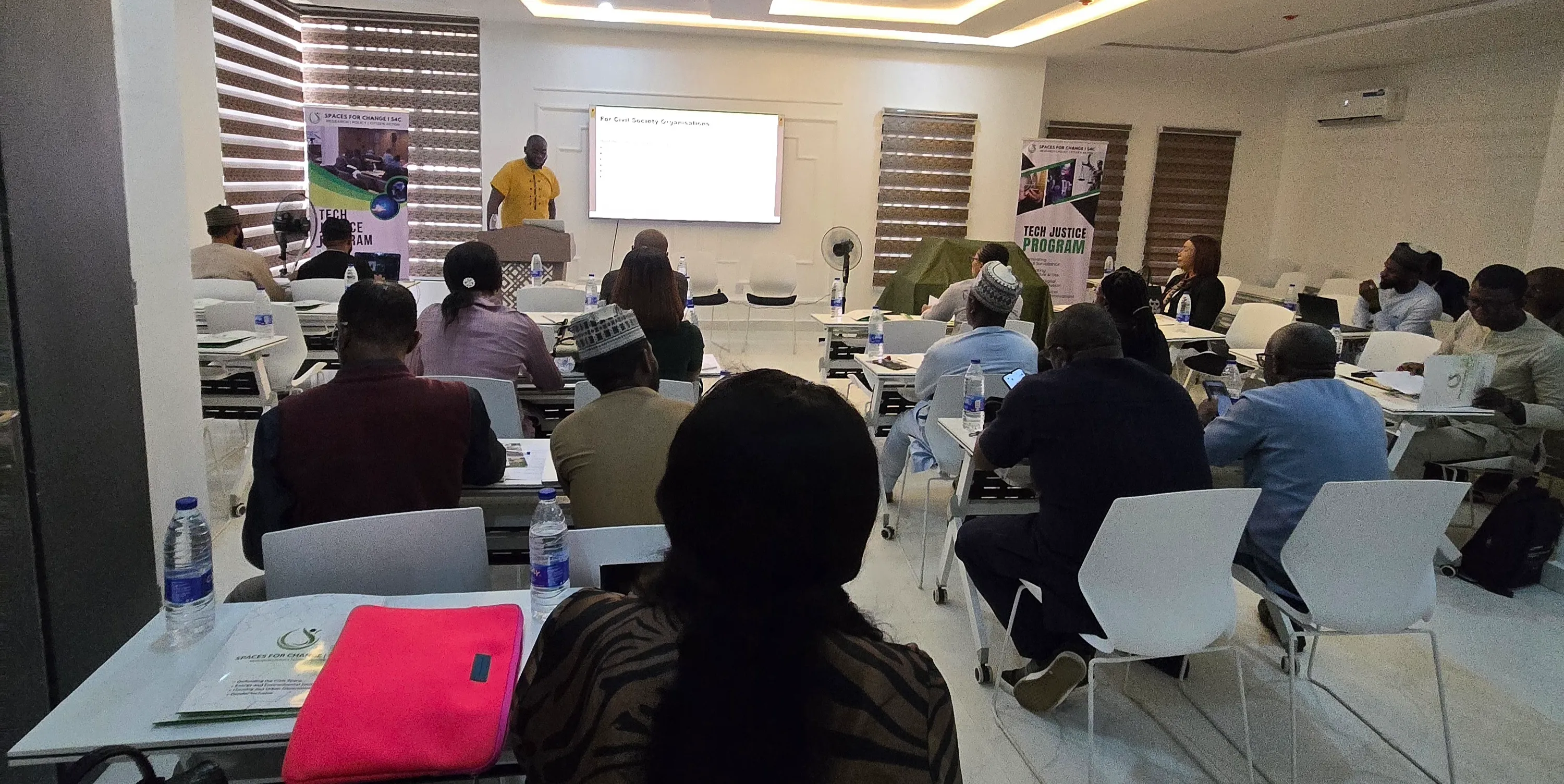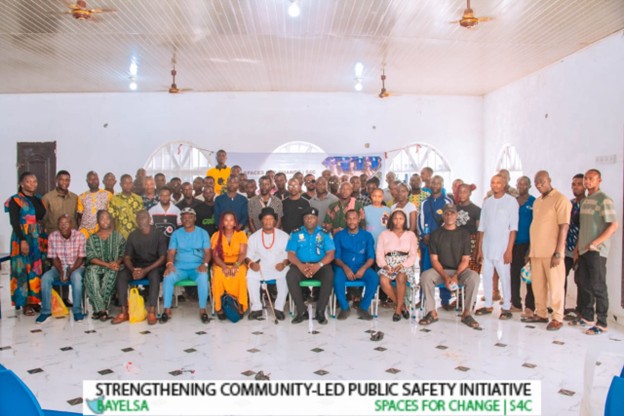
A legal empowerment training for over 100 members of two neighborhood watch groups in Amassoma and Ondewari communities in Southern Ijaw Local Government Area of Bayelsa State is empowering local youth to play active roles in improving public safety and the protection of lives and properties. Organized under the Security and Rights Opportunity (SRO) project, supported by Open Society Foundations, the event united representatives of security and paramilitary agencies, civil society organizations, community stakeholders, including traditional rulers, youth leaders, women leaders, and the executives of community development committees on January 29 and 30, respectively.
Amassoma and Ondewari neighborhood watch groups consist of young men and women from the two communities aged between 18-45, who volunteer their time, talents and resources towards the safety of their communities. The legal empowerment training became necessary, not only to build their capacity to discharge their duties in line with extant legal provisions, but also promote seamless collaboration with security and law enforcement agencies.
The roles neighborhood watch groups play in local communities significantly align with the tenets of community policing. Along this line, participants learned about the regulatory frameworks that undergird community policing in Nigeria. The array of presentations and interactive sessions delivered by seasoned resource persons drawn from security agencies, civil society groups and legal practitioners, delved deeper into a wide range of topics such as community policing, community-police relations, public safety principles, human rights norms, collaborative problem-solving and strategic partnerships in securing local communities. A common thread tying these presentations together is the consensus that cooperation between law enforcement agencies and communities is an essential step towards crime prevention, effective intelligence sharing, trust-building and conflict resolution.
Another important issue that dominated the discussions is the centrality of human rights in the protection of lives and property. Accordingly, neighbourhood watch groups are obligated to respect and protect human rights while discharging their public safety functions. Participated learned about the core elements of the right to fair hearing, the right to life, and other fundamental human rights enshrined in the constitution and other relevant state and federal laws. These lessons were shared to provide guidance to neighbourhood watch groups to act within the limits of their mandate without overstepping their safe-keeping roles. For instance, the law does not authorize neighbourhood watch groups to carry arms, arrest and detain suspects. Rather, they have a duty to share intelligence and report criminal offenses to lawful authorities.
The training also afforded an opportunity to share and learn from similar community-led public safety initiatives in Benue State. Unlike Bayelsa State, community policing committees (CPCs) implemented in Benue State comprises traditional rulers, religious leaders, security agents, women, youths, persons with disability (PWDs), and other stakeholders. From the questions asked and the answered provided during the various sessions, it was clear that the neighbourhood watch groups were determined to learn, adapt and improve best practices from other localities.
As the event wound down, participants took turns to share their major takeaways from the training. One major point repeated by many is the renewed appetite for cooperation between neighbourhood watch groups and law enforcement agencies, especially the police. The participants and community stakeholders departed the venue with greater commitment toward ensuring that community policing is conducted in adherence to human rights principles.