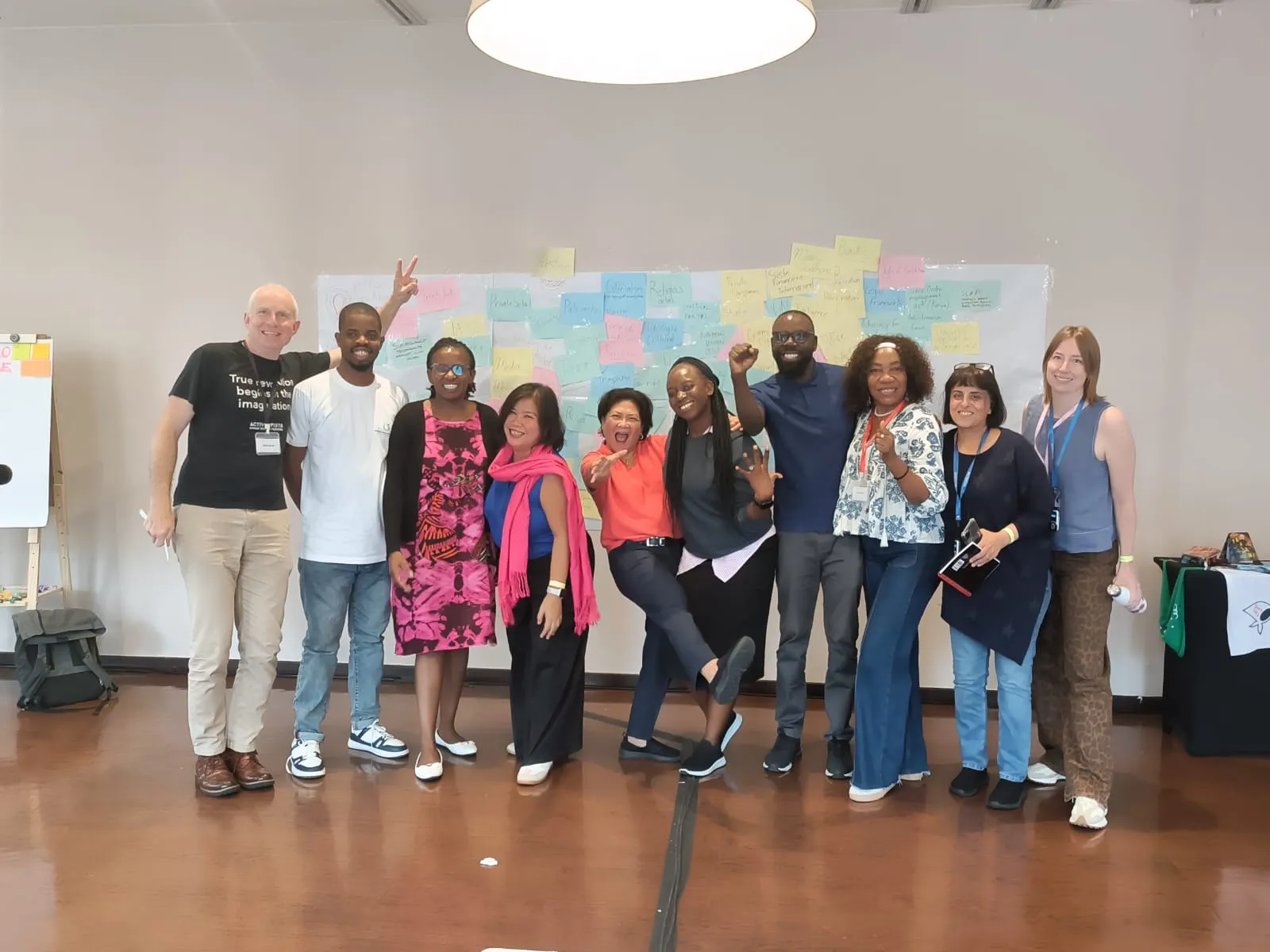
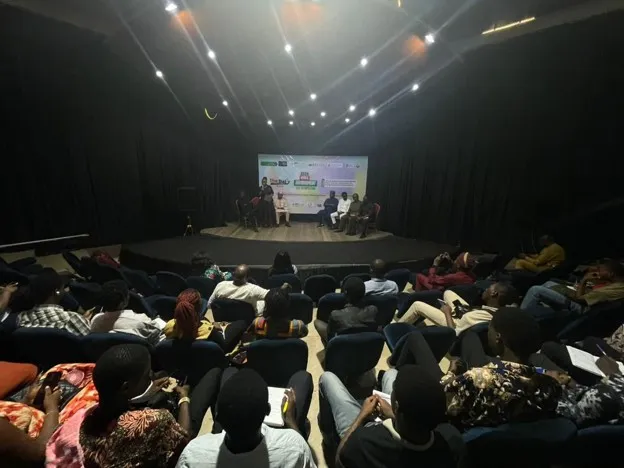
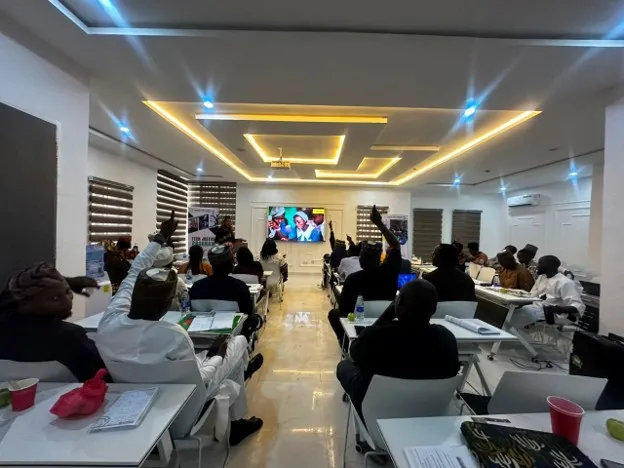
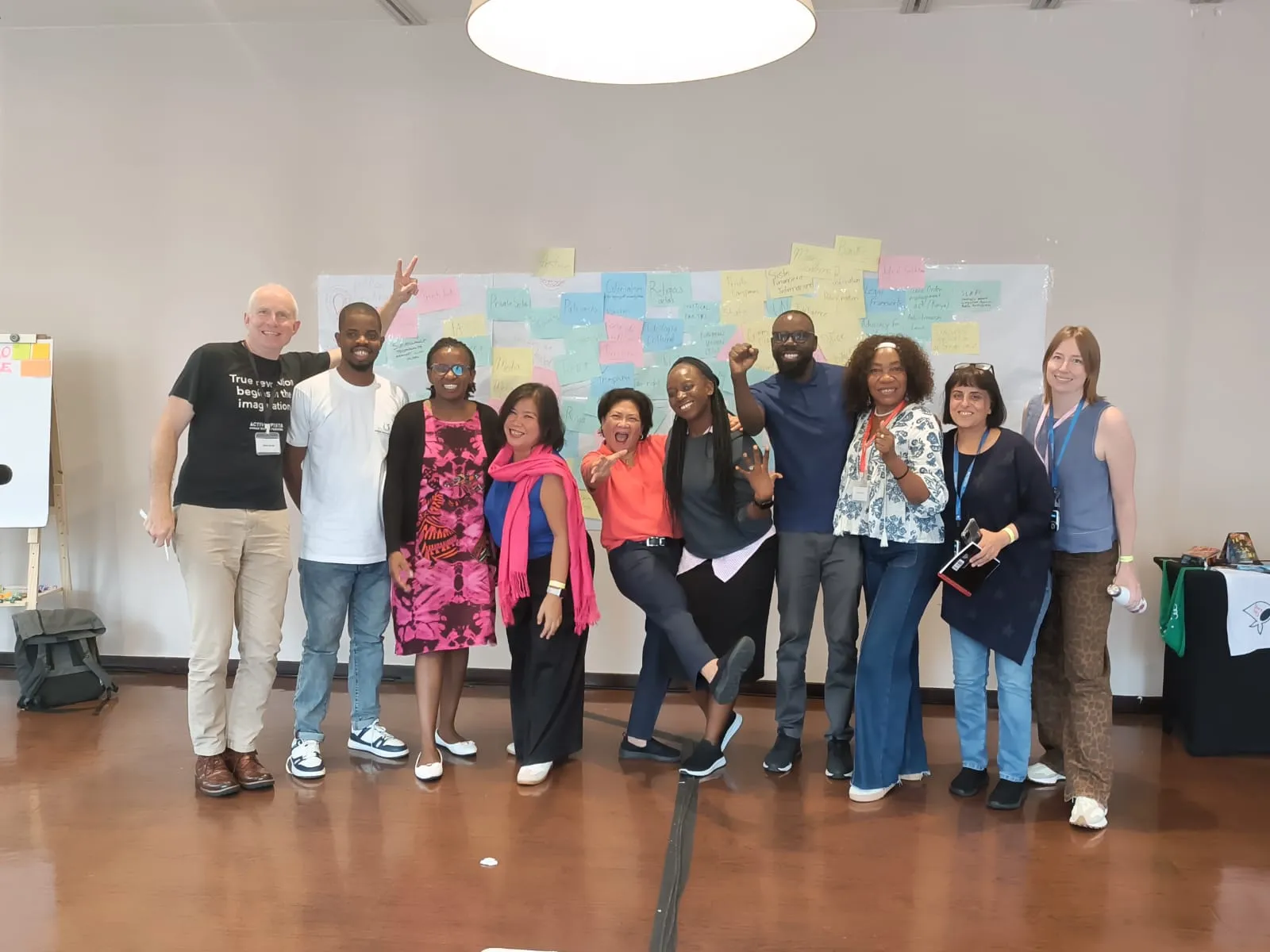
 On June 22–24, 2026, members of the Action Group on Free Civic Space (AGFCS) joined civic actors from across the world at the Civic Futures Convening in Rio de Janeiro, Brazil, where activists, lawyers, and civil society organizations came together to connect, exchange experiences, and reimagine strategies to protect civic space around the globe. Conversations, dialogues, and inquiries throughout the convening took an informal, yet deeply reflective approach, allowing participants to critically examine and reimagine ways of breaking through the system of control engineered by the global security architecture against transnational threats.
Different groups and activists working on diverse thematic areas such as border and immigration control, gender inclusion, cybersecurity, human rights, social and economic justice, public safety, humanitarian action, enforced disappearances, public interest litigation, and civic space protection, shared perspectives, exploring the intersections between conceptual pillars overlap to reveal hidden trends, interdisciplinary solutions, or complex systemic relationships. One lesson learned is that while individual objectives and organizational missions differed, participants were united by the shared experience of a securitized civic space. Participants recounted experiences of militarization and repression, gradually weaving together a web of interconnected realities that were strikingly, though not surprisingly, similar across jurisdictions. It became evident that pushing back against this repression required deliberate and coordinated action, prompting participants to exchange practical countermeasures that had proven effective in their respective contexts.
The AGFCS Coalition highlighted how locally-tested strategies have translated into practical interventions, including specialized training for security and judicial officers on civic space protection, the provision of free legal representation for civic actors and victims of civic space violations, advocacy for legal reforms, and sustained engagement with government officials through policy influencing, among other initiatives. Collectively, these efforts have helped to safeguard the civic space in Nigeria.
The conversation then shifted to the role of narratives. How do prevailing narratives shape the cycle of repression perpetuated by the global security system? How can we build historical memory processes that recover narratives around security? Discussions examined how dominant security narratives continue to fuel the repression of civic space while reinforcing polarization within civic movements across the world. Given the established reach of the global security system, participants acknowledged that the control, policing, and capture of civic space remain persistent realities. Consequently, civic actors must remain vigilant in protecting narratives and ensuring that authentic histories and lived experiences are preserved for future generations.
As the dialogue wound down, participants proposed the creation of monuments and memorial spaces as tangible tools for preserving collective memory and reclaiming narrative control from the security establishment. The Coalition further emphasized the importance of research and documentation, not merely as instruments for communication or policy influence, but as essential mechanisms for preserving knowledge in both physical and digital formats, thereby reducing the risk of erasure.
Finally, participants imagined what the future of a liberated civic space could look like. Reflecting the informal nature of the convening, discussions and recommendations extended beyond what is conventionally considered “practical” or immediately achievable into what might be described as “utopian.” Yet the exercise demonstrated that many of these ideas were not unrealistic, but entirely possible with sustained political will and collective action. Among the proposals were a decentralized and open information technology system; citizens’ assemblies as integral governance mechanisms; inclusive systems of government that meaningfully represent women, young people, and persons of diverse gender identities; self-governance for Indigenous communities; expanded visa-free travel and less restrictive immigration regimes; universal access to healthcare and education; and the primacy of human intelligence (in contrast to artificial intelligence).
As the convening drew to a close, it became clear that while there were no immediate or formal outcomes, participants had collectively resolved to use this platform to build and strengthen their collective power. Through commitments to deepen collaboration, hold periodic convenings, and leverage one another’s experiences, skills, tools, and expertise, the gathering demonstrated that it had become more than a meeting of civic actors. It had laid the foundation for a growing hub where activists, coalitions, organizations, and citizens can continue to draw strength, exchange strategies, and collectively push back against the shrinking civic space.