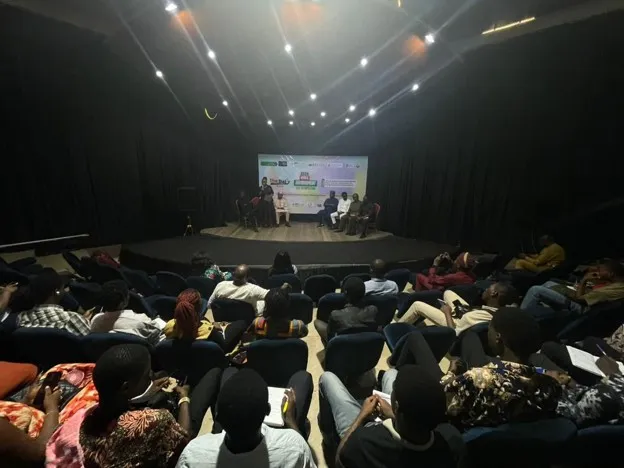
In commemoration of the 2026 World Environment Day on June 5, 2026, Spaces for Change | S4C participated in high level dialogues across the southwestern and southeastern regions of Nigeria, focused on pivoting toward sustainable energy sources and circular economies. In Lagos, S4C’s representative moderated at a symposium examining the impacts of climate change on Nigeria’s energy security, sustainability, and local content capacity within a changing energy landscape. In Imo, S4C partnered with the State’s Ministry of Environment and Sanitation, including civil society coalitions, and community stakeholders, to steer the development of subnational climate governance and adaptation plans. The engagements in Lagos and Imo States provided vital platforms to bridge the gap between high-level macro policies and grassroots execution, while mapping out practical solutions that can transform local youth and host communities from passive onlookers into active participants in Nigeria’s green economy.
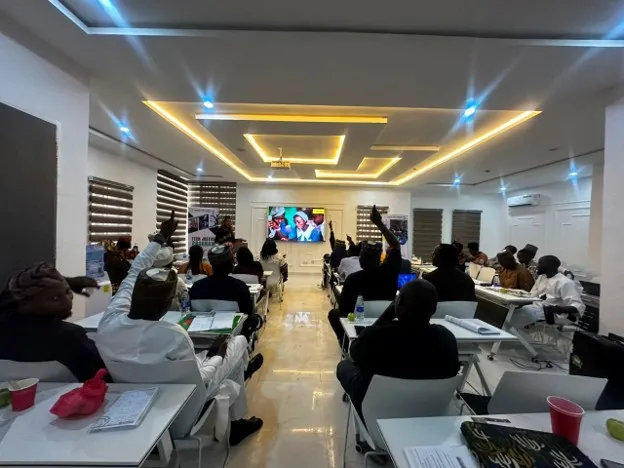
The symposium in Lagos united energy industry executives, structural engineers, oceanographers, and academics. Who keeps the academic community informed on climate policies? How can countries strike a healthy balance between industrial growth and environmental preservation? What steps must be taken to ensure that corporations consciously integrate ecofriendly protocols into their standard operations? These questions stirred debates among panelists, discussants and the audience. Experts discussed how to pioneer clean industrial methodologies as well as how to institutionalize green infrastructure within national engineering codes. One way to achieve this is by treating sustainability as a primary design requirement in all technological and infrastructural projects rather than an afterthought. While presenting the financial and logistical frameworks required to transition local industries to low carbon models, one of the experts advocated for phased local transition models and challenged Nigerian scholars to venture into the domestic manufacturing of ecofriendly equipment like solar panels and lithium batteries to realize national self-sustainability goals.
Presenting the S4C’s core think piece, titled, “The Architecture of Nigeria’s Green Future”, the organization contended that a just transition must empower local youth and host communities to become technically proficient architects and drivers of tomorrow’s energy landscape. Nigerian local content laws already provide a pathway for realizing this ambition. In many extractive communities, large sums are spent on projects and interventions, yet local economic participation remains weak. Contracts are often handled by external companies. Technical opportunities rarely translate into community employment. Procurement systems remain opaque. Youths are frequently excluded from skilled opportunities. Women remain underrepresented in decision making and economic participation. As a result, communities receive projects without necessarily gaining economic power. A just transition must, therefore, place local content at the center of energy operations. Local contractors, artisans, women owned enterprises, youth cooperatives, and indigenous service providers must be intentionally integrated into procurement and project delivery processes.
When it was time for audience engagement, conversations delved deeply into data-backed energy development, economic justice, and corporate safety compliance. Experts demonstrated how converting technical data into actionable insights optimizes community energy access without degrading fragile ecosystems. They also explained the roles professional associations play toward enforcing strict health, safety, and environment standards across the upstream, midstream, and downstream sectors. While reflecting on how oil dependent countries like Nigeria can bridge the energy supply gap as it transitions away from fossil fuels, conversations ended with practical recommendations for equipping the next generation with advanced technical and regulatory knowledge to innovate safely within established international safety compliance frameworks.
The intervention in Imo State centered on subnational climate policy execution and frontline ecological vulnerability at an event organized by the Imo State Ministry of Environment and Sanitation. The Commissioner for Environment and Sanitation detailed how rising temperatures, devastating gully erosion, irregular rainfall patterns, and flooding are actively threatening local agricultural livelihoods, public health, and sustainable development. He reaffirmed the ministry’s commitment towards intensifying erosion control advocacy, sanitation management, and afforestation initiatives.
Spaces for Change reminded stakeholders that environmental protection is an absolute mechanism for human survival rather than a favor to nature. Pointing directly to visible ecological impacts across the state, such as the receding waters of a regional lake, the degraded swamps of oil-bearing communities, and the severe erosion gullies in a critical federal constituency, S4C stressed the importance of an immediate shift from policy formulation to practical execution. Following the successful development of the Imo State Climate Change Policy in 2025, S4C and relevant government ministries are working together to develop the Imo State Climate Change Action Plan. The event featured several landmark activities such as a public lecture; practical demonstration on proper waste sorting to halt environmental pollution; and a ceremonial tree planting exercise.