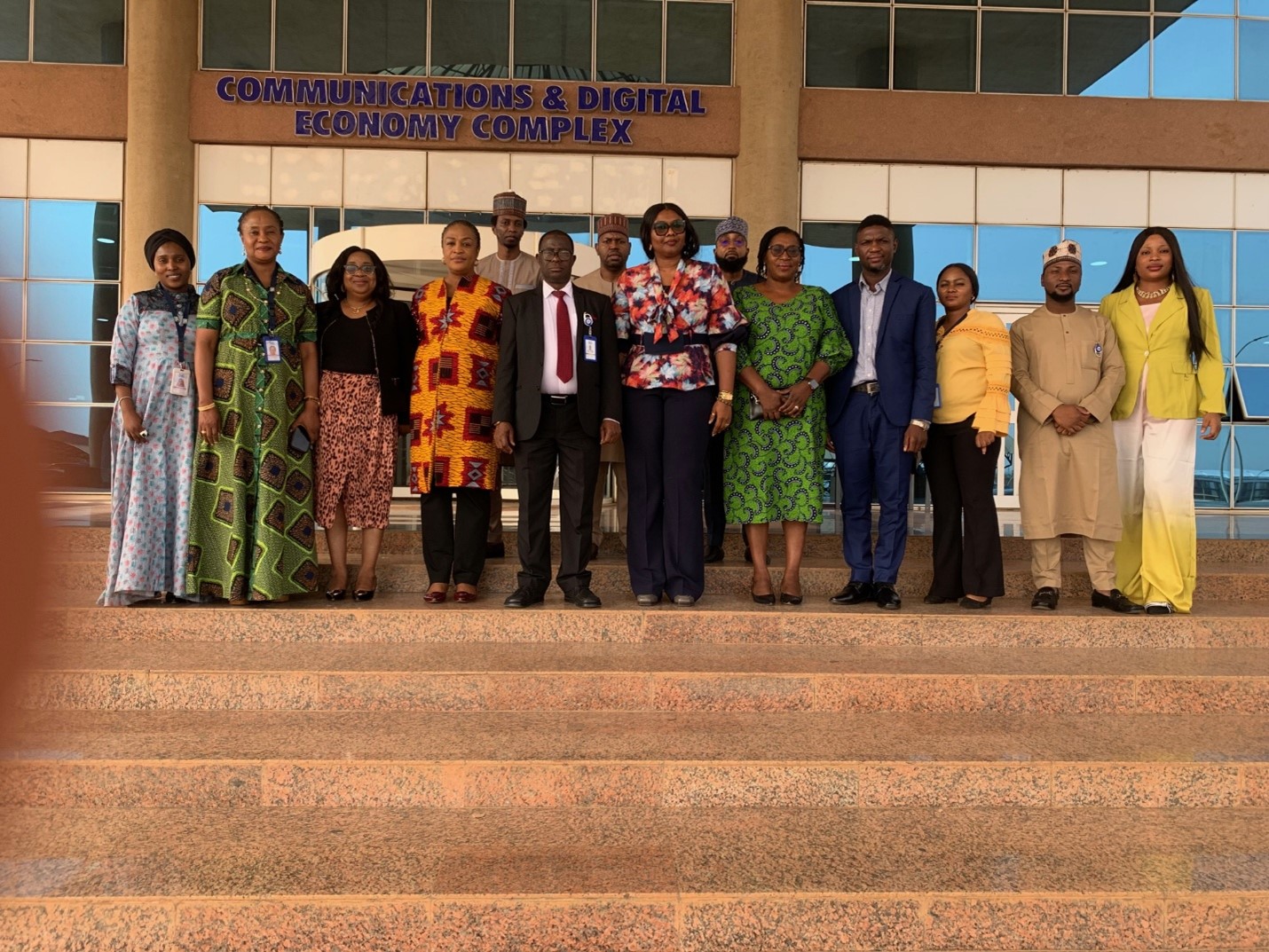
S4C’s Knowledge Management Team paid a courtesy visit to the Nigerian Communication Commission’s (NCC’s) Department of Research and Development to present the findings of the latest report, “Proliferation of Dual-Use Surveillance Technologies in Nigeria: Deployment, Risks, and Accountability”. NCC’s Research and Development (R & D) department is responsible for conducting research into emerging technologies and trends in the Nigerian telecommunication industry.
Warmly welcoming the S4C delegation to its Abuja office on February 12, directors and senior executives of the R and D department joined their Head of Department to receive the visiting delegation and the presentation of key research findings. The report highlights how weak regulations and unaccountable practices have facilitated the importation and misuse of dual-use surveillance technologies to violate privacy, stifle dissent, and restrict civic freedoms, especially under the guise of national security. It extensively analyzed the domestic import and export control regimes that exist in-country and in Nigeria’s top supplier countries, and where gaps remain. Although import controls like the End User Certificates (EUC) and controlled list of prohibited technologies exist, they have not been able to rein in the perpetration of human rights abuses using dual-use technologies.
Export control regimes, on the other hand, promise so much but deliver very little in terms of privacy, safety and legal protection against abuse and proliferation because exporting countries or suppliers’ export regimes are largely influenced by their national interests, economic security and need for political dominance. Accordingly, ‘Reform,’ ‘Regulate,’ ‘Due Diligence’ & ‘Transparency’ form the major keywords for the recommendations: The report offered key recommendations to refine or reform spyware imports into Nigeria. It called on importing countries, like Nigeria, to take deliberate steps to protect their national interest and implement, by design, human rights protections against the harms of dual use surveillance technologies. This is a task the NCC can play a key role in accomplishing.
NCC received copies of the report, commending its academic rigour and depth, amid promises to read more closely for further action. The ensuing discussions delved into global technological trends, the roles of various agencies responsible for the regulation of technology and the digital economy in Nigeria. They also explored potential partnerships to facilitate the implementation of the report’s recommendations, including strengthening research and evidence generation for improved policy-making.