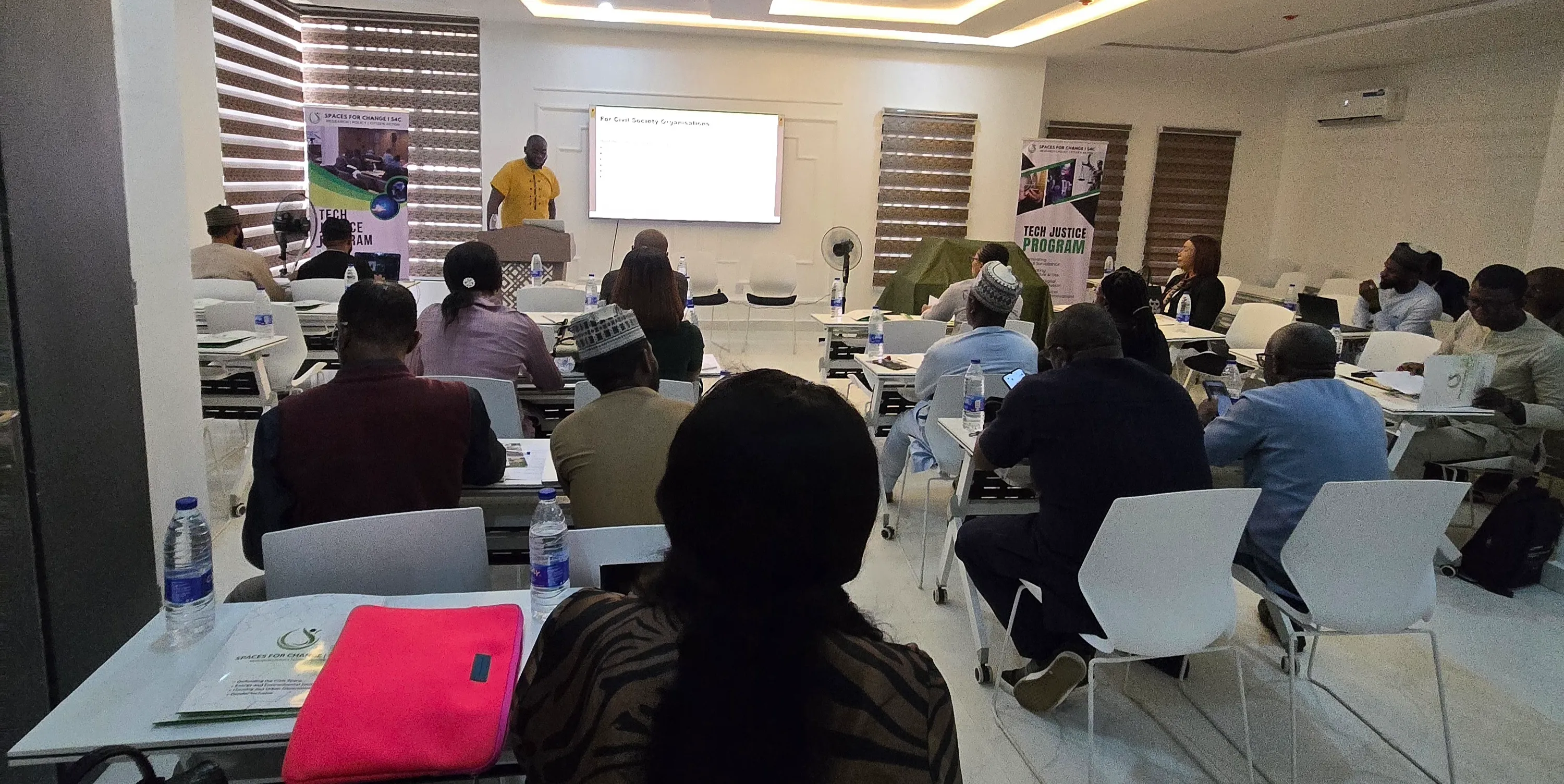
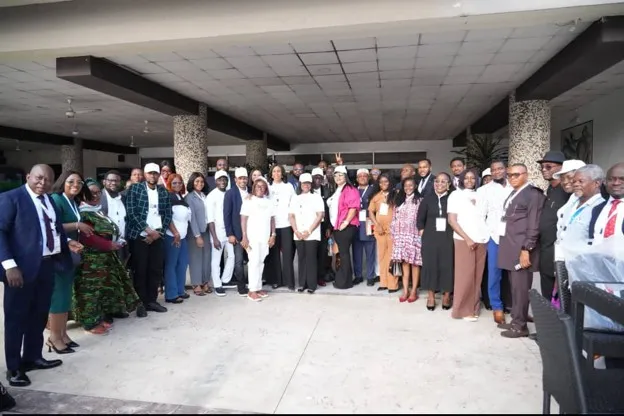
 Spaces for Change | S4C hosted a panel session at the Digital Rights Inclusion Forum (DRIF’26) held in Abidjan, Côte d’Ivoire on April 14, 2026, where it launched its latest report, “VICTIMS SPEAK: Tactics, Patterns and Impacts of Targeted Surveillance in Nigeria.” Digital rights lawyers, human rights defenders, activists and civil society leaders from across Africa participated in the session, examining the impact of targeted surveillance in Africa while proffering policy recommendations for closing accountability gaps in the continent.
Building S4C’s previous surveillance studies—the “Security Playbook on Digital Authoritarianism in Nigeria” and “The Proliferation of Dual-Use Surveillance Technology in Nigeria“—the new report, “Victims Speak” documents the lived realities of civic actors targeted by surveillance in Nigeria. The research methodology was grounded in S4C’s Spy Stop Lab—a capacity-building initiative that equips activists, journalists and campaigners susceptible to unlawful surveillance with legal and technical tools to confront the ongoing abuse of spyware proliferation. Over the course of two Spy Stop Labs conducted in May and November 2025, participants who had experienced targeted surveillance were provided with technical support to detect surveillance on their devices, document evidence, and secure their communications. Through this process, S4C documented cases directly from victims, capturing their experiences, the tactics used against them, and the consequences they faced. This victim-centered approach distinguished the research from traditional surveillance studies by centering the voices of those directly affected rather than relying solely on policy analysis or technical assessments.
The panel discussion examined the surveillance technologies being deployed arbitrarily across Africa. Conversations centered on IMSI catchers, Command, Control, Communications, Computers, and Intelligence (C4I) systems, Remote Control Systems (RCS), spyware, cyber attack tools such as Distributed Denial of Service (DDoS) attacks, and AI-driven surveillance systems. These technologies, often procured under the justification of national security and crime prevention, are increasingly being turned against journalists, activists, and opposition figures. The discussion highlighted that the problem is not the technology itself, but the lack of oversight and accountability mechanisms to prevent misuse. A live testimony from a surveillance victim sent chills across the room, highlighting the extent surveillance can be used for other purposes unrelated to crime prevention, but to silence dissent and stifle civic participation. The victim’s story made it clear that targeted surveillance is not an abstract privacy concern, it is a tool used to identify, track, arrest, and punish people for exercising their constitutional rights.
A significant portion of the dialogue focused on import controls for surveillance technologies in the region. Using Nigeria’s End-User Certificate (EUC) system managed by the Office of the National Security Adviser as a case study, panelists explored how such systems are supposed to regulate the importation of dual-use technologies. However, critical gaps were identified and policy recommendations shared. Participants noted that many African countries face similar challenges: import control mechanisms exist on paper but lack the scope, transparency, and enforcement capacity to prevent surveillance technology from entering countries unchecked.
The discussion also examined the processes for obtaining court orders to conduct lawful surveillance and the mechanisms needed to prevent the diversion of surveillance technologies toward illegitimate uses. The law enforcement perspective highlighted how some countries are attempting to build safeguards, requiring written requests signed by senior officers, mandating judicial approval for interception, and establishing protocols for data requests to telecommunications operators. However, even where legal frameworks exist, enforcement remains inconsistent. Judges often lack technical understanding to assess surveillance-related warrants, oversight bodies lack independence or resources, and security agencies operate with broad discretion that is difficult to challenge.
Regional perspectives emphasized that the patterns documented in Nigeria are not unique. Similar abuses are occurring across West Africa and the broader continent, enabled by weak legal frameworks, under-resourced oversight bodies, and private sector complicity. Telecommunications companies, technology vendors, and platform operators were identified as critical actors in the surveillance ecosystem. The panelists stressed that these companies must move beyond passive compliance with government requests and take proactive steps to protect user rights, publishing transparency reports, resisting unlawful requests, and conducting human rights due diligence before deploying surveillance-capable technologies.
The session concluded with concrete recommendations for independent regulators, policymakers, and civil society. Key recommendations included requiring mandatory human rights impact assessments before surveillance technologies are procured or deployed; establishing public procurement registers to increase transparency around surveillance technology purchases; strengthening judicial capacity to understand and assess surveillance-related warrants and requests; building local technical capacity to reduce dependence on foreign surveillance vendors; and mandating transparency obligations for telecommunications operators and technology platforms regarding government data requests and compliance rates.
There are three major takeaways from the session. First, the “Victims Speak” report fills a critical gap by centering the voices and experiences of people who have been targeted by surveillance, moving the conversation beyond policy debates to the lived realities of repression and resistance. The Spy Stop Lab model demonstrates that civil society can play a direct role in supporting surveillance victims while simultaneously building the evidence base needed for advocacy and policy reform. Second, surveillance abuse is not an isolated problem but a regional pattern enabled by permissive legal frameworks, under-resourced oversight bodies, and private sector complicity. The technologies being deployed, the tactics being used, and the consequences victims face show striking similarities across countries, suggesting that solutions must also be coordinated regionally. Third, meaningful reform requires coordinated action across multiple fronts, legal advocacy, technical capacity-building, transparency from private actors, and sustained civil society pressure to close accountability gaps. The willingness of stakeholders to engage deeply and constructively with these challenges demonstrates the potential for collective action to push back against the expanding surveillance state and protect civic freedoms across Africa.