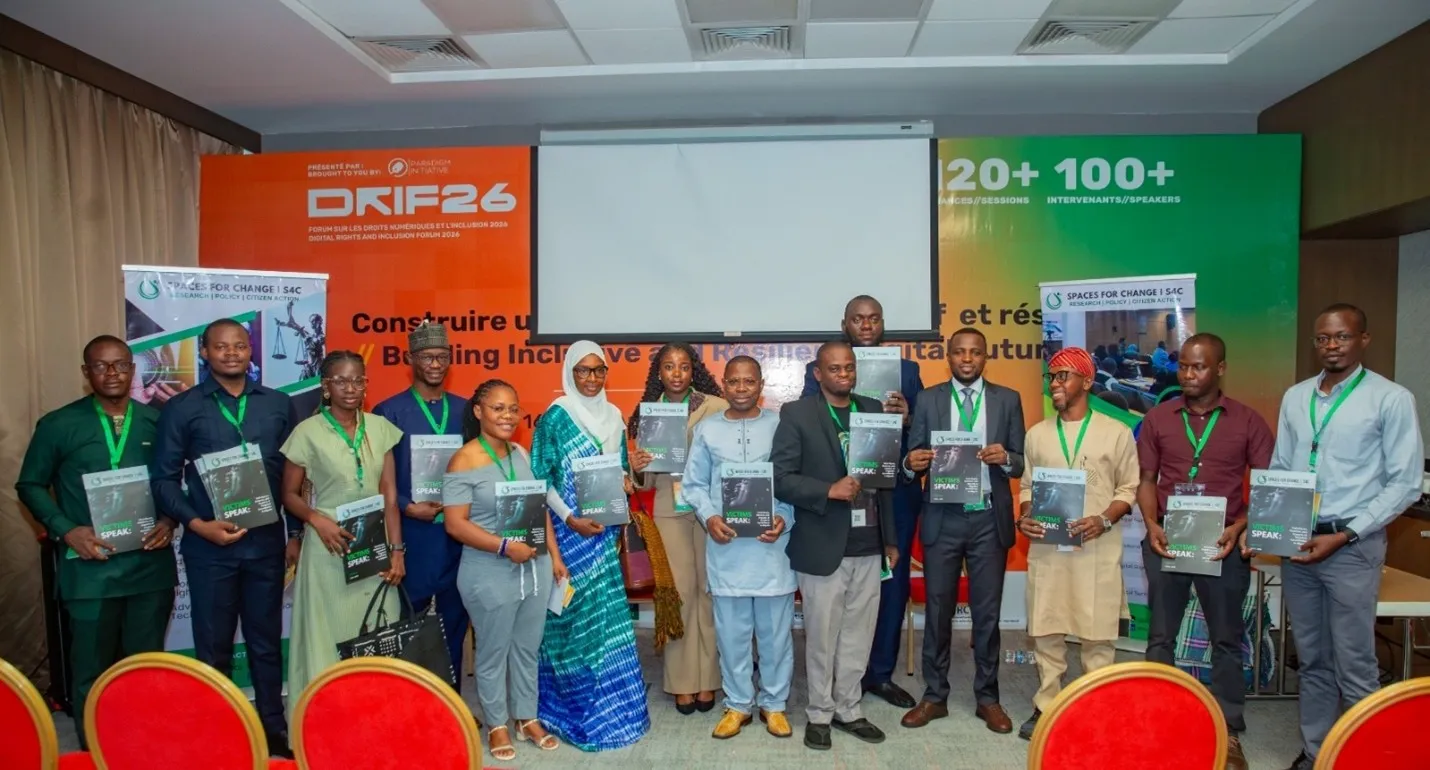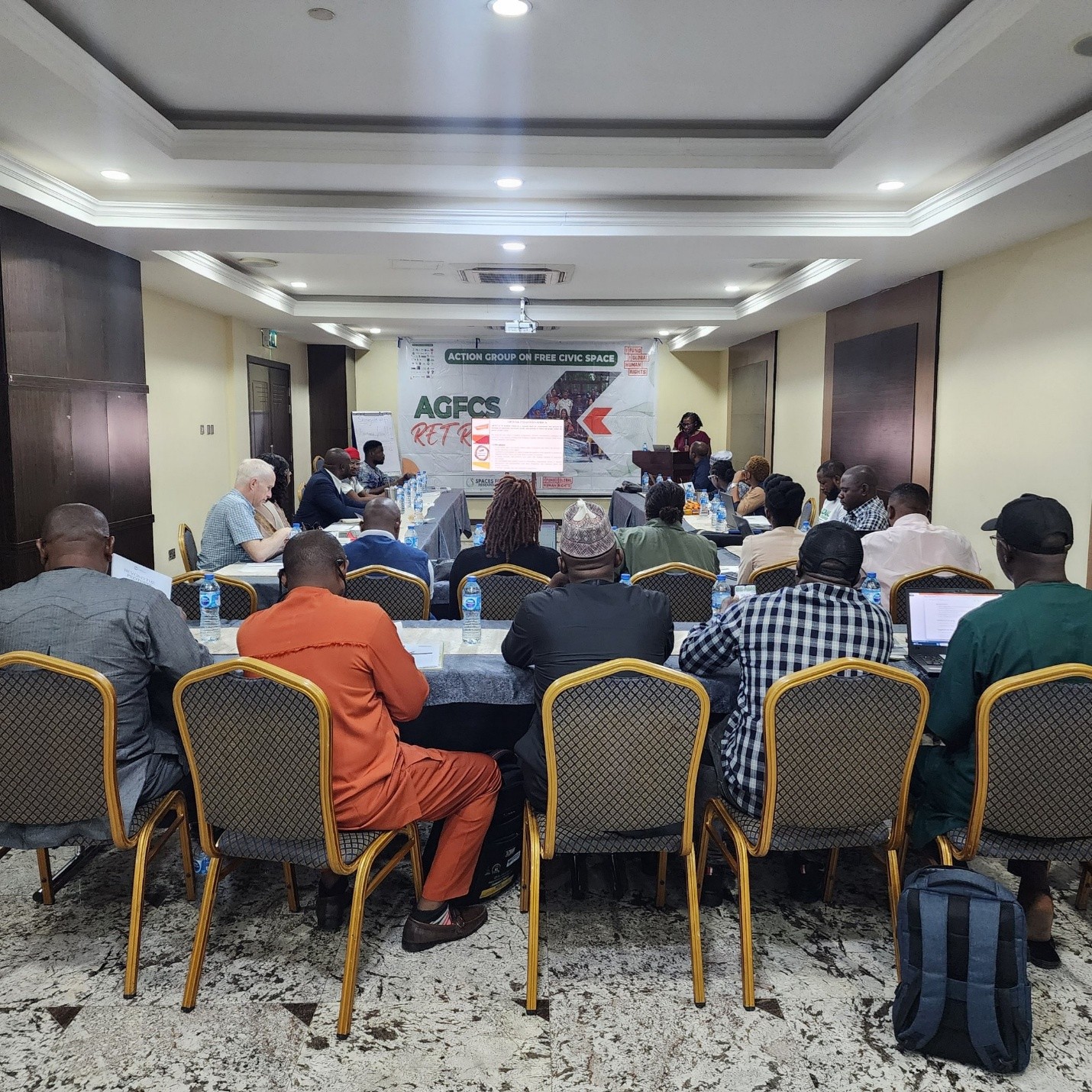
On March 11-12, 2025, member organizations of the Action Group on Free Civic Space (AGFCS) converged in Lagos for the annual retreat of the coalition. Organized by Spaces for Change | S4C with support from the Fund for Global Human Rights (FGHR), the gathering of over 30 civil society organizations from Nigeria’s 6 geopolitical zones marked a critical moment of collective reflection, ideation, strategizing, and harmonization of efforts to safeguard the civic space in Nigeria. Building on the findings of the three-part Security Playbook reports launched in 2021, AGFCS members have been implementing a wide range of initiatives aimed at addressing the security-related drivers of shrinking civic space in Nigeria.
The retreat began with a collective reflection of the progress that members have made since 2021 when the reports were published. In the last year (2024), members implemented several initiatives in response to security-linked attacks on the civic space in Nigeria ranging from research, capacity-building workshops, litigation campaigns, awareness creation activities, radio programs, community engagement, media outreaches, amongst others. It was against this backdrop that coalition members reflected on the progress made, lessons learned, challenges encountered in the previous year as well as the emerging entrypoints for future interventions. There was consensus that despite the substantial progress recorded across regions, future initiatives must shift away from reactivity to proactivity while prioritizing long-term and sustained impact. Guided by a dedicated framework designed for evaluating project implementation progress, members refined the coalition’s overarching strategy, emphasizing effectiveness, follow-through, scalability and intersectional/collaborative work. Going forward, the refined strategy will shape future interventions toward disrupting, transforming, and reforming harmful security narratives at the national and sub-national levels.
On the second day, civic space experts from the Philippines and Kenya joined the retreat deliberations, sharing the experiences of restrictions on civil society in their context and the strategies activists are using to push back. In recent years, Philippines has witnessed increased securitization and militarization owing to the intense war on drugs, which has garnered both national and international attention. Kenya on the other hand, has also witnessed terrorist attacks, resulting in the government enacting stringent counterterrorism laws and measures that limit freedom of expression, assembly, and association. The nature of the restrictive laws create an environment where dissent or criticism of government policies can be framed as an act of terrorism or extremism. This trend has negatively affected marginalized groups and civic organizations advocating for social justice, limiting their ability to engage in public discourse or mobilization for fear of reprisal.
The similarity in the three contexts—Nigeria, Kenya, and the Philippines—accentuated the need to build solidarity economies hinged on movement-building and collaboration between organizations to achieve desired social change. The solidarity economic model ensures every member of the social movement makes specific contributions to the change-making process. Most importantly, the solidarity economic model thrives where there is willingness to collaborate. Applying this model in the Philippines challenged members to leverage resource commons, reduce harm and adhere to the agreed rules of the movement towards the ultimate goal of reviewing dominant security narratives. Seeing the commonalities that exist across countries as well as the success stories arising from the successful implementation of the solidarity model in the Philippines and Kenya, Nigerian organizations discussed how to adopt and replicate this model within the coalition.
The retreat concluded with members developing a unified road map and communication plan for the year. To ensure a holistic and harmonized approach, they adopted three main levers of action. First, future interventions will focus on addressing the root of problems rather than firefighting or merely responding to immediate problems. Secondly, experimentation through indigenous movements should be encouraged, ensuring that every organization has a defined role in the process. Lastly, clear communication about ongoing initiatives is essential, as this would provide the opportunity to foster stronger collaboration.