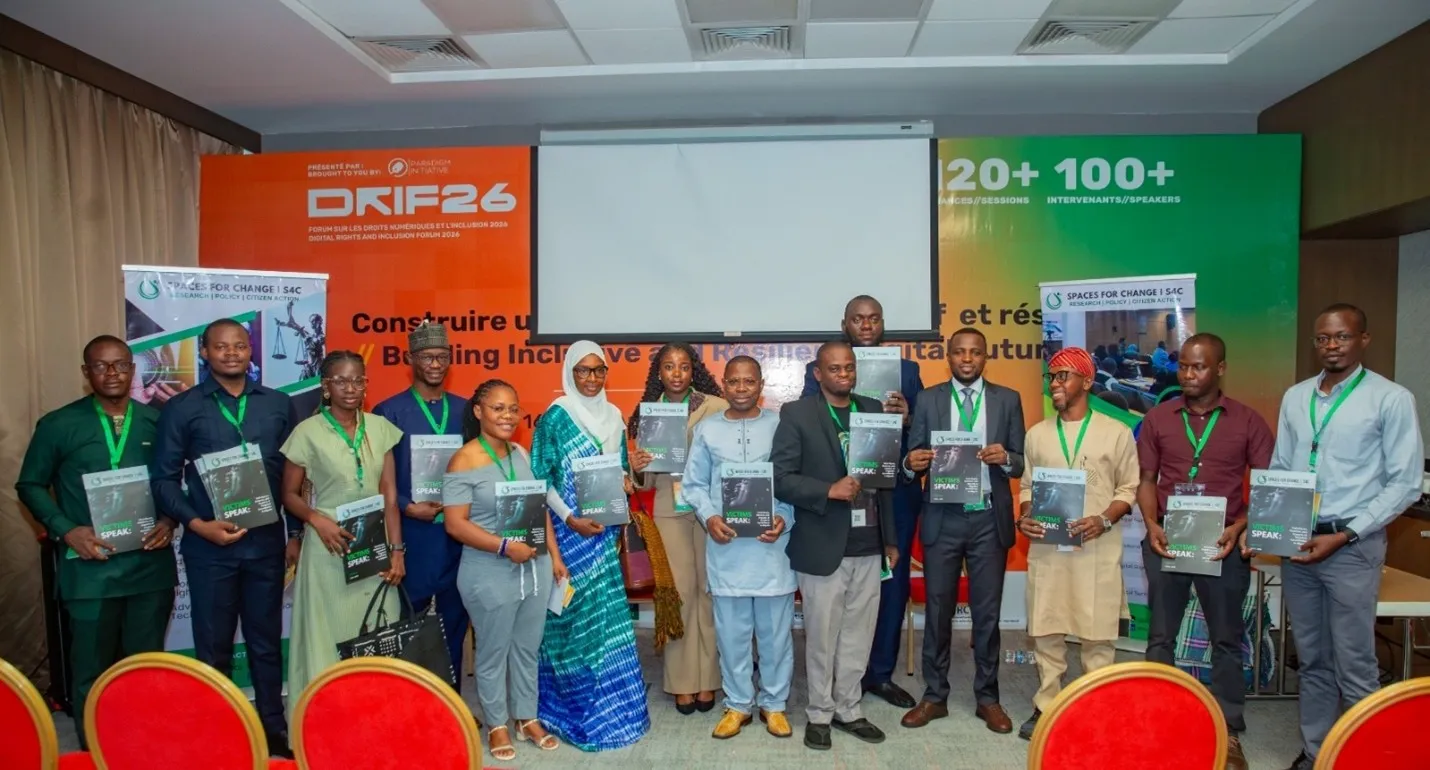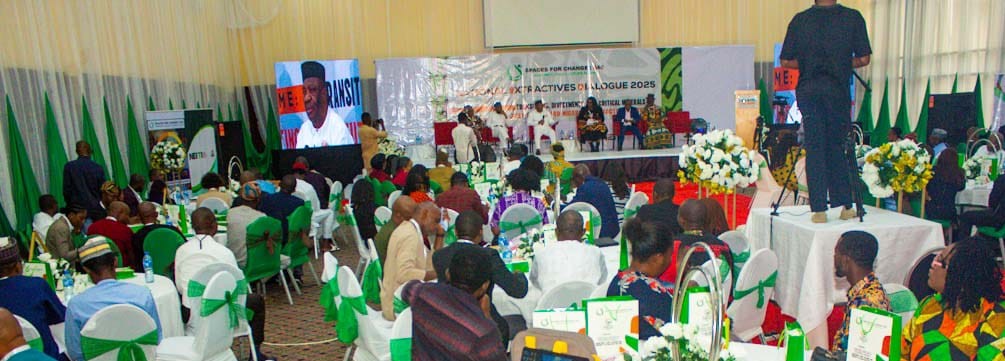
Over 150 stakeholders drawn from federal and state government departments, regulators, host communities, civil society, media, academia, corporations and international development partners across West Africa converged in Uyo, Akwa-Ibom State, for the 4th edition of the National Extractives Dialogue (NED2025). Convened by Spaces for Change|S4C in partnership with the Nigeria Extractive Industries Transparency Initiative (NEITI), the National Oil Spill Detection and Response Agency (NOSDRA), the Ministry of Solid Minerals Development, with support from the Ford Foundation, NED2025, tagged, “Transitions, Divestments, and Critical Minerals: Charting a Just Future for Nigeria’s Extractive Sector,” wasn’t just a conference, but a call to introspection and responsible action towards a low-carbon future in West Africa.
Nigeria’s extractive sector is undergoing dynamic and disruptive shifts. International oil companies are rapidly divesting from onshore assets, leaving behind environmental liabilities and unresolved community grievances. These exits often happen in a haste, with abandoned sites resembling graveyards, darkened seashores, devastated farmlands and silent witnesses of sorrow, tears, and blood. As companies are closing out and decommissioning wells where they have extracted fossil fuels for decades, global demand for critical minerals like lithium, cobalt, and gold is soaring, drawing renewed attention to Nigeria’s untapped natural resource reserves. These transitions present both historic opportunities and grave risks. If not managed responsibly, they could deepen long-standing injustices in communities already burdened by pollution, displacement, and exclusion.
Victoria Ibezim-Ohaeri, Executive Director of Spaces for Change|S4C, set the tone with a powerful opening statement that reverberated throughout the event. As the race for critical minerals is accelerating amid rapid divestments and declining fossil fuel investments, this shifting landscape presents a defining moment and a turning point for governments, communities, corporations and the civil society to interrogate past frameworks, correct past mistakes and urgently design new natural resource governance models and systems grounded in inclusion, sustainability, and justice. Echoing this sense of urgency, the Executive Secretary of NEITI, Dr. Orji Ogbonnaya Orji, emphasized that transparency and accountability must remain central as Nigeria navigates divestments and mineral transitions. “We must ensure that extractive activities do not repeat the mistakes of the past. Communities must be protected, and environmental remediation must be prioritized.” Similarly, Dr. Steve Akpan, NEITI’s South-South representative cautioned that the global shift to energy transition must not transform into a new form of marginalization. Host communities must be beneficiaries of the resources extracted from their domains.
NOSDRA revealed that over 25 divestment deals involving major oil companies Shell, Total Energies and ExxonMobil etc. have been initiated and concluded over four years ago, transferring huge assets. Yet, these exits have left behind a trail of pollution, abandoned infrastructure, and unremediated sites in places like Ogoni, Bodo, and Bomu. “Our agency is faced with increasing risks of stranded environmental liabilities. Nigeria must not allow its mining future to become another pollution crisis,” NOSDRA warned, calling for stronger oversight and enforceable divestment protocols. The Ministry of Solid Minerals Development (MSMD) also lent its voice, stressing the need for a strategic and forward-looking approach to mineral extraction. MSMD highlighted the importance of building robust regulatory frameworks, strengthening geological data systems, and ensuring that host communities are not sidelined in the rush for critical minerals. The Ministry emphasized that Nigeria must not repeat the mistakes of the oil era in its pursuit of mineral wealth.
From the legislative angle, Senator Sampson Ekong and Hon. Jonathan Gaza, Chairman of the Senate and House of Representatives’ Committees on Solid Minerals, respectively, noted that demand for critical minerals is projected to quadruple by 2040, driven by the rise of electric vehicles and battery technologies. Countries like Australia and Chile are reaping the benefits of targeted policies. Nigeria needs legislation that defines strategic minerals, mandates environmental, social, and governance (ESG) compliance and enforces local content. In the Nigerian context, the most critical gaps include the absence of a national critical minerals policy, limited value addition, weak geological data, and inadequate environmental and social safeguards. What Nigeria needs is a Critical Minerals Development Bill or policy to strengthen geological surveys, promote local processing, ensure community inclusion, and align with global partnerships. Traditional rulers and institutions also weighed in, urging the Nigerian government and regulatory agencies to think proactively rather than reactively. They called for environmental justice to be treated as a fundamental right, with regulators performing their oversight functions diligently to checkmate the activities of settlors. His Royal Majesty, King Bubaraye Dakolo, urged the National Assembly to strengthen the legal framework governing extractive activities, ensuring that laws are not only enacted but enforced.
Beyond the colorful opening ceremony, high-level statements from political and industry leaders, rich cultural displays, radiant attires and explosive panel discussions, NED provided a platform for host communities impacted by decades of oil pollution to directly engage industry and political decision-makers, ventilate their grievances about rushed divestments without environmental remediation and demand stronger environmental safeguards. Numerous agencies and departments of government at the state and federal levels stepped in to answer difficult questions, provide clarity on unresolved local agitations and announce new projects and technologies for mitigating past and current environmental harms.
Among several sessions, a major highlight of NED2025 is the opening panel on the second day of the Dialogue which spotlighted Imo State’s draft climate change policy. Members of the Imo Technical Committee on Climate Change shared their experience regarding how they developed a home grown subnational framework that centers community voices, environmental resilience, and inclusive governance. The session showcased how states can lead the way in climate action, offering a replicable model for other regions seeking to localize global climate commitments. Other panel discussions explored the efficacy of current divestment protocols, environmental audits, host community rights, investor accountability, and the role of civil society in extractive governance. The conversations were rich, layered, and often emotional, as community representatives shared firsthand accounts of displacement, pollution, and neglect. Their testimonies served as poignant reminders that extractive governance is not just about resources it is about lives, livelihoods, and legacies.
The last panel session examined energy transition practices in other countries in the subregion such as Ghana and Senegal. Experts shared the land tenure, mineral licensing and remediation protocols in Ghana and the role regional frameworks like the Africa Mining Vision and ECOWAS Mining Code plays in strengthening national legal regimes. The session ended with calls for a regional protocol on divestments to end the practice of corporations flocking to weaker jurisdictions leaving behind unremediated spaces. The regional protocols will establish principles on how to exit, the obligation to remediate and curtail environmental jumping.
As the two-day Dialogue drew to a close, it became clear that Nigeria stands at a crossroads and the choices made today about who benefits, who is protected, and who is heard will shape the country’s extractive legacy for generations yet unborn. NED 2025 was not just a space for reflection, but a platform for action. It called for binding divestment protocols that hold exiting companies accountable for environmental remediation and community restitution. It demanded legislation that embeds transparency, equity, and sustainability in the mining of critical minerals. It urged the scaling of subnational climate policies like Imo State’s to ensure local ownership and tailored solutions. It emphasized the need to strengthen geological data systems, inter-agency collaboration, and benefit-sharing mechanisms. Greater vigilance is needed to hold oil companies accountable, and stronger institutions must rise to the challenge. NED 2025 reminded everyone that extractive governance is not just about resources, it’s about people.