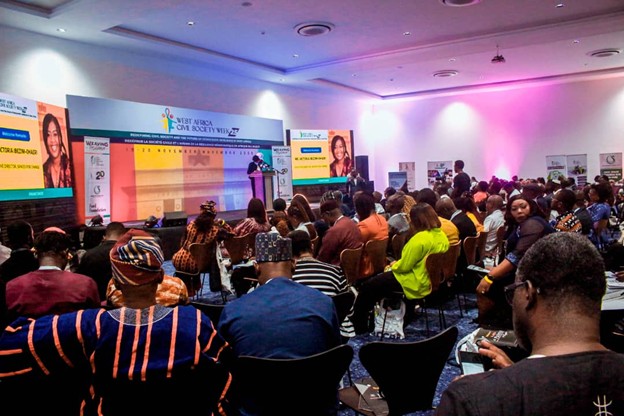
The 3rd edition of the Civil Society Week in West Africa 2025, themed, “Redefining Civil Society and the Future of Democratic Resilience in West Africa”, united a diverse pool of participants from civil society organizations, community-based groups, youth and women-led movements, civic tech and investigative/public-interest media organizations, think tanks, trade unions, political parties and development partners across sub-Saharan Africa. Held under the auspices of the Ford Foundation-backed Civic Space Resource Hub, the 3rd edition of the conference co-hosted by West Africa Civil Society Institute (WACSI) and Spaces for Change | S4C provided a broad-based platform to assess the state of civil society in West Africa and redefine its purpose – conceptually and operationally.
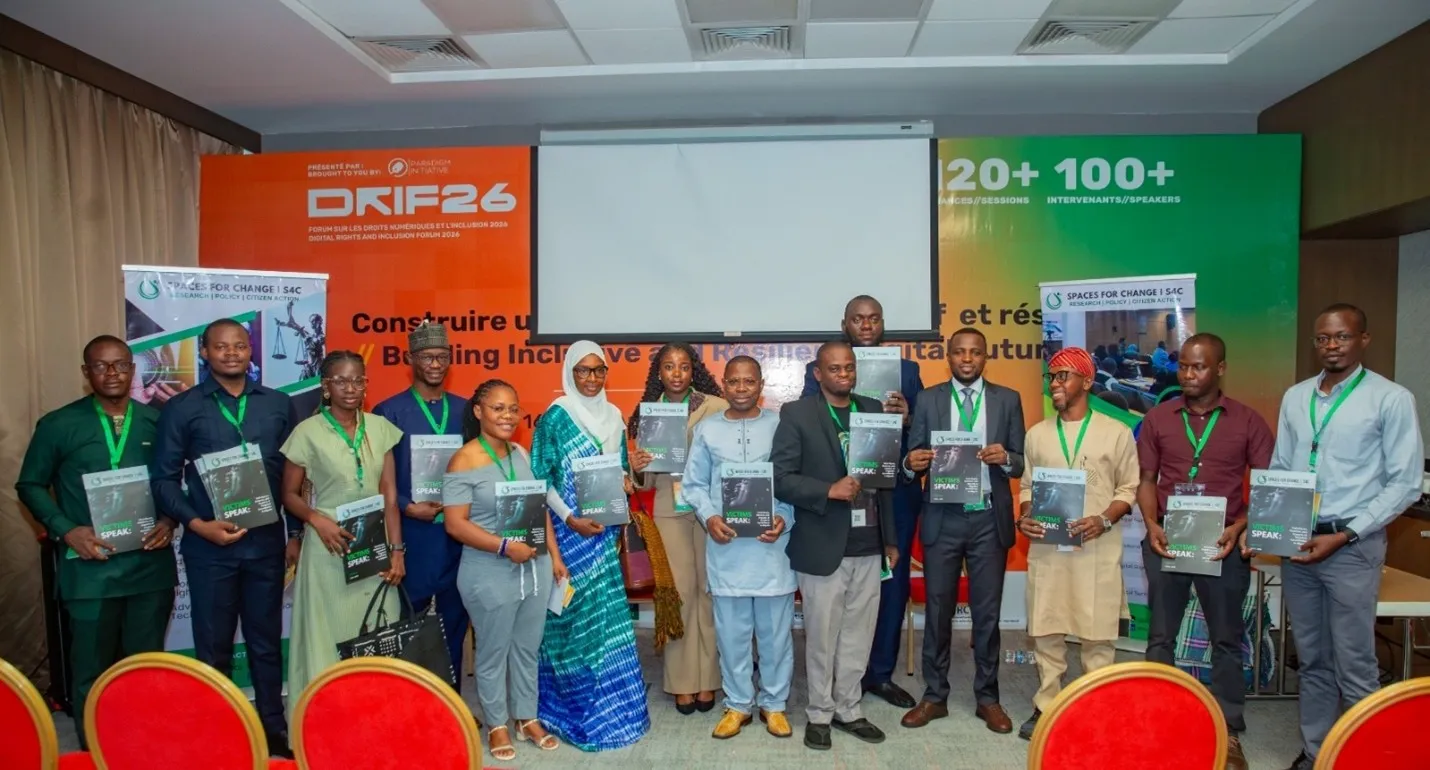
During the opening ceremony, S4C opined that security is the bedrock of a healthy democracy, highlighting the impact and relevance of African civil society organizations and their networks, particularly in the fight against insecurity and terrorism in West Africa. Unveiling the report, titled, Mapping Civil Society Engagement in Africa-Led Counterterrorism and Peace Operations, S4C mapped the contributions of civil society organizations (CSOs) to the various counterterrorism initiatives and peace operations in Africa , ranging from research and documentation, conflict prevention, peacebuilding, capacity-building and delivering humanitarian assistance in locales ravaged by conflict.
However, building a resilient civil society across West Africa can benefit from the wisdom of the elders and the energy of the youth. It is against this backdrop that Spaces for Change facilitated a panel session on Inter-generational Bridge-building of Civil Society Leadership in West Africa. The session – an intergenerational exchange between veterans and present-day civic actors – unpacked how the past struggles by veteran activists can inform and shape contemporary efforts to drive sustainable change in West Africa. Veteran activists and their young counterparts from across the region threaded stories of their struggles, pains, battles and successes towards promoting democratic principles in Nigeria, Ghana and Senegal.
Do present-day activists have it easier today than the veterans that contended with severe oppression and closed civic spaces during the military era? This topic dominated the discussions, stirring a heated debate. Vehemently opposing this view, younger civic actors argued that each era bore its own unique challenges. While the veterans had a ‘common enemy’ in the guise of the military regimes, the present-day activists have to deal with authoritarian regimes that wear a democratic outlook, a heavily-polarized civic space, and other internal and external problems plaguing the sector.
Spaces for Change also hosted a book fair that drew the attention of both participants and tourists that gathered to discuss the reports and policy briefs on civic space protection in Africa. The rich display of books featured publications on civic space trends in West Africa, risk-based regulation of non-profits in West Africa, digital authoritarianism in Nigeria, the proliferation of dual-use surveillance technologies, the impact of security laws in West Africa, among others. As participants departed the conference with renewed vigour, Spaces for Change remains steadfast in its institutional commitment toward protecting democratic principles in West Africa.