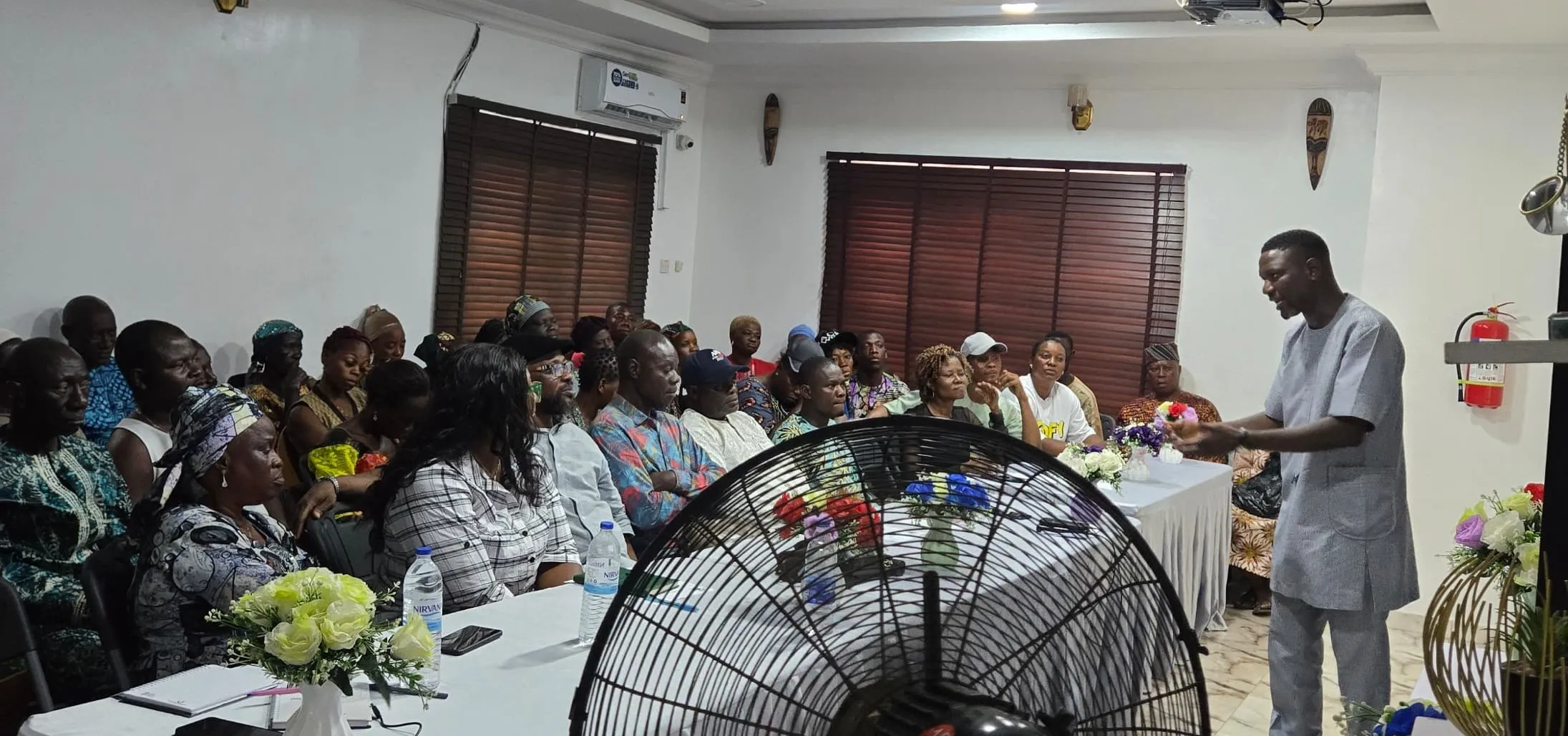
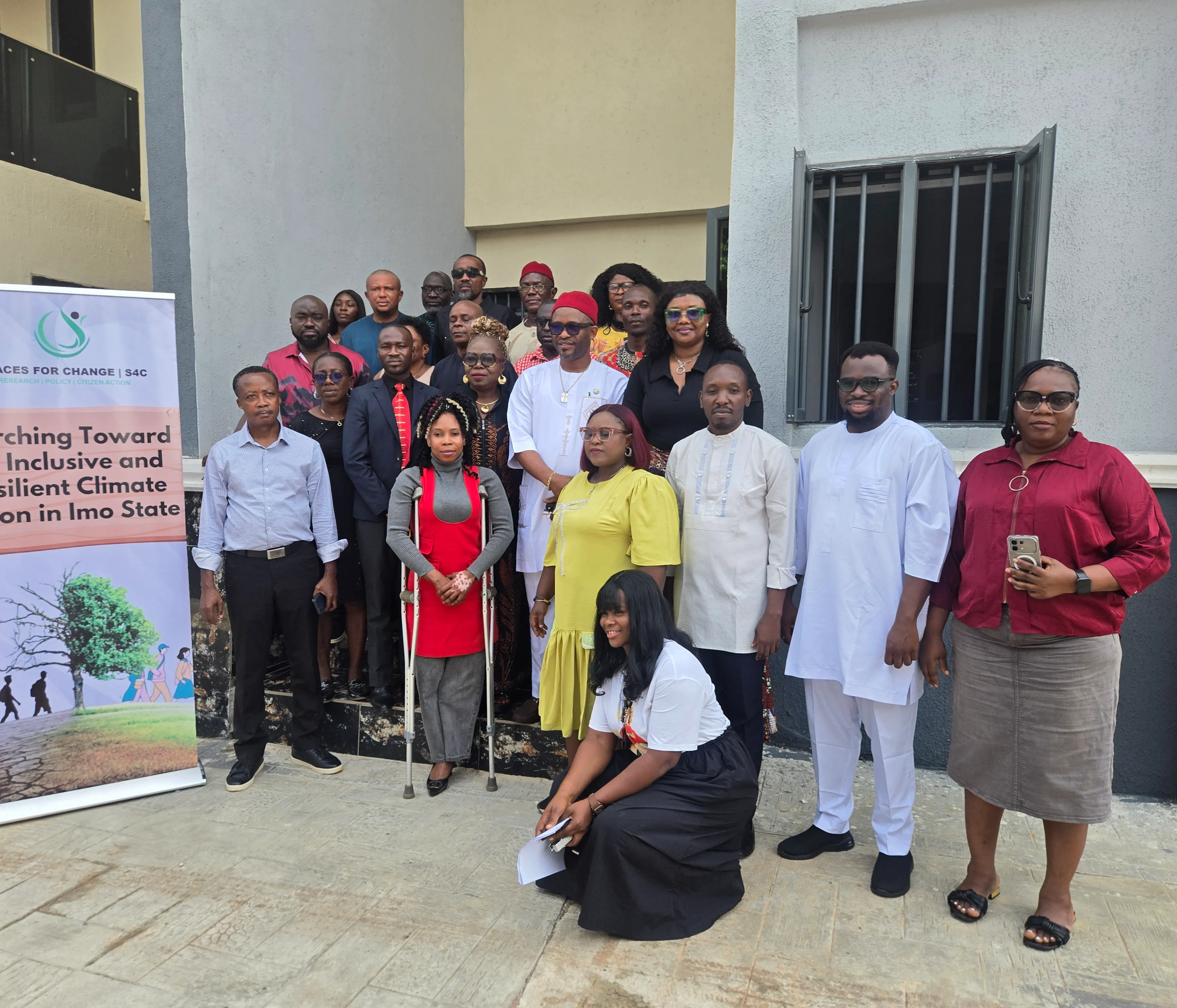
 To operationalize the Imo Climate Change Policy 2025, Spaces for Change [S4C] and the Imo State Ministry of Environment and Sanitation constituted an enlarged steering committee comprising government officials, lawmakers, academia, traditional rulers, community leaders, media, and environmental specialists, to develop an action plan that holds strong under real conditions. Every sector, every voice, and every perspective mattered, with all stakeholders working together to inform and shape the blueprint.
At the second and third steering committees held in April and May 2025 respectively, committee members compared the climate change action plans of various states in Nigeria. While the goal was not to evaluate their successes or failures, the main task for the committee was to review how other states in Nigeria have structured their climate action plans, pull out what’s working in terms of structure, unique provisions, and how they’re being implemented. They examined those plans closely, identifying key clauses, structures, and enforcement mechanisms, while also spotlighting areas that require stronger language, better data, and a tighter design that can effectively shape the Imo State Climate Change Action Plan (CCAP).
From that comparative analysis, committee members split themselves into smaller teams, engaging in a hands-on practical tasks of developing a strong model that fits Imo’s context and the needs of its people. During the practical session, participants saw firsthand the difficulty in translating climate ambitions into practical actions across different sectors of government. From the point of assigning responsibilities, or defining timelines, or sustainable financing pathways, participants recognized that climate commitments required dedicated budget lines, institutional accountability, and legal safeguards if they are to produce lasting results.
Grounded in the realities communities face, the meeting also highlighted the role of traditional institutions, local communities and development partners in strengthening climate resilience. Drawing from generations of environmental knowledge, representatives of Imo’s traditional council emphasized that changing flood patterns and disrupted farming cycles cannot be ignored in planning decisions. Civil society actors reinforced the point, noting that interventions disconnected from people’s daily realities often fail to deliver tangible results. From classrooms to communities, academic scholars from state and federal educational institutions stressed that sustainable solutions depend on reliable and verifiable evidence. What emerged from the discussions was a shared understanding that real progress requires combining data-driven planning with the lived experiences of people across both urban and rural communities.
By the close of the meeting, the Steering Committee members collectively agreed on a clear path forward, supported by defined steps and institutional structures. Building on the momentum generated throughout the engagement, participants resolved to continue applying this comparative approach in future stages of planning. It was also formally agreed that the final version of Imo State’s Climate Change Action Plan (CCAP) would incorporate tailored legal provisions for each participating ministry, including Agriculture, Transport, Water Resources, Power, and Finance. Through collaboration across sectors, Spaces for Change, the Ministry of Environment and Sanitation, and other key stakeholders laid the foundation for a governance framework designed around the realities of how Imo State functions and what its environment demands.