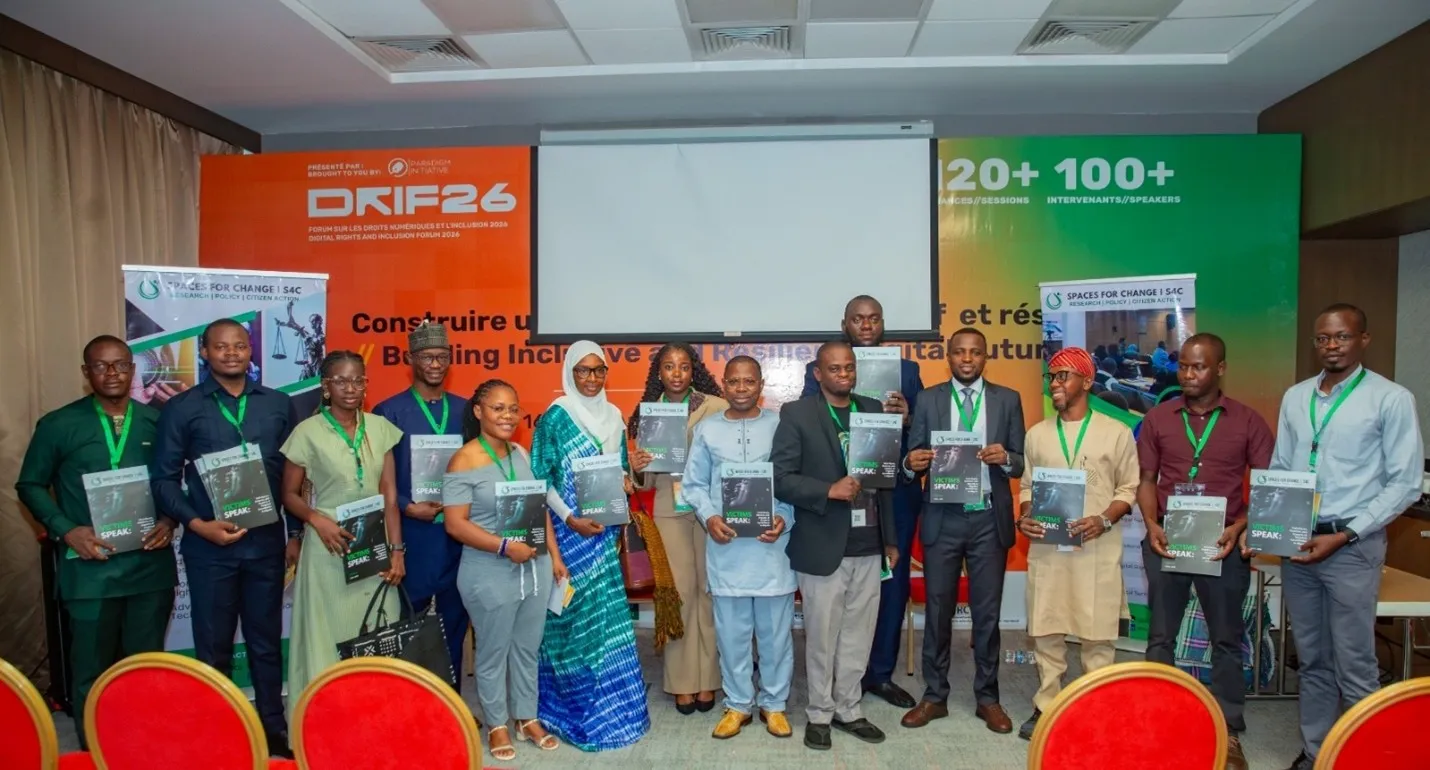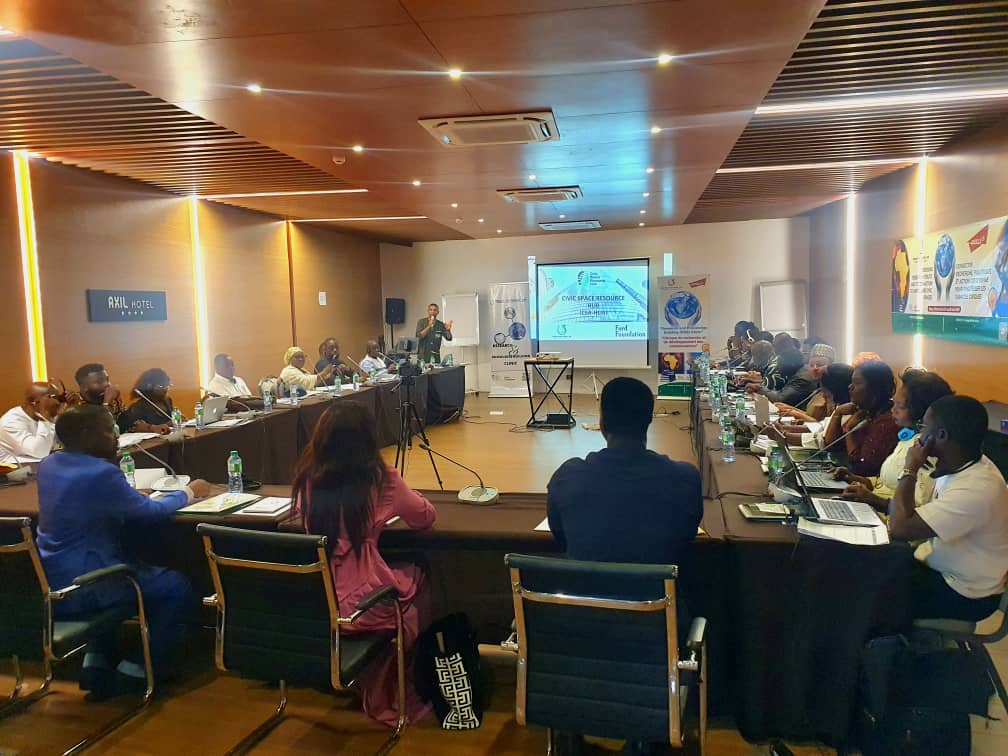
Spaces for Change | S4C organized the two-day Research and Knowledge Building (RKB) Clinic in Dakar, Senegal, in partnership with Article 19 Senegal/West Africa. The RKB is one of the four pillars of the Civic Space Resource Hub (CSR-Hub) delivered under the Weaving Resilience initiative, supported by the Ford Foundation. Held on May May 27-28, 2025, the RKB brought together 40 executive directors, program officers, journalists, activists, and academics from Nigeria, Senegal, and Ghana, to increase their capacity to use research evidence to support their social justice advocacy and other far-reaching interventions to keep the civic space open.
The civic space in West Africa (WA) is shrinking at an unprecedented rate, significantly influenced by the actions of state actors who often undermine democratic principles. The Closing Spaces Database—www.closingspaces.org—has documented over a thousand incidents of human rights violations throughout the sub-region between 2016-2025, ranging from arrests and detention of activists and agitators, censorship, and violent repression of peaceful protests etc. Civic actors and civil society organisations (CSOs) are responding to these trends, employing an array of strategies in their public advocacy and street campaigns. No matter the strategy adopted, advocacy initiatives achieve greater impact, influence and results when backed with credible research evidence. It is against this backdrop that the RKB was established as a vital resource for CSOs and civic actors in West Africa to equip them with the skills and knowledge necessary to conduct credible, evidence-based research that can inform their advocacy for policy reform and social justice.
Over the two days, participants learned about the concepts undergirding social justice research; research design processes; methodologies for gathering, analysing, and presenting evidence to local and international human rights mechanisms, including United Nations Office of Human Rights (OHCHR) Special Rapporteurs. A pool of experts also taught how to incorporate and deploy evidence in various campaigning initiatives such as litigation, policy development, policy reform and establishing early warning systems.
The Clinic also delved deeper into research communication protocols, and the role of technology in the research process as well as the technological tools they can utilize to enhance visual content making complex ideas more comprehensible. Additionally, the advent of artificial intelligence (AI) has revolutionized image generation, allowing researchers to create high-quality visuals that support their findings. However, using technology to conduct research is not without its challenges. Ethical concerns arise, particularly regarding the potential for misuse, such as plagiarism. This issue is particularly critical, as many research institutes and funders are increasingly vigilant and emphatic about high levels of integrity in research practices. It is important for researchers to avoid legal repercussions that can harm their reputation, underscoring the need for ethical standards in the incorporation of technology in research. As such, while technology undeniably offers invaluable support in advancing research processes, it also necessitates careful consideration of the ethical implications associated with its use.
Technical sessions during the clinic shed light on how African researchers can attract or access grants and global budget allocations for research. To meet the rigorous requirements that underpin international research grants, African researchers must build capacity to produce research outputs that meet international standards. Along this line, participants received guidance on how to craft compelling research proposals, design robust research methodologies, and implement evidence-based research techniques effectively. In addition, effective communication can help attract vital funding and influence critical policy reforms.
In conclusion, the participants expressed their gratitude to Spaces for Change and Article 19 for organising the Clinic. Some noted that the clinic opened their eyes to the opportunities in research, including how to use their research to drive lasting social change. The partnership between Spaces for Change and Article 19 West Africa underscores the collaboration among West African CSOs to drive impactful initiatives. The Research and Knowledge Building clinic was supported by the Ford Foundation.