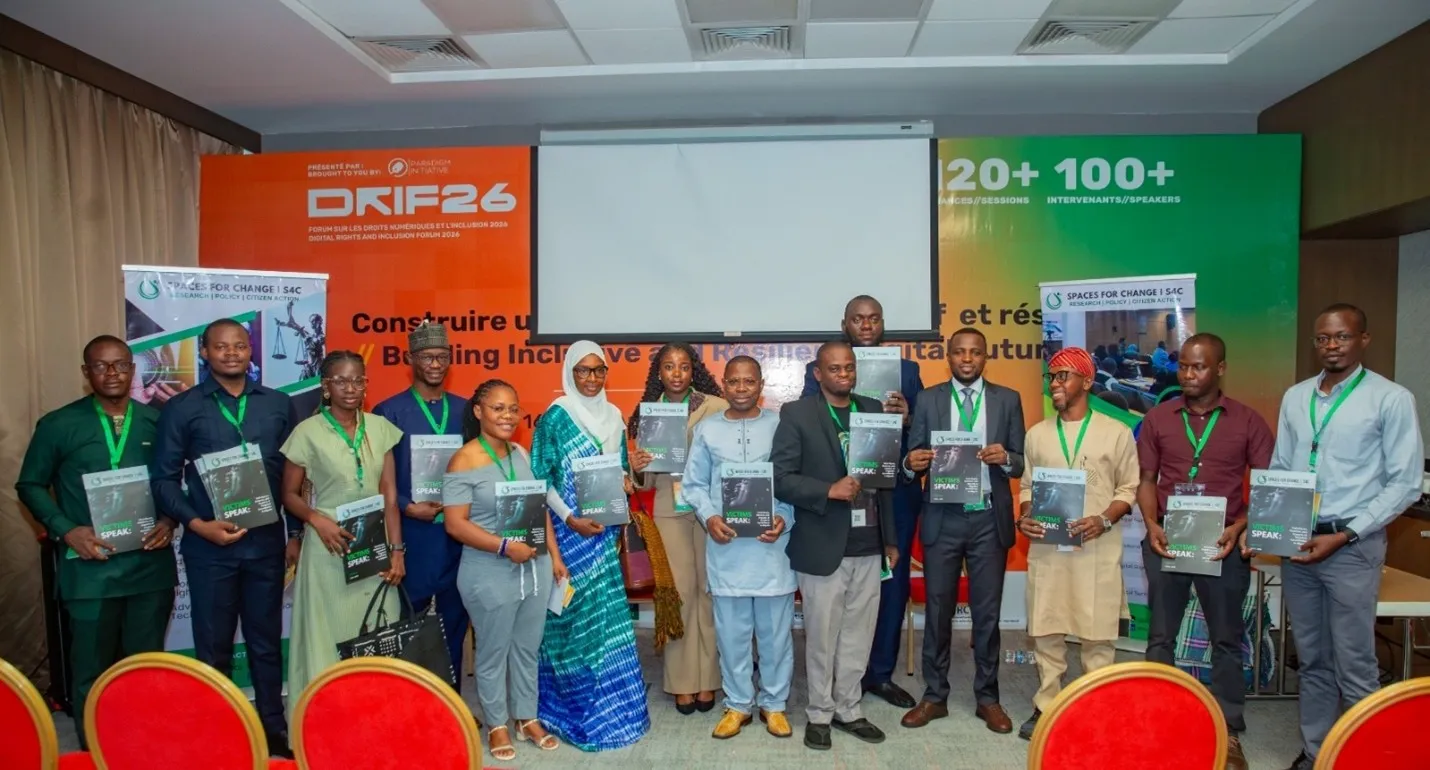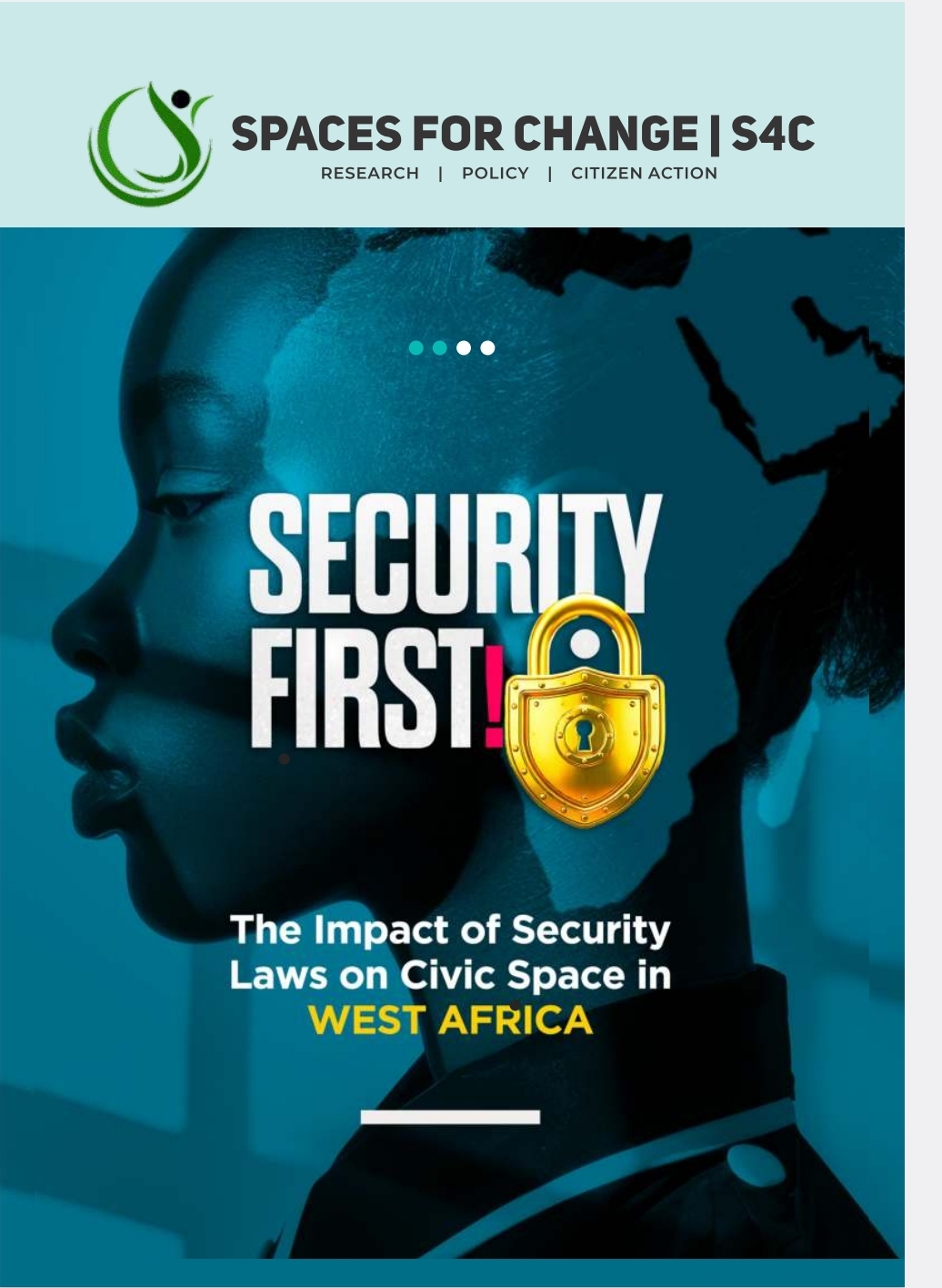
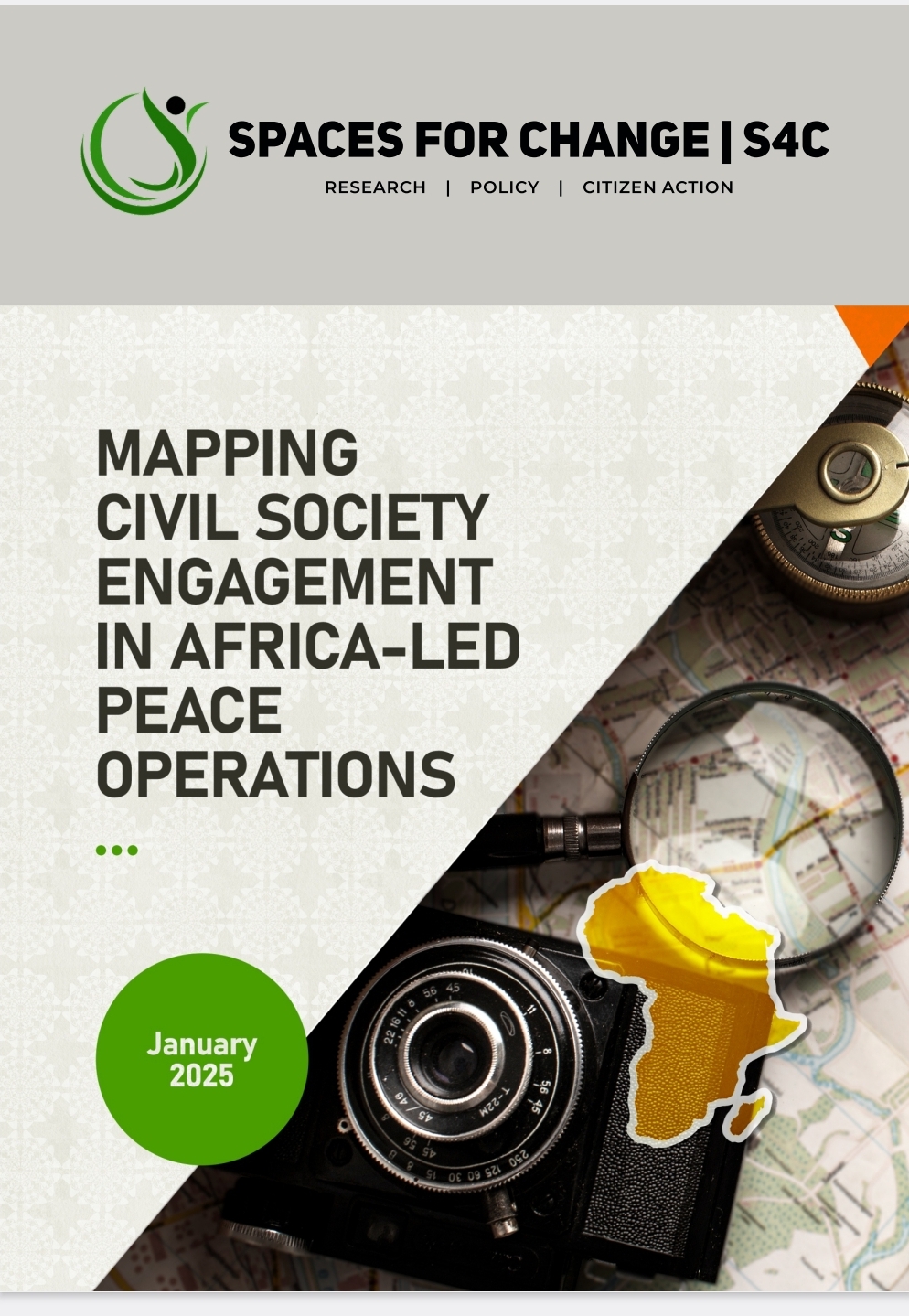
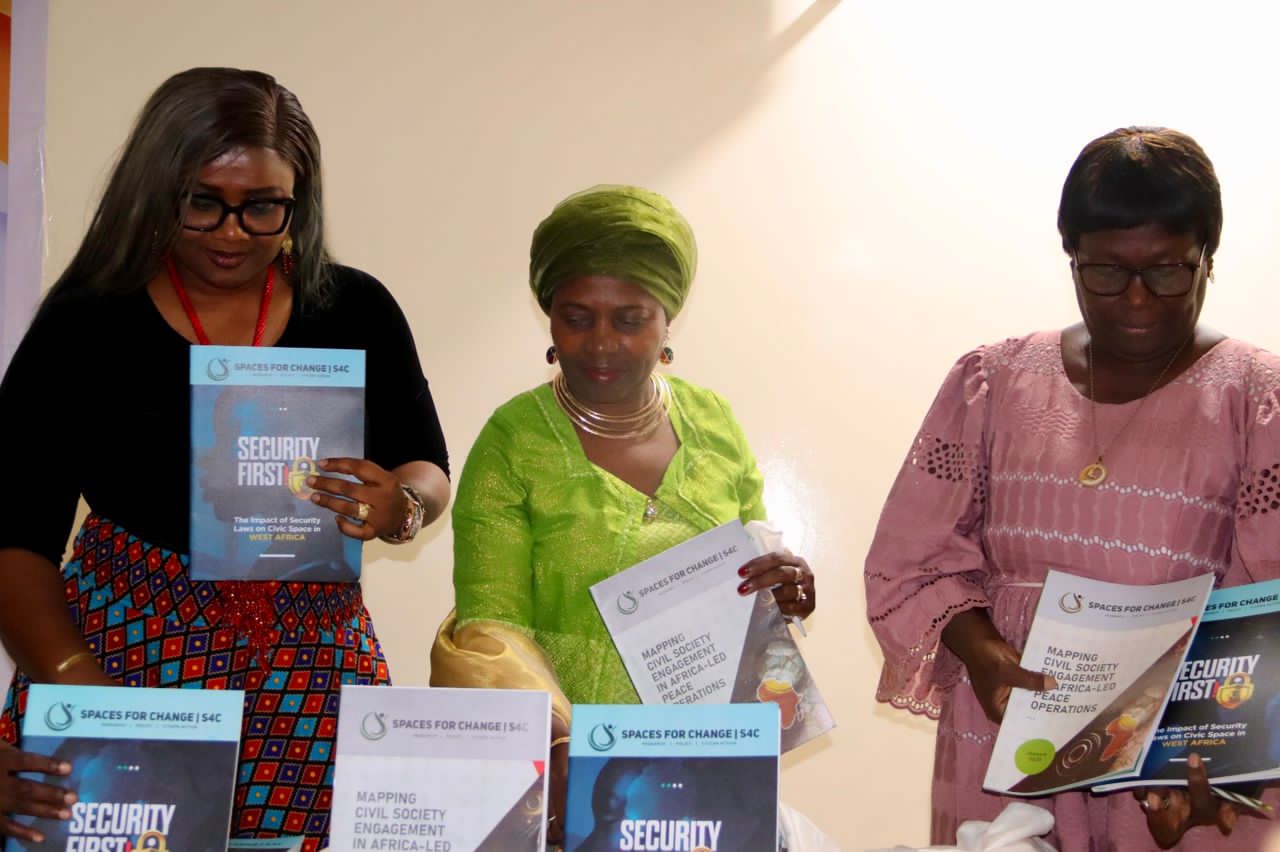
Spaces for Change | S4C launched two new reports in Banjul, The Gambia, on January, 29, 2025. The two reports, titled, “Security First: Impact of Security Laws on the Civic Space in West Africa” and “Mapping Civil Society Engagement in Africa—Led Counterterrorism and Peace Operations” examined the implications of national and regional security measures, including security governance systems, on individual rights and civil society in Africa. The launch ceremony had in attendance, civil society representatives from Nigeria, Ghana, The Gambia, and Sierra Leone, the African Commission on Human and Peoples’ Rights (ACHPR) and members of the press.
The first report, “Security First: Impact of Security Laws on the Civic Space in West Africa”, provided detailed evidence showing how the enforcement of a wide range of security laws—especially counterterrorism regimes and measures—in the 16 West African countries are enabling violations of civil liberties and constricting the civic space in the subregion. It concluded by proffering recommendations for striking a delicate balance between protecting countries from grave security threats and upholding civil liberties as well as keeping democratic spaces open. The second report, “Mapping Civil Society Engagement in Africa—Led Counterterrorism and Peace Operations,” detailed the role civil society organizations (CSOs) have played in Africa’s counterterrorism and peace operations, contributing to conflict prevention, peacebuilding, capacity-building, and humanitarian efforts in conflict-affected areas. The report underscores the importance of securing meaningful CSO engagement in the design and implementation of security initiatives to ensure a holistic and effective response to these challenges.
“S4C’s report do three very important things: first, they demonstrate systemically, with evidence, the unrelenting challenge faced by CSOs in dealing with security laws in the subregion. Secondly, they detail how the leadership of the civil society is pushing back to counter the misapplication of security laws. Thirdly, the recommendations demonstrate that the civil society should and is indeed pushing back against these security laws. Above all, the reports trace the genealogy of security laws in Africa, highlighting the lingering effects of colonial legacies.” These were the special remarks by Professor Fionnuala Ní Aoláin KC (Hons), Regents Professor & Former United Nations Special Rapporteur on Counterterrorism and Human Rights. She noted that the findings of the two reports corroborate those of other reports—like Global Study on the Impact of Counter-Terrorism on Civil Society & Civic Space (June 2023)—which show that civil society is facing an onslaught of complex security and counterterrorism laws with unending and growing consequences for civil society.
The West African region is a place of constant attention by global and regional authorities for the growth of these security laws. Because of the way these laws are implemented, civil society is facing multilayered pressures that are not only criminal, but also administrative, judicial, social, and media pressures, which further affect organizations, civic actors and their families. The security playbook narrative is here and not going anytime soon, says Fionnualla. The playbook is particularly weaponized against communities that have the least capacity to push back against the misuse of the security architecture and laws, ultimately affecting women, children, minorities, and disadvantaged groups. But one thing is clear: “you cannot fix your problem until you know what the problem is.” These reports, therefore, set out to identify the problems with these security laws and areas that need fixing.
The report launch also featured a panel plenary session that discussed three topical issues: building trust between CSOs and state actors; under-representation of Africa in the development of global counterterrorism norms; and thirdly, the role(s), spaces and participation of women in global counterterrorism (CT) initiatives. Limited technical expertise, resource constraints and travel restraints are some of the barriers to African civil society participation in global CT initiatives. In addition, women need to be involved in CT initiatives, including kinetic approaches, to bring gender balance to their implementation. The presence of representatives from the African Commission on Human and Peoples’ Rights (ACHPR) added significant weight to the discussions, highlighting potential pathways for implementing the two reports’ recommendations through regional mechanisms.
The report launch in Banjul demonstrates the vital importance of constructive dialogue and collaboration between civil society actors and government institutions in addressing security challenges while protecting civic space. As West Africa continues to grapple with complex security challenges, the insights and recommendations from this event provide a valuable roadmap for building more inclusive, effective, and rights-respecting security frameworks. The success of future security initiatives will largely depend on how well stakeholders are able to balance robust security measures with the protection of civic space and human rights.