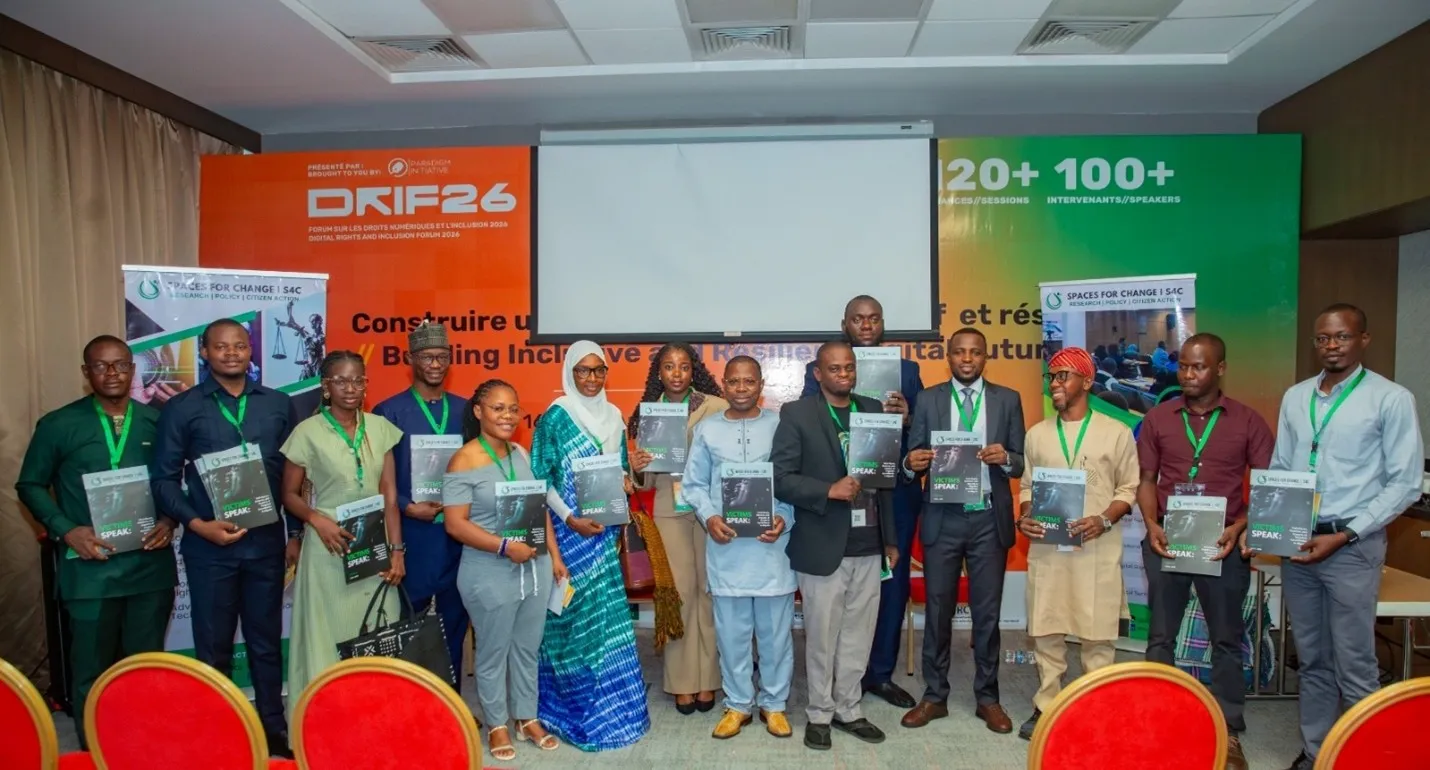
Spaces for Change | S4C participated in the 2024 Civic Tech Innovation Forum (CTIF) and the International Civic Forum (ICF), held from October 29 to November 1, in Johannesburg, South Africa. The two events united local and international civil society organizations (CSOs), cyber-security experts, researchers, journalists, and academics to discuss the pressing challenges as well as the promising advancements shaping Africa’s civic tech ecosystem. These events coincided with the launch of S4C’s recent report on Dual-Use Surveillance Technologies, affording digital rights advocates an opportunity to learn about its findings alongside other trends and developments affecting the global technological landscape.
During both events, stakeholders discussed ways of building a more inclusive civic tech ecosystem in Africa. Speakers and discussants at various sessions highlighted the value of designing tech solutions that reflect the cultural and practical needs of underrepresented communities, emphasizing co-creation and localization as essential pathways to enhance accessibility. They also discussed a wide range of issues such as technology exclusion for marginalized communities, investments in digital literacy, funding gaps and the growing governmental restrictions on the civic space. Additionally, the need for community-driven digital literacy, civic education, and the simplification of tech tools were identified as crucial for grassroots engagement. Civil society actors have a vital role to play when it comes to leveraging technology to foster civic participation, particularly in communities that are often sidelined as an initial step towards widening access and deepening inclusion.
During the learning exchanges, participants reflected on the ways technology has advanced democratic participation, human rights protection, civic organizing, and social justice across the continent. The #EndSARS protests in Nigeria against police brutality, or Ghana’s #FixtheCountry demonstrations or #FreeSenegal protests following the arrest and prosecution of the country’s leading opposition politician, are all examples of the way technology is powering civic organizing in West Africa. The deployment of the youthful energies, the rise of active citizenship and the creation of new digital spaces for popular expression point to how technological is offering civic actors new levers to enhance digital freedoms, participatory democracy and people-driven development.
In the same vein, open data also plays a critical role in enhancing transparency and accountability. The Closing Spaces Database hosted by Spaces for Change is an example of West African initiatives that provide quick and accessible data for civic action. The database is a secure online platform that tracks and documents crackdowns on the civic space, enabling activists and CSOs to monitor and respond to threats against digital and civic freedoms. The database has become a vital tool for raising awareness on the state of civic space across West Africa. Another initiative by Spaces for Change—the Digital Security Clinic (DSC)—has also been equipping journalists, activists, and human rights defenders with practical tools to counter digital threats, supporting their resilience in increasingly challenging digital landscapes.
The rise of artificial intelligence is another topic that dominated the discussions, with emphasis placed on balancing its advantages with the risks it poses to digital rights. The forward-looking group exercises during the closing sessions stirred up fresh thinking about adaptive strategies, proactive planning, and innovative solutions for future challenges associated with technological advancements. Beyond the shared commitment to an inclusive, resilient digital landscape in Africa, the two events concluded with actionable recommendations for strengthening regional and continental cooperation.