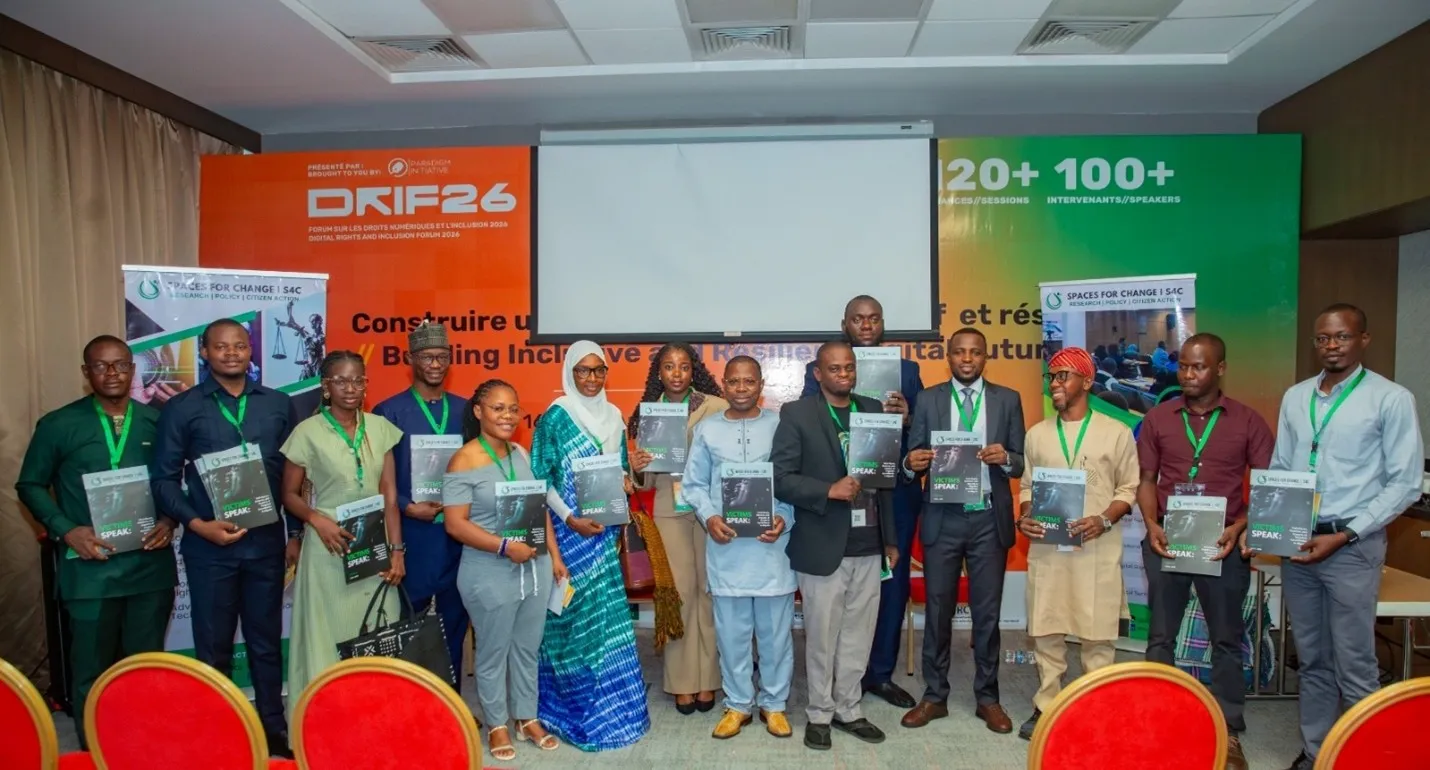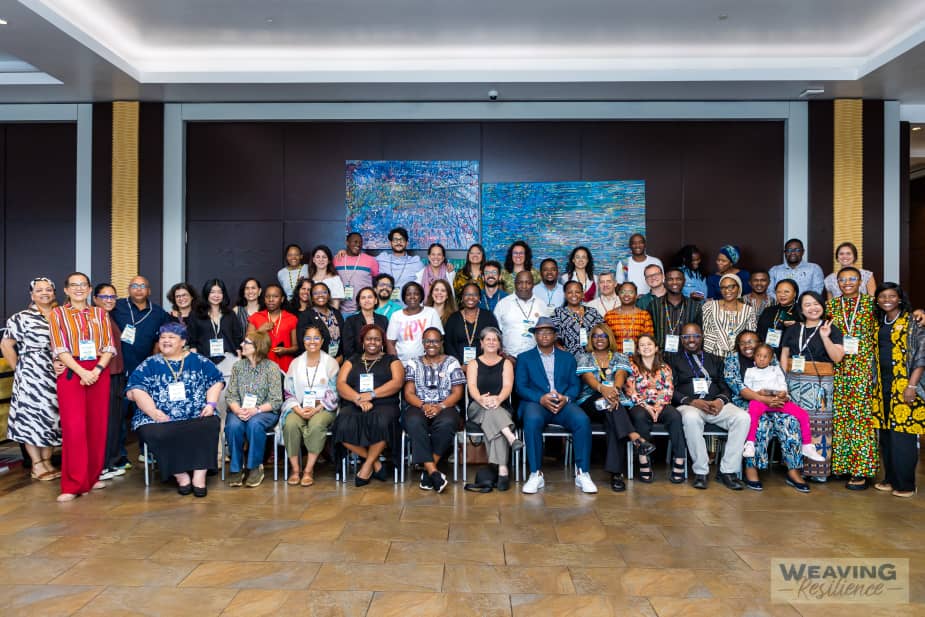
Spaces for Change│S4C participated in the Weaving Resilience Initiative’s (WRI) annual global gathering held in Accra, Ghana between 8 – 10 July, 2025. This year’s gathering united organizations managing the Weaving Resilience Hubs across the global south to reflect on their changing work environment, re-imagine the future of the social justice interventions and consider strategies to scale-up impact. As the co-manager of the West Africa Civic Space Resource Hub (CSR-Hub), S4C joined sixty-one participants drawn from 30 countries, representing 31 organizations at the just-concluded WRI convening.
Established in 2022 with the support of Ford Foundation, the global Weaving Resilience Initiative aims to strengthen the capacity of civil society organizations (CSOs) operating in the global south to build and sustain social change. In the last 3 years, Spaces for Change | S4C has directly reached over 500 organizations under the CSR-Hub West Africa project. The organization has provided project beneficiaries—mainly media and civil society organizations—operating in restricted environments in Nigeria, Ghana and Senegal with tailored capacity-building and outreach support in critical areas such as regulatory compliance, digital security, research and knowledge building, strategic communication and civic space protection.
Participants examined the changing work environment in the social justice sector, highlighting the distinctions and commonalities in the trends witnessed across countries and the specific ways CSOs are responding to these changes. Some of the key changes noted include polarizing narratives, demonizing dissent, misinformation, manipulating elections, ineffective legal systems, defunding CSOs, protecting oligarchies, and widespread clampdown on civic actors. All of these point to shrinking civic spaces, with the defunding of CSOs and demonizing dissenting views topping the list of concerns.
As the challenges in the Global South are increasingly becoming taking on regional coloration, participants identified the importance of collaboration and partnership as the future of social justice interventions. The hub-based approach has proven effective over the last 3 years, driving impactful interventions across 30 countries and reinforcing the value of cross-pollination and strategic alliances. With the WR initiative ending in 2026, discussions focused on sustaining impact beyond the Ford Foundation initial funding period through institutional memory, alternative funding models like endowments and local fundraising, and integrating learning systems for long-term resilience.
Spaces for Change | S4C showcased the results and impacts of its Regulatory Compliance Clinic (RCC) during a dedicated session for most impactful interventions under the hub designed to strengthen the capacity of CSOs operating in West Africa. The RCC builds the capacity of non-profit organizations to comply with national and international regulatory frameworks applicable to non-profit entities, including anti-money laundering and terrorist financing legal regimes. S4C has, over the last five years, organized 15 RCCs for 269 non-profit organizations operating in 8 West African countries. The platform of the RCC continues to provide a safe space for NPOs in the subregion to discuss and understand their inherent shocks, threats and vulnerabilities and adopt tailored practical solutions that suit their regulatory and operational landscape. As the event wound down, participants critically re-evaluated the work done so far by various organizations and hubs under the WRI while reaffirming their commitment to sustain the hub-based model of work.