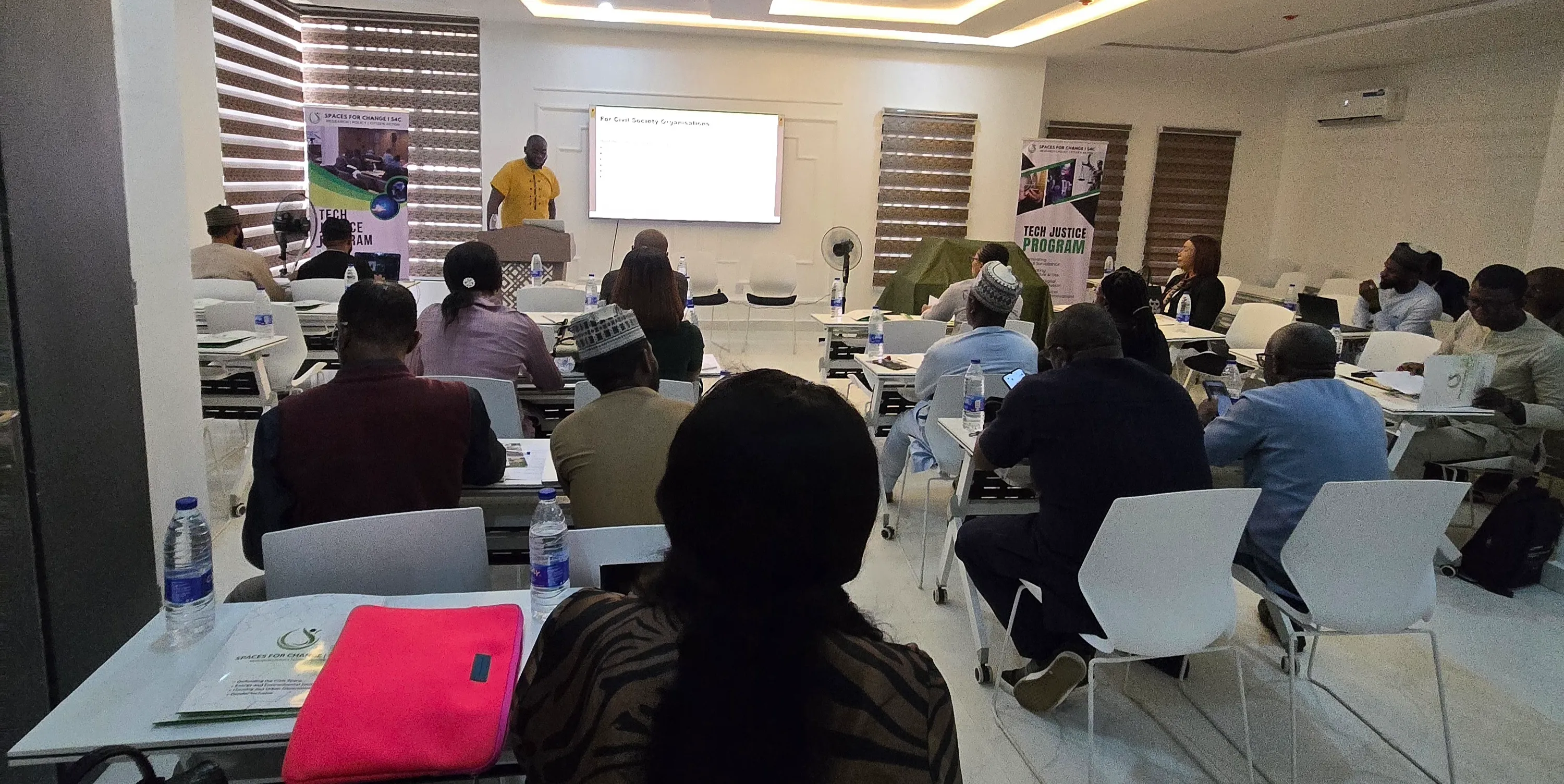
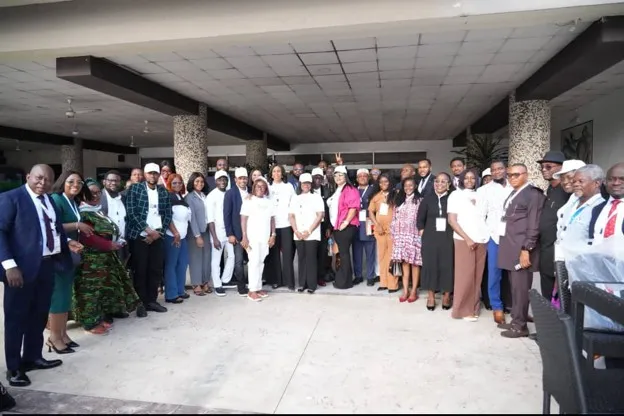
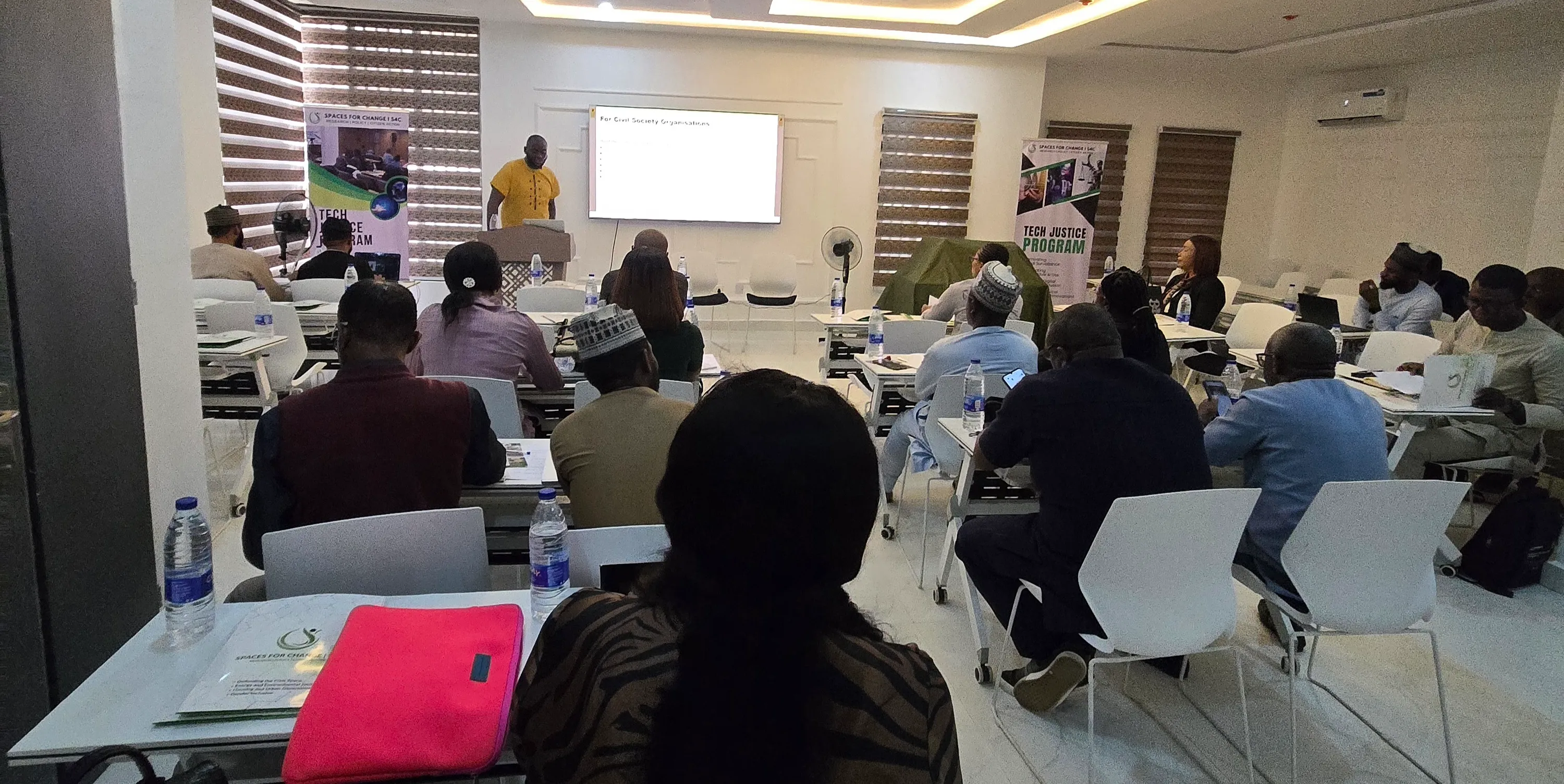
 At the launch of Spaces for Change’s | S4C’s latest report, “Victims Speak: Tactics, Patterns and Impacts of Targeted Surveillance in Nigeria”, legal practitioners, journalists, judges, and representatives of government agencies and civil society organisations converged on May 14, 2026, for an in-depth conversation on the growing threat of unlawful surveillance against civic actors in Nigeria.
Building on S4C’s previous surveillance studies—“Security Playbook on Digital Authoritarianism in Nigeria” and “The Proliferation of Dual-Use Surveillance Technology in Nigeria”—the new report documents the lived realities of civic actors targeted by surveillance in Nigeria. The launch opened with a presentation of the report, anchoring the discussion around the main drivers of proliferation of surveillance technology in Nigeria. Presenters examined the import control architecture for dual-use technologies, exposing critical gaps in the system and interrogating why existing legal frameworks have largely failed to prevent the misuse and wrongful diversion. Oversight mechanisms exist on paper, but lack the scope, transparency, and enforcement capacity to keep surveillance technologies from being turned against the very citizens they are meant to protect.
A significant portion of the session centred on how unlawful surveillance manifests in practice. Drawing from 18 documented victim cases, two stories were presented in detail. Although the circumstances and locations differed, the patterns and techniques of surveillance used against both victims were strikingly similar, reinforcing a key finding of the report that targeted surveillance in Nigeria follows identifiable patterns regardless of the specific actor or region where it occurs. The discussion also addressed practical recommendations for civil society organisations and individuals at risk, outlining concrete steps for protection, documentation, and response.
Participants also learnt about the Spy Stop Lab (SSL), S4C’s capacity-building initiative that equips civic actors vulnerable or susceptible to unlawful surveillance with the legal and technical tools to confront growing spyware abuse and proliferation. The session highlighted the Lab’s core components: psychosocial support for affected individuals, voluntary device checks, information-sharing sessions, and expert-led training modules. Together, these interventions reflect a holistic model of support, one that addresses both the technical and human dimensions of surveillance harm. In a moment that brought the report’s findings to life, a surveillance victim supported at S4C’s most recent Spy Stop Lab shared his personal experience of being targeted. He recounted how organising a peaceful protest made him a target, leading to his unlawful surveillance and subsequent detention. His testimony underscored the real-world consequences of unchecked surveillance not as an abstract policy concern, but as a lived experience of violation, fear, and disruption to the constitutionally-guaranteed privacy protections.
The event also featured a fireside chat featuring a retired judge and an investigative journalist who had been supported through the first edition of the Spy Stop Lab. The journalist shared her first-hand account of being targeted and surveilled by powerful actors as a direct consequence of carrying out her work, a sobering reminder that surveillance is not a peripheral risk for journalists, but an occupational threat with real consequences for those who hold power to account. The retired judge built on this, calling for improved human rights training across the judiciary, including judges, magistrates, and legal practitioners handling surveillance-related matters. She stressed that as surveillance technologies continue to evolve rapidly, judicial actors must remain consistently up-to-date on digital rights, the distinctions between lawful and unlawful surveillance, and the broader implications of emerging technologies on the human rights ecosystem.
Experiences documented in the report showed that many victims of unlawful surveillance were arbitrarily detained, denied timely access to court hearings, and in some cases accused of grave offences such as terrorism and treason. Beyond unlawful surveillance itself, the misuse of judicial processes against journalists and activists points to a pattern of what could be described as “judicially-enabled repression,”, signaling growing concerns about the use of courts to legitimize intimidation and repression. The retired judge further urged courts to protect citizens’ constitutional rights by ensuring fair hearings and resisting the abuse of legal processes against journalists and activists. She also advocated for the speedy resolution of cases involving unlawful surveillance and meaningful compensation for victims subjected to intimidation and rights violations, maintaining that strong institutions and rights-focused judicial interpretation remain essential to protecting press freedom and civic participation in Nigeria.
The launch demonstrated that the conversation around surveillance accountability in Nigeria is gaining ground, across courtrooms, newsrooms, and civil society. The Victims Speak report, grounded in the real experiences of those targeted, gives that conversation an evidence base that is difficult to ignore. What remains is the harder work: translating awareness into action, closing the gaps in legal frameworks, and ensuring that victims of unlawful surveillance have genuine access to justice and redress.